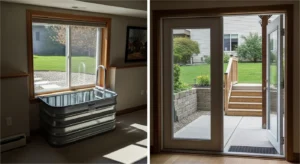
New Jersey is home to stunning, historic architecture. From classic colonial builds in Bergen County to mid-century modern ranches in South Jersey, our state’s housing stock is full of character. However, if you own a home built before 1980, you have likely encountered the most common enemy of a successful basement remodel: low ceilings.
Historically, basements were designed purely as root cellars or utility rooms to house the furnace and water heater. Builders never intended for them to be used as home theaters, legal ADUs, or custom wet bars. As a result, when you start framing walls and routing HVAC ducts, an already tight 7-foot ceiling can quickly begin to feel like a cave.
At Jazz Construction Group, we specialize in transforming restrictive spaces into luxurious, open environments. Maximizing headroom isn’t just about aesthetics; it is a structural and design puzzle that directly impacts your basement renovations cost and legal permitting. Here are our top strategies for overcoming low ceilings in older New Jersey homes.
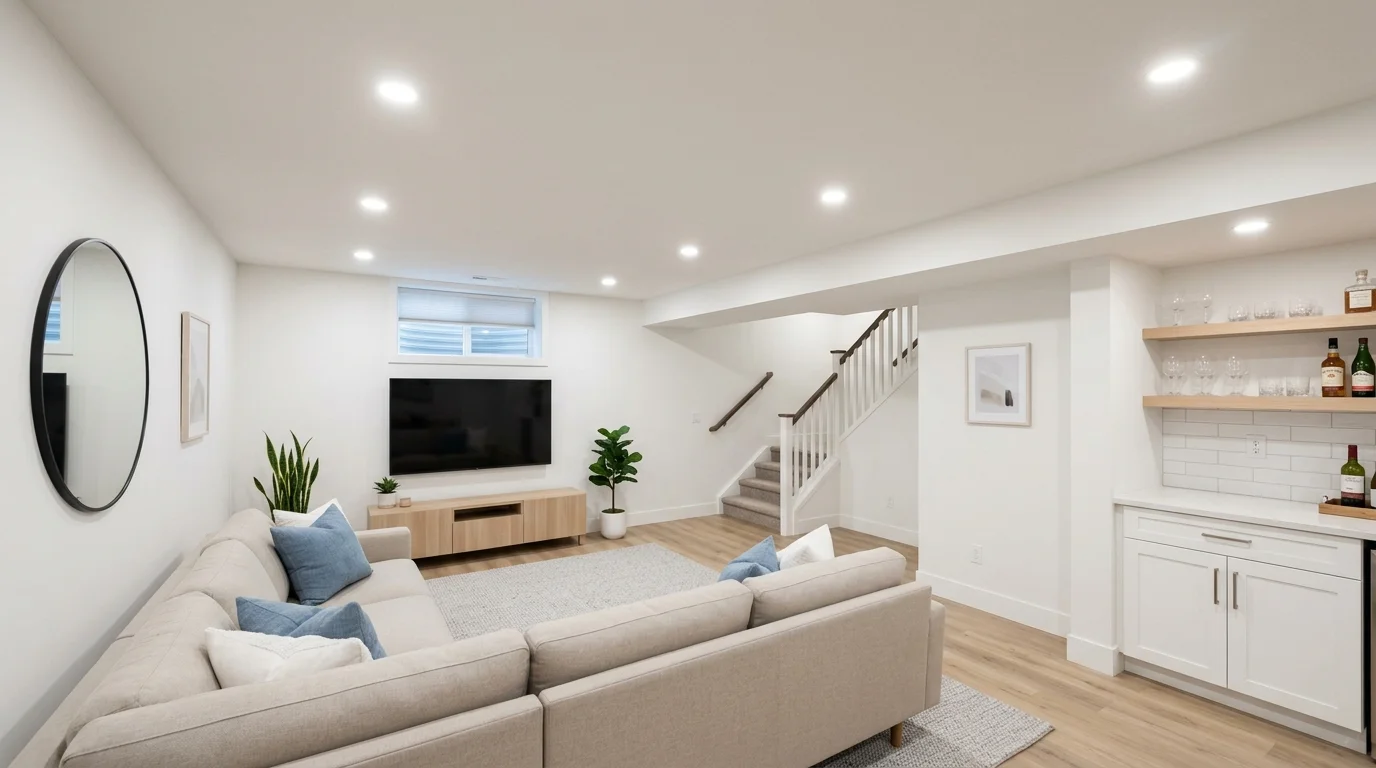
The Legal Hurdle: Minimum Ceiling Height Codes
Before designing the space, you must understand the rules. Under the International Residential Code (IRC) adopted by New Jersey municipalities, habitable living spaces must have a minimum ceiling height of 7 feet.
However, there are exceptions. Beams, girders, and ductwork can project downward, but they must remain at least 6 feet 4 inches above the finished floor. If your raw basement ceiling is already hovering around 7 feet, you have very little margin for error when adding drywall and flooring. Navigating these codes requires precise engineering.
1. Strategic Ductwork and Soffits
The biggest culprits stealing your headroom are the massive sheet metal HVAC trunks that run perpendicular to your floor joists. You cannot simply drywall flat across them, or you will drop the entire ceiling height of the room.
The Architectural Soffit Solution
Instead of lowering the whole ceiling, we build tight, custom framing boxes—called soffits or bulkheads—strictly around the ducts. By placing these soffits strategically around the perimeter of the room or over seating areas where standing height isn’t an issue, we can leave the center of the ceiling pushed as high as possible. When painted seamlessly, these soffits look like intentional tray ceilings rather than utility covers.
2. Visual Illusions: Lighting and Paint
When you cannot physically raise the ceiling, you must manipulate how the eye perceives the space. Dark colors and shadows make ceilings feel heavier and lower.
- Go Flat White: Paint the ceiling in a flat, ultra-pure white. Glossy paints reflect light but also highlight every imperfection, which draws the eye upward. A flat white essentially makes the ceiling “disappear.”
- Recessed LED Wafers: Do not install hanging pendants or bulky track lighting in a low basement. We use ultra-thin recessed LED “wafer” lights. Because they are the thickness of drywall, they don’t require bulky cans housing that drop the ceiling, keeping your sightlines perfectly clear.
- Vertical Lines: Use vertical elements in your design, such as tall wainscoting, vertically stacked tile at the wet bar, or tall, slender bookcases. Vertical lines trick the brain into perceiving height.
3. Smart Flooring Choices
When headroom is measured in fractions of an inch, your flooring material matters immensely. Building a raised subfloor (using 2x4s and plywood) to combat moisture will steal nearly two inches of vertical space.
Instead, we rely on low-profile moisture barriers (like DMX underlayment) paired directly with Luxury Vinyl Plank (LVP). LVP is only a few millimeters thick, 100% waterproof, and incredibly durable. This combination protects against cold concrete without sacrificing your headroom.
4. The “Nuclear” Option: Underpinning and Excavation
What if your basement is only 6 feet tall, and you desperately want a legal, 8-foot luxury living space? You can go down.
Underpinning (or Basement Lowering) involves breaking up the existing concrete slab, excavating the dirt beneath it by 1 to 3 feet, extending the foundation walls downward (underpinning), and pouring a brand new slab.
While this is an incredible way to turn an unlivable cellar into a premium walkout suite, it is a massive structural undertaking. It requires extensive engineering, soil removal, and heavy labor, often adding $20,000 to $40,000 to the budget. However, in high-value NJ real estate markets, the ROI of adding a massive, full-height lower level often outweighs the upfront investment.
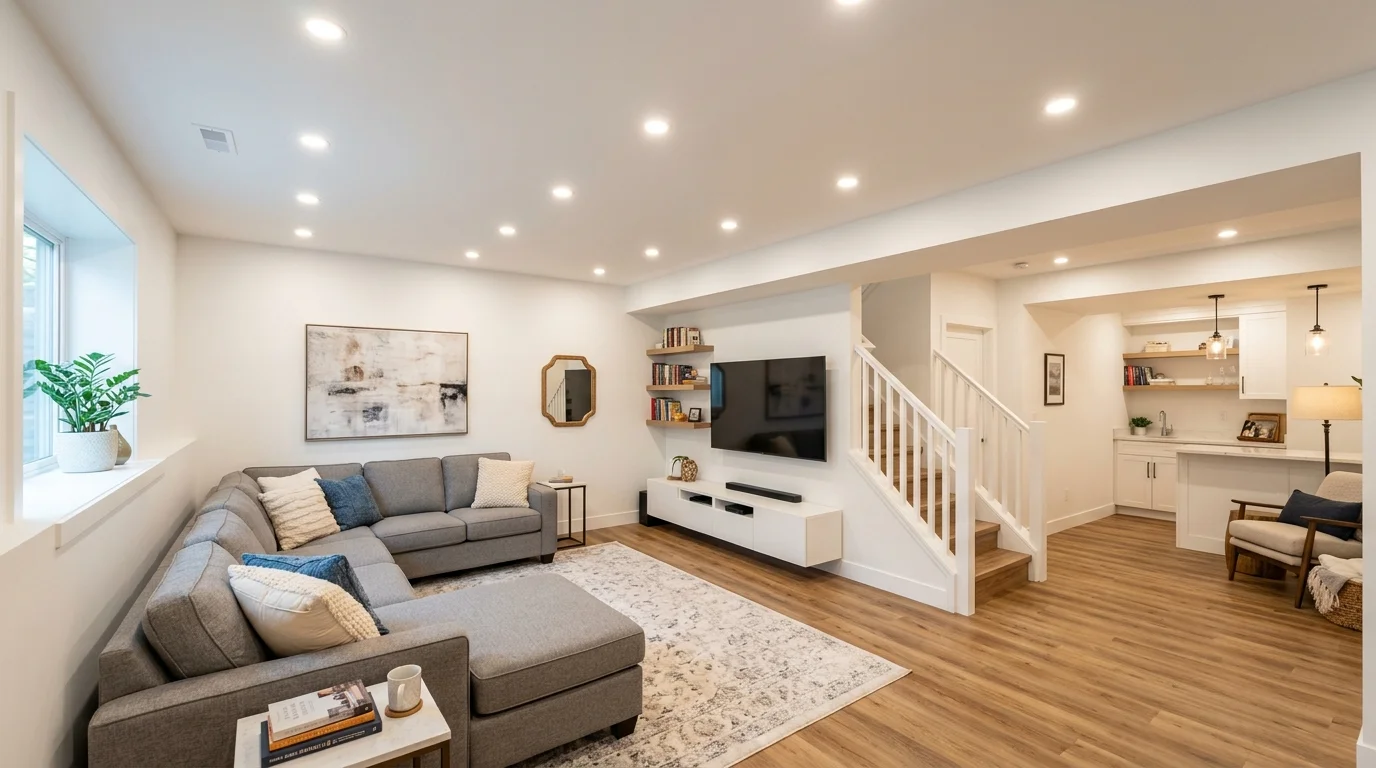
Ceiling Maximization Matrix
| Strategy | Impact on Headroom | Cost Factor |
|---|---|---|
| Custom Soffits / Tray Ceilings | Saves maximum height in the center of the room. | $$ |
| Exposed / Painted Ceiling | Reclaims 1-2 inches by eliminating drywall. | $ |
| Low-Profile LVP Flooring | Saves 1-2 inches compared to raised subfloors. | $$ |
| Basement Underpinning (Digging down) | Adds 1 to 3 full feet of literal height. | $$$$ |
Frequently Asked Questions
Will a drop ceiling work in a low basement?
Typically, no. Suspended grid ceilings require several inches of clearance below the lowest pipe or duct to allow the tiles to be tilted into place. In a basement that is already struggling with height, a drop ceiling can make the space feel far too cramped.
Can my HVAC ductwork be moved?
Sometimes. If an old HVAC trunk line drops directly through the center of your room, we can often work with our HVAC specialists to re-route it to the perimeter of the room, or flatten it out using wider, shallower rectangular ducts to reclaim vertical space.
Do low ceilings affect my appraisal?
Yes. If the ceiling does not meet the legal 7-foot IRC requirement (with allowances for ducts), an appraiser may not legally classify the basement as finished Gross Living Area, which can significantly limit your Return on Investment.
Raise Your Expectations
Don’t let older architecture limit the potential of your home. Through structural engineering and clever design, we can transform your low basement into a stunning, open living space. Explore our basement renovation services and let Jazz Construction Group elevate your lower level.
Book a Free Design Consultation