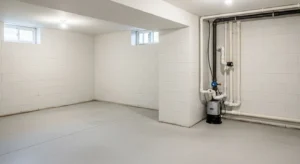
A beautifully finished basement complete with a home theater, a custom wet bar, and a sprawling game room is the ultimate New Jersey home upgrade. However, there is one critical feature that dictates whether your family actually spends time in the space: a bathroom.
Nobody wants to pause the movie, walk up a flight of stairs, and tiptoe through the main level just to use the restroom. If you are planning an in-law suite or an Accessory Dwelling Unit (ADU), a bathroom is not just a convenience—it is a legal requirement.
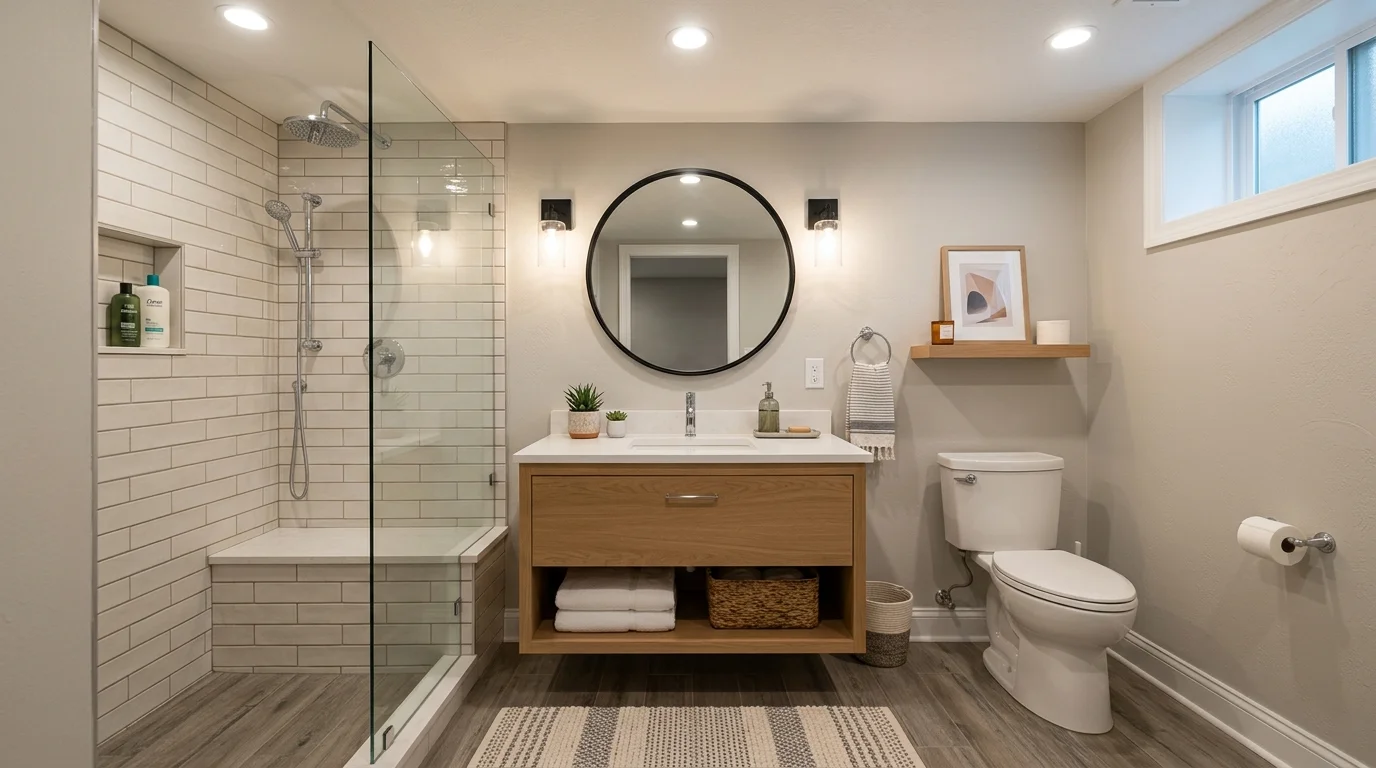
While framing walls and installing flooring is straightforward, adding a bathroom below grade presents a unique set of plumbing challenges that heavily influence your overall basement renovations cost. At Jazz Construction Group, we specialize in high-end subterranean plumbing. Here is exactly what you need to know about bringing a luxury bathroom to your lower level.
Fighting Gravity: The Plumbing Reality
On the main floors of your home, plumbing relies entirely on gravity. When you flush a toilet or drain a sink, the wastewater flows downward into the main sewer line that exits your house.
In a basement, you are likely sitting below that main municipal sewer line. Gravity is no longer your friend; it is the obstacle. To get wastewater from a basement toilet up and out of the house, we have to employ specialized mechanical systems.
The Solution: Sewage Ejector Pumps
The most robust and reliable method for a basement bathroom is an ejector pump system. We use heavy concrete saws to cut a trench into your basement floor. We install a large sealed basin (pit) beneath the concrete, which houses a powerful mechanical pump. All wastewater from the basement toilet, sink, and shower flows into this pit. When the water reaches a certain level, the pump activates, grinding the waste and shooting it upward through a dedicated pipe into your home’s main sewer line.
Half Bath vs. Full Bath: Making the Choice
The layout and utility of your basement will dictate the type of bathroom you need.
The Half Bath (Powder Room)
A half bath consists of just a toilet and a vanity sink. This is the perfect, cost-effective solution if your basement is primarily used as an entertainment zone or a family room. It solves the convenience factor without requiring the space or massive plumbing footprint of a shower. A well-designed half bath can often be tucked under the basement stairs to maximize square footage.
The Full Bath
A full bathroom includes a toilet, vanity, and a shower (or bathtub). If you are adding a legal bedroom with an egress window, an au pair suite, or a home gym, a full bathroom is absolutely essential. Appraisers place a massive premium on homes with multiple full bathrooms, making this option a powerhouse for increasing your property’s resale value.

Strategic Placement Saves Money
If you want to keep your basement renovation budget under control, where you put the bathroom matters significantly.
The most cost-effective location for a new basement bathroom is directly beneath an existing upstairs bathroom or the kitchen. Why? Because the main water supply lines and the main vertical soil stack (the large drain pipe) are already running through that specific area. By placing the basement bathroom nearby, our plumbers minimize the amount of copper piping, PVC, and concrete trenching required to tie the new fixtures into the existing system.
Plumbing System Comparison
| System Type | How It Works | Best For |
|---|---|---|
| Underground Ejector Pump | Waste collects in a buried pit and is pumped forcefully up to the main sewer line. | Full bathrooms, heavy daily use, seamless aesthetic. |
| Above-Ground Upflush (Saniflo) | Pump is located in a box directly behind the toilet; no concrete cutting required. | Tight budgets, half-baths, areas where cutting concrete is impossible. |
| Gravity Fed | Waste flows naturally downward (only possible if your main sewer line is buried very deep). | Walkout basements located on a steep hill. |
Frequently Asked Questions
Do ejector pumps smell?
No. When installed correctly by a licensed plumber, the ejector pit is completely sealed with a bolted, airtight cover and properly vented to the roof. You will never smell sewer gas in your basement.
Are permits required for a basement bathroom?
Absolutely. Because you are tying into the municipal sewer line and altering the home’s primary plumbing system, strict plumbing and building permits are legally required by every township in New Jersey.
What happens to the bathroom if the power goes out?
Because the ejector pump relies on electricity, a power outage means the pit cannot empty itself. While the pit has some reserve capacity (usually 1-2 flushes), it is highly recommended to tie the pump into a whole-home generator to prevent backups during severe storms.
Masterful Plumbing. Flawless Design.
Adding a bathroom to your basement is a complex engineering task that requires elite plumbing expertise and meticulous planning. Don’t trust your home’s sanitation to an amateur. Partner with the design-build professionals at Jazz Construction Group for a luxurious, fully permitted bathroom addition.
Get a Free Bathroom Estimate