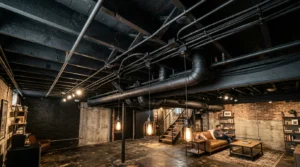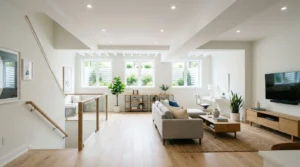
You have framed the walls, planned the ultimate home theater, and selected premium waterproof flooring. But before you close up those basement ceilings, there is a critical question that will dictate how comfortable your new space actually is: How are you going to heat and cool it?
Basements possess their own unique microclimates. Because they are nestled deep into the New Jersey soil, they are naturally cooler than the rest of the house in the summer and completely insulated from the sun’s warmth in the winter. Simply relying on space heaters or window units is not only inefficient, but it will also prevent a real estate appraiser from legally counting your new basement as “finished living space.”
At Jazz Construction Group, we understand that proper climate control is the backbone of a successful remodel. When factoring HVAC into your overall basement renovations cost, you have three primary options to consider. Here is how to find the perfect solution for your lower level.
Option 1: Extending Your Existing HVAC System
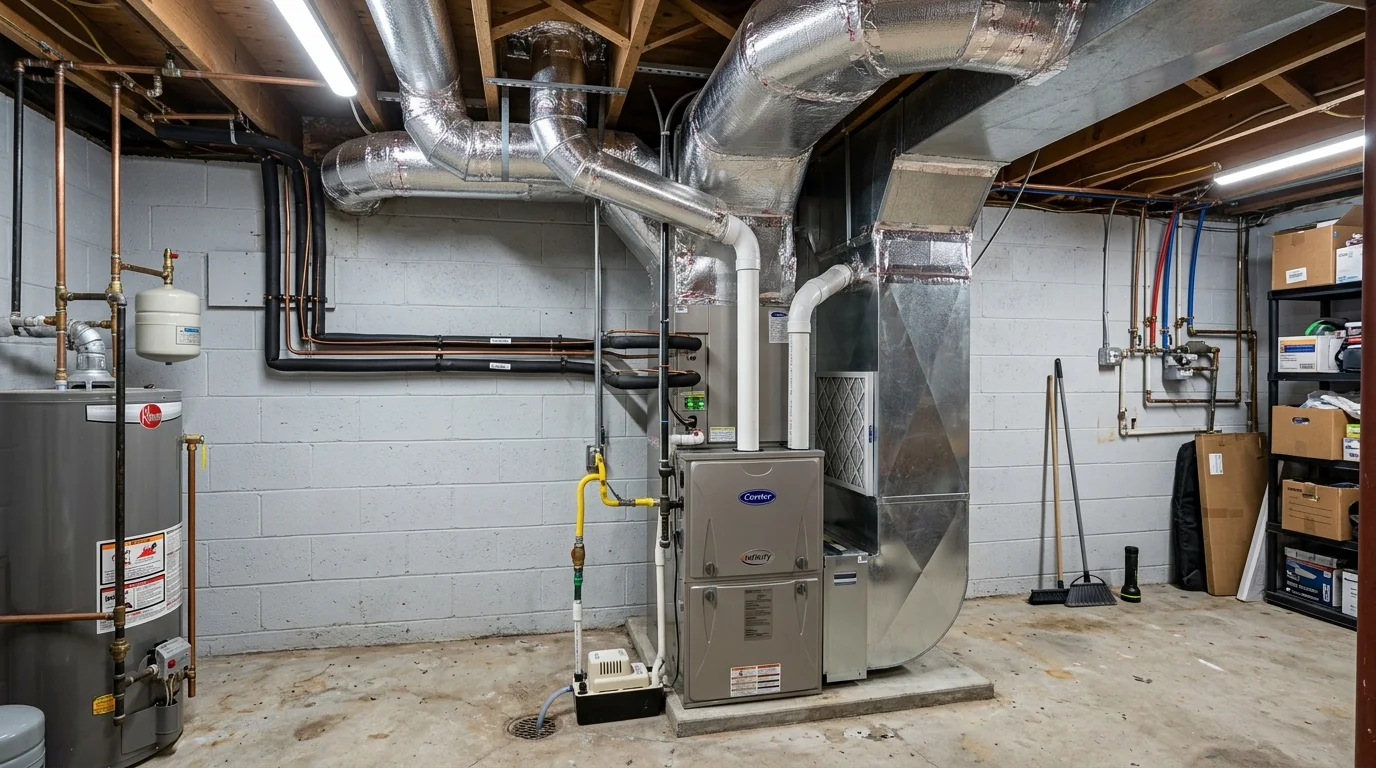
The most common initial thought homeowners have is simply tapping into the central air conditioning and heating system that already serves the upper floors. Since the main trunk lines often run directly through the basement ceiling, it seems like an easy fix to just cut a few new registers.
The Pros and Cons
Pros: If your current furnace and AC condenser are relatively new and appropriately sized, this can be the most cost-effective option. It keeps the entire house on a single, unified system.
Cons: The biggest issue is capacity. Your existing HVAC unit was mathematically sized (using a Manual J calculation) to heat and cool the above-grade square footage of your home. Asking it to take on an additional 1,000 square feet in the basement often overworks the system, resulting in poor airflow upstairs and a prematurely burnt-out motor. Furthermore, because basements naturally stay colder, you will often find yourself freezing in the basement during the summer while the upstairs is struggling to cool down, as both spaces are fighting the same thermostat.
Option 2: The Ductless Mini-Split (The Gold Standard)
For modern basement remodels—especially if you are creating a legal Accessory Dwelling Unit (ADU) or a walkout suite—the ductless mini-split is widely considered the ultimate solution.
A mini-split system consists of a small outdoor compressor unit connected to one or more sleek, wall-mounted indoor air handlers. They operate entirely independently of your home’s main central air system.
The Pros and Cons
Pros: Absolute zone control. You can keep the basement at a cozy 72 degrees in the winter without overheating the bedrooms upstairs. They are whisper-quiet, incredibly energy-efficient (meaning lower utility bills), and require zero bulky ductwork, which preserves your precious basement ceiling height.
Cons: The upfront installation cost is higher than simply adding a few vents to your existing system. Also, some homeowners prefer hidden vents over the visible wall-mounted units (though flush-mount ceiling cassettes are available for an aesthetic upgrade).
Option 3: Radiant Floor Heating
If you have ever stepped barefoot onto a concrete basement floor in January, you know exactly why radiant heating is considered the pinnacle of residential luxury.
Radiant heating involves installing a network of electric heating cables or hydronic (hot water) tubes directly beneath your finished flooring. Rather than blowing hot air through the room, the heat slowly radiates upward, warming the objects (and people) in the room from the ground up.
The Pros and Cons
Pros: Unmatched comfort. It provides even, consistent heat without the dry air or drafts associated with forced-air systems. It is completely invisible and completely silent.
Cons: It only provides heat, meaning you will still need a separate solution (like a mini-split) for summer air conditioning. It must also be installed *before* the flooring goes down, making it impossible to add retroactively without destroying the floor.
Basement HVAC Comparison Matrix
| System Type | Provides Heat? | Provides AC? | Best Use Case |
|---|---|---|---|
| Extend Existing HVAC | Yes | Yes | Small basements, tight budgets, oversized existing units. |
| Ductless Mini-Split | Yes | Yes | ADUs, large open-concept basements, strict temperature zoning. |
| Radiant Floor Heat | Yes | No | Luxury builds, tile floors, paired with a separate AC system. |
Frequently Asked Questions
Do I need a building permit to add HVAC to my basement?
Yes. Anytime you run new electrical circuits for a mini-split, tap into existing ductwork, or alter plumbing lines for hydronic heating, a municipal permit is required in New Jersey to ensure the system is safe and up to code.
Can baseboard heaters work in a basement?
Electric baseboard heaters are cheap to install and satisfy the appraisal requirement for a permanent heat source. However, they are incredibly expensive to run (high electricity consumption) and take up valuable floor space along the walls, making furniture placement difficult.
Will a finished basement increase my energy bills?
Adding square footage will naturally increase your energy footprint. However, because basements are surrounded by earth (an excellent natural insulator) and because we use high-grade spray foam insulation during the framing process, heating and cooling a basement is generally much cheaper than heating the upper floors.
Master Your Microclimate
A beautiful basement isn’t truly finished until it feels perfectly comfortable year-round. Don’t leave your climate control to chance. Let the design-build experts at Jazz Construction Group engineer a flawless HVAC solution for your new space. Explore our basement renovation services and start planning your project today.
Get a Free HVAC & Remodel Estimate