As the cost of assisted living and real estate continues to rise across New Jersey, a significant demographic shift is occurring: the return of multi-generational living. Families are increasingly choosing to bring aging parents into their homes. It offers peace of mind, shared financial burdens, and the priceless benefit of keeping loved ones close.
However, moving an aging parent into a spare upstairs bedroom rarely works long-term. Privacy becomes strained, and navigating stairs often becomes a physical impossibility. This is why converting an unfinished lower level into a dedicated, luxury In-Law Suite has become one of the most requested projects at Jazz Construction Group.
Designing a space for multi-generational living requires a completely different approach than building a standard game room or home theater. From accessible floor plans to municipal zoning challenges, here is how to navigate the process and calculate the true value of your basement renovations cost when building an in-law suite in NJ.
The Core Components of a Complete In-Law Suite
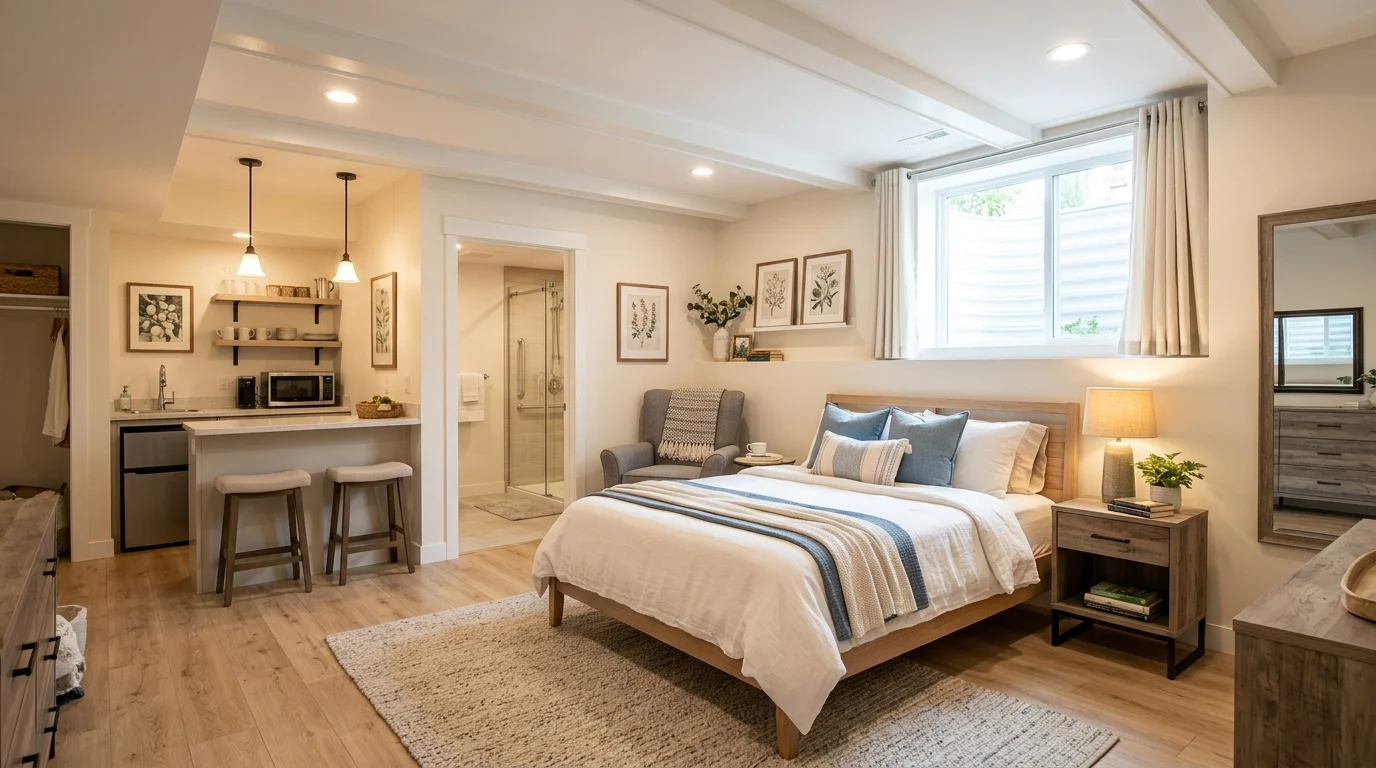
To provide true independence and comfort, a proper in-law suite must function as a self-contained apartment. A well-designed suite should include four primary zones:
- A Private Bedroom: Legally, this space must have a closet and a dedicated emergency escape (such as an egress window).
- A Full Bathroom: Designed with accessibility in mind, ideally featuring a walk-in shower.
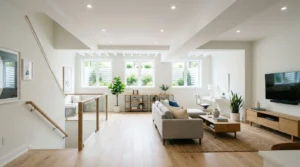
- A Living Area: A comfortable space for a sofa, television, and reading nook, completely separate from the upstairs family room.
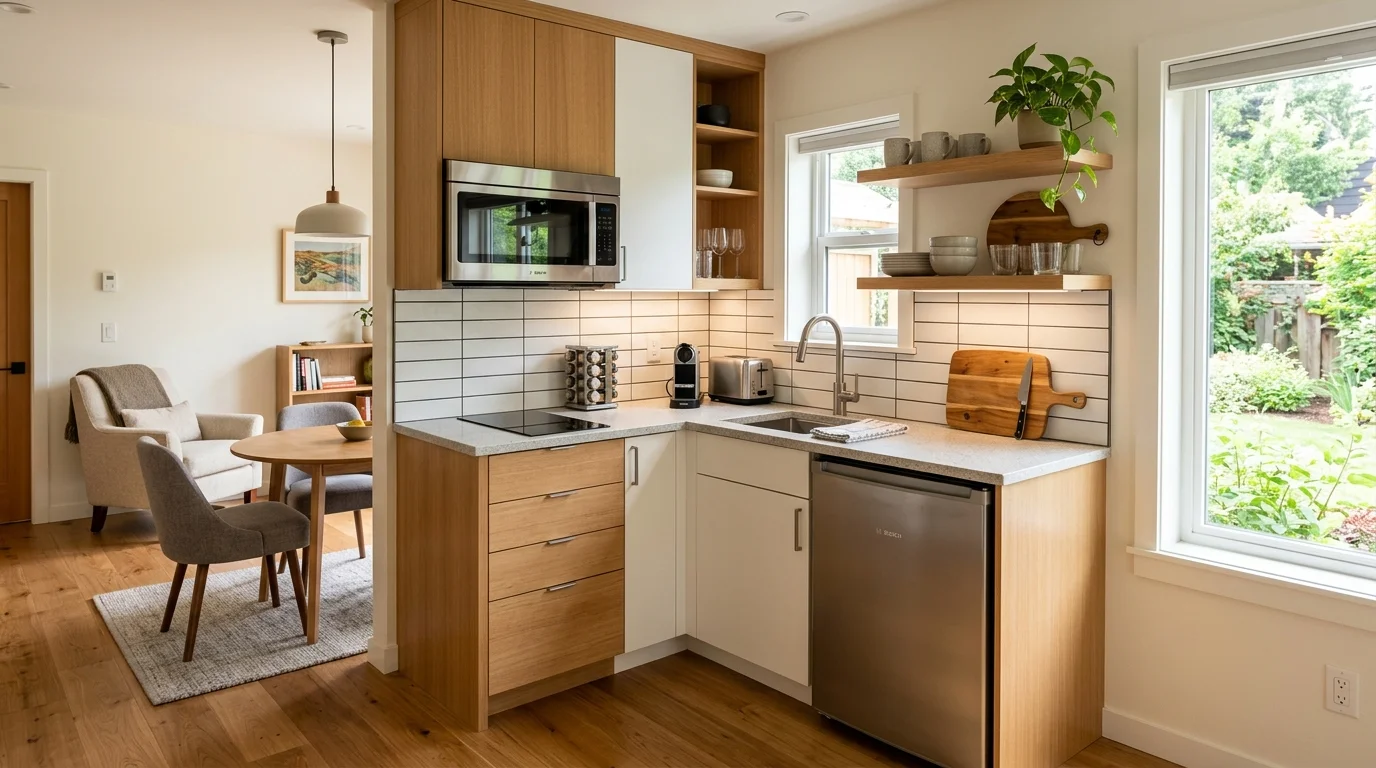
- A Kitchenette: Depending on local zoning laws, this should include a sink, refrigerator, and microwave for basic meal prep.
Universal Design: Planning for Accessibility
The most important factor in designing an in-law suite is ensuring the space is safe and navigable for someone with limited mobility. This philosophy is known as “Universal Design.”
Key Accessibility Upgrades
Curbless Showers: Eliminate the tripping hazard of a traditional bathtub or shower curb. A curbless (zero-entry) shower allows a wheelchair or walker to roll straight in. We also install heavy-duty blocking behind the shower drywall to support future grab bars.
Wider Doorways: Standard interior doors are 30 or 32 inches wide. For an in-law suite, we upgrade all doorways (especially the bathroom) to 36 inches to comfortably accommodate a wheelchair.
Slip-Resistant Flooring: High-gloss tiles are a slipping hazard. We recommend matte Luxury Vinyl Plank (LVP) for the living areas and textured porcelain tiles for the bathroom to ensure maximum traction.
The Walkout Advantage: Independence and Safety
If your basement does not currently have an exterior door, adding a walkout entrance is arguably the most valuable upgrade you can make to an in-law suite.
A walkout provides aging parents with their own private entrance, allowing them to come and go freely without having to navigate the main internal staircase of the house. Furthermore, it floods the suite with natural sunlight, which is crucial for mental well-being and preventing the space from feeling like a dark cellar.
Navigating NJ Zoning: Is It a Kitchen or a Kitchenette?
The most complicated part of building an in-law suite in New Jersey is municipal zoning. If you live in a neighborhood zoned strictly for “single-family residential,” the township wants to ensure you are not secretly building a duplex to rent out to strangers.
The defining line usually comes down to the stove. If you install a 220v electric range or a gas stove, the township classifies the space as a “second kitchen,” which triggers strict Accessory Dwelling Unit (ADU) codes. To bypass the need for a complex zoning variance, many homeowners opt to build a robust kitchenette instead. By utilizing a large sink, a full-size refrigerator, a microwave, and portable induction burners (which do not require hardwired 220v outlets), you can provide full utility without violating single-family zoning laws.
The ROI of an In-Law Suite
| Factor | Traditional Unfinished Basement | Luxury In-Law Suite |
|---|---|---|
| Property Appraisal Value | Does not add to Gross Living Area | Adds massive line-item value (Extra Bed/Bath) |
| Buyer Demographics | Standard families | Highly sought after by multi-generational buyers |
| Alternative Costs | N/A | Saves $60k-$100k+ annually on assisted living |
Frequently Asked Questions
Can I add a laundry room to the in-law suite?
Yes. Adding a stackable washer and dryer is a brilliant way to give your parents complete independence. Since we are already trenching the concrete for the bathroom plumbing, tying in the laundry drains is a highly cost-effective addition during the construction phase.
How do I soundproof the suite from the upstairs?
Privacy goes both ways. We utilize acoustic mineral wool insulation in the ceiling joists and install the ceiling drywall on resilient channels to completely decouple the basement from the main floor, ensuring footsteps and voices do not travel between levels.
Will this increase my property taxes?
Because you are officially adding a bathroom, a legal bedroom, and finished square footage to your home, your property’s assessed value will increase, which will slightly raise your taxes. However, the equity gained far outweighs the tax bump.
Keep Your Family Close and Comfortable
Building an in-law suite requires meticulous planning, accessible design, and flawless execution. Don’t trust your family’s comfort to an amateur. Partner with the design-build professionals at Jazz Construction Group to create a luxurious, safe, and fully permitted living space. Explore our basement renovation services today.
Get a Free In-Law Suite Consultation