A patio is one of the best dollar-for-dollar upgrades you can make to a New Jersey backyard — but “pour a slab” is only one of several ways to get there, and it’s not always the best one. Pavers, stamped concrete, natural stone, and even gravel each give you a different look, price point, and maintenance commitment.
This guide breaks down the most common patio and hardscaping materials used on New Jersey properties in 2026 — real installed costs, lifespan, and where each one makes the most sense — so you can plan your outdoor space with a clear budget in mind.
In This Guide
Key Takeaways
- Pavers offer the best combination of durability, repairability, and look — individual pavers can be replaced without redoing the whole patio.
- Poured and stamped concrete are the most budget-friendly solid-surface options, but can crack over time with NJ’s freeze-thaw cycles.
- Natural stone and flagstone are the premium choice — genuinely can last up to 100 years with proper care.
- Gravel is the most affordable option by far, good for informal seating areas or fire pit patios.
- Proper base preparation (compacted gravel sub-base) matters more than the surface material for long-term durability.
Why Patio Material Matters in NJ
New Jersey’s freeze-thaw winters are hard on any hardscape surface — water gets into small cracks, freezes, expands, and widens them a little more every year. A patio built on a poorly compacted base, or made from a material that can’t flex slightly with ground movement, will crack and heave faster here than in a milder climate.
The material you choose — and just as importantly, how it’s installed — determines whether your patio stays flat and crack-free for decades, or needs repair within the first few winters.
Patio Materials Compared
Here’s how the most common patio and hardscaping materials used on New Jersey properties stack up.
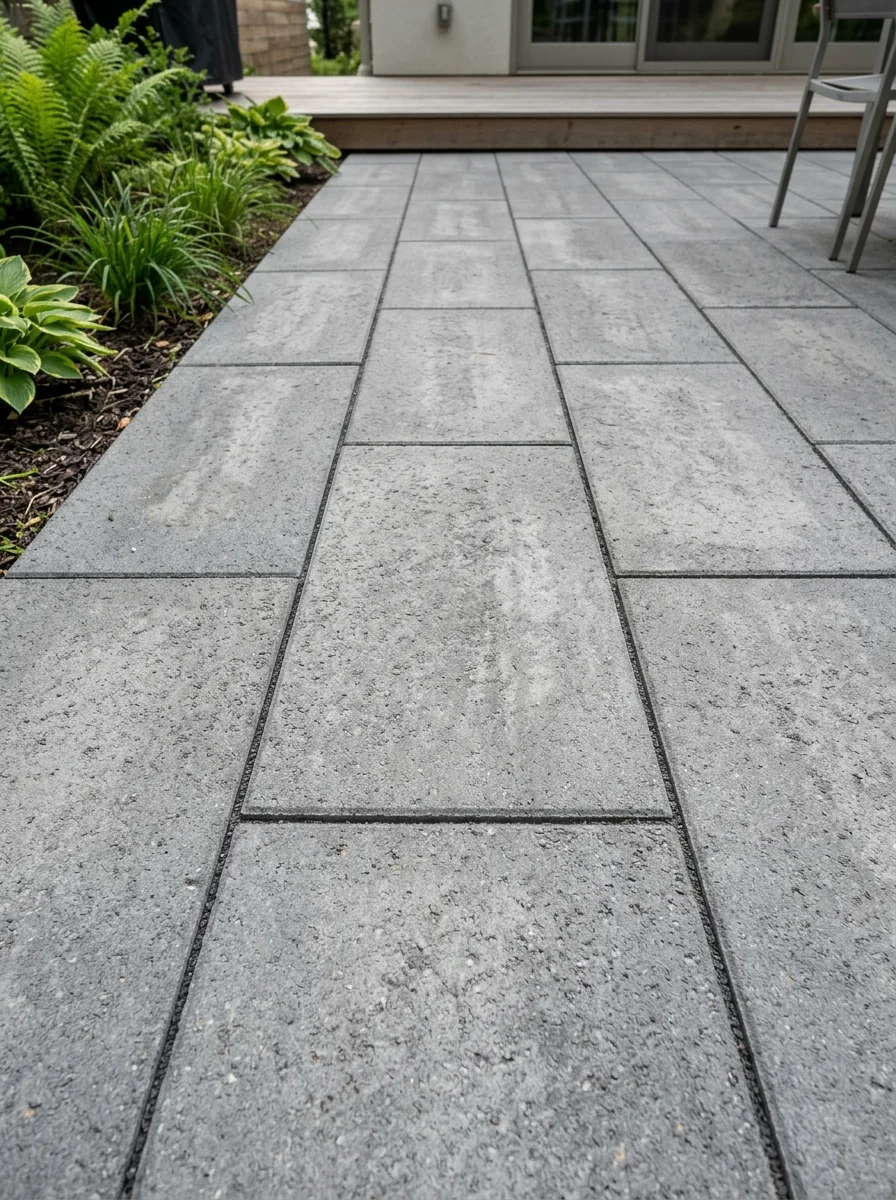
Concrete & Brick Pavers
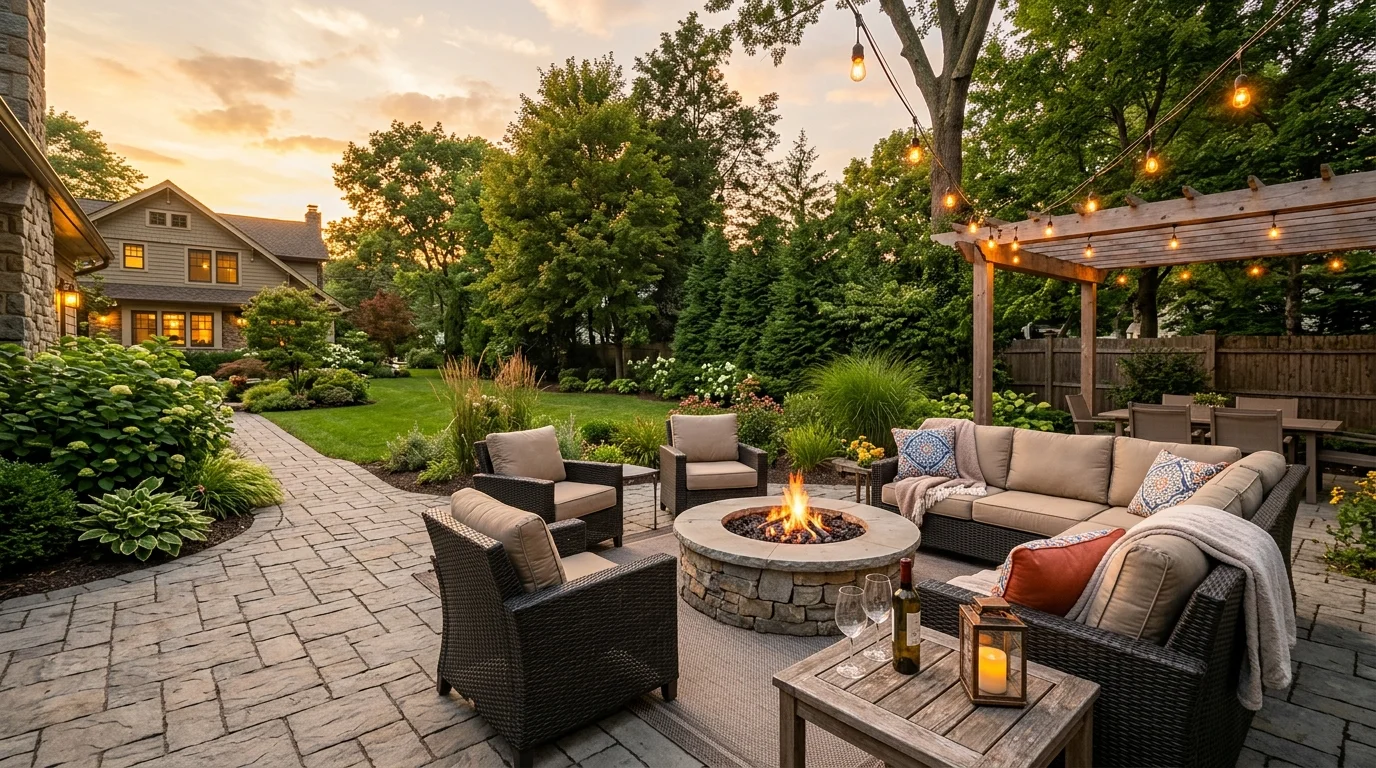
Individual concrete or brick units laid over a compacted gravel and sand base. Pavers are the most popular patio choice in New Jersey because they flex slightly with ground movement instead of cracking, and if one unit ever chips or stains, it can be popped out and replaced without touching the rest of the patio.
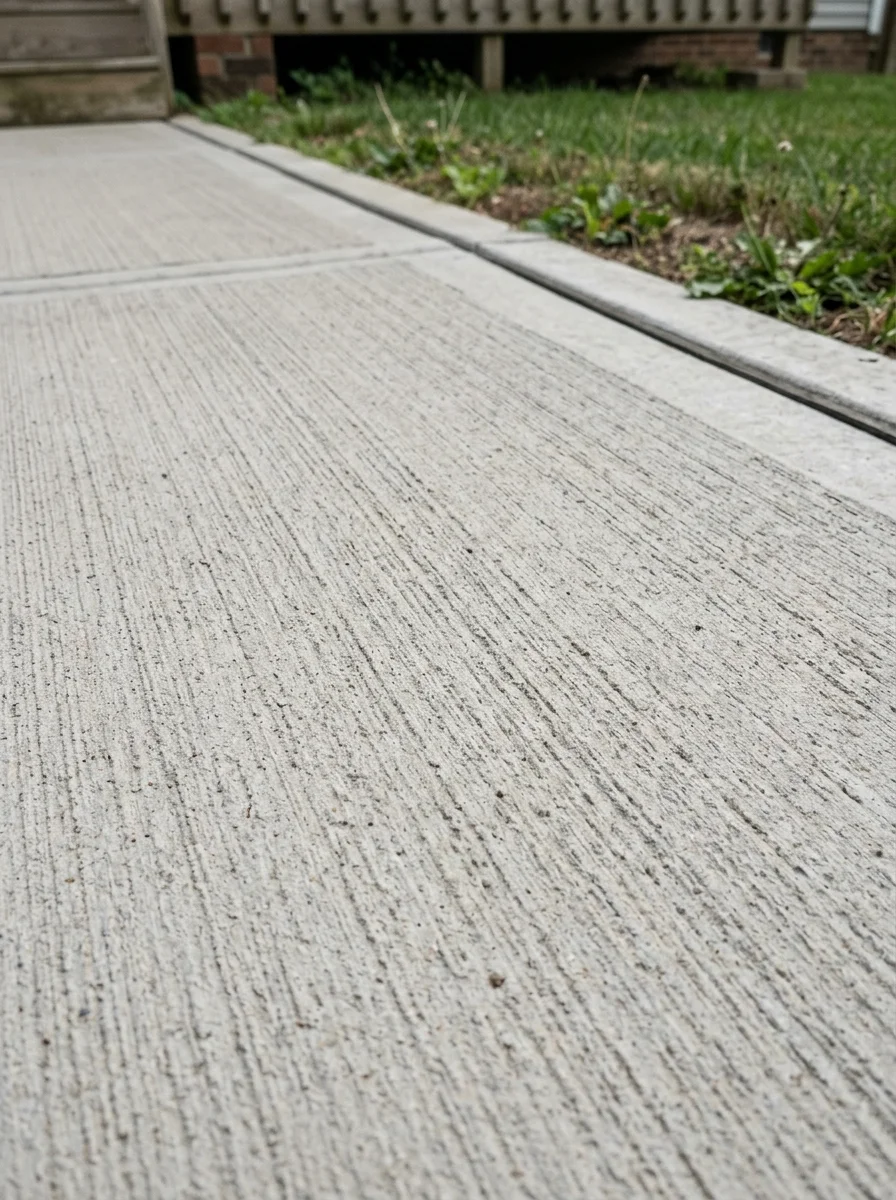
Poured Concrete
A single poured slab, the most budget-friendly solid-surface patio option. It’s a clean, simple look, but as one continuous slab it’s more prone to visible cracking over time from freeze-thaw movement than a jointed surface like pavers — proper base prep and control joints reduce this risk significantly.
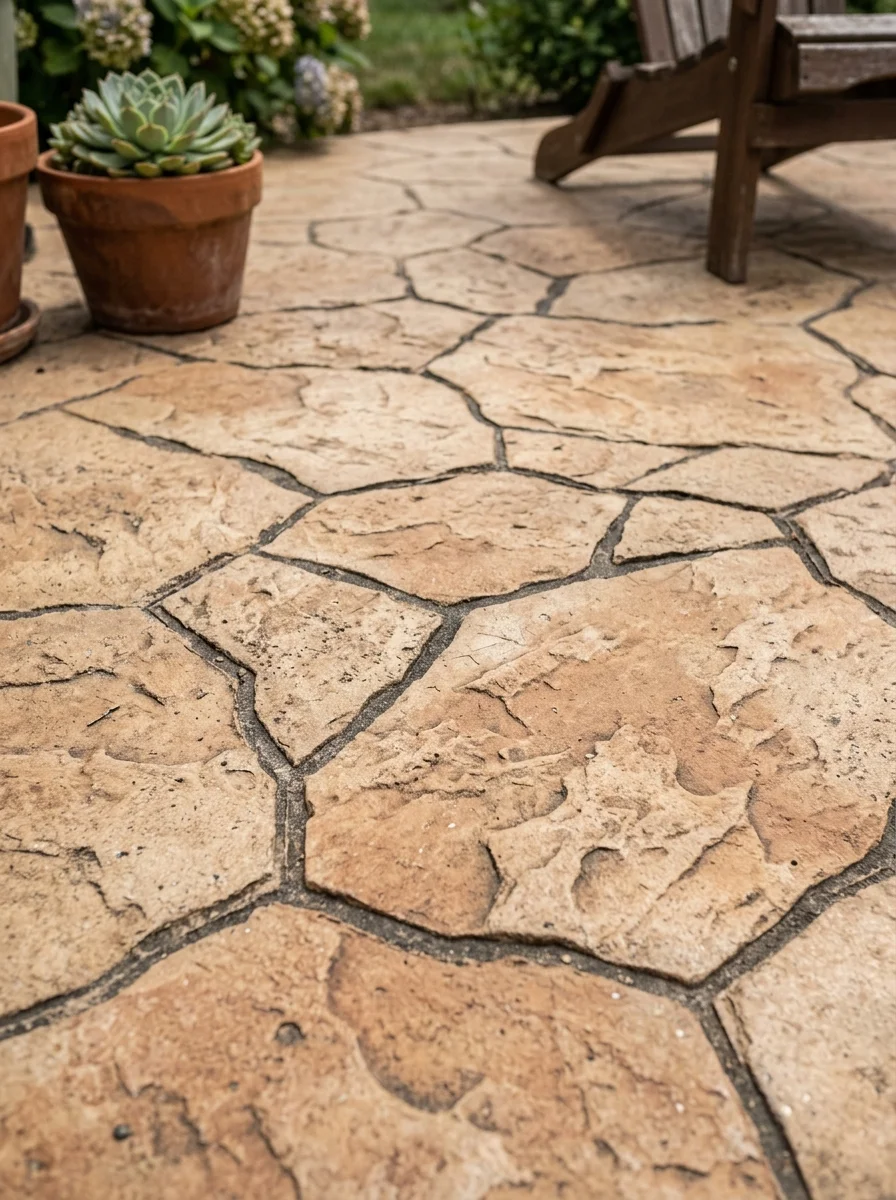
Stamped Concrete
Poured concrete stamped and colored with a pattern to mimic the look of natural stone, brick, or slate at a fraction of the cost. It’s a strong middle-ground option — more visual interest than plain concrete, without the full price tag of real stone — though it carries the same freeze-thaw cracking considerations as any poured slab.
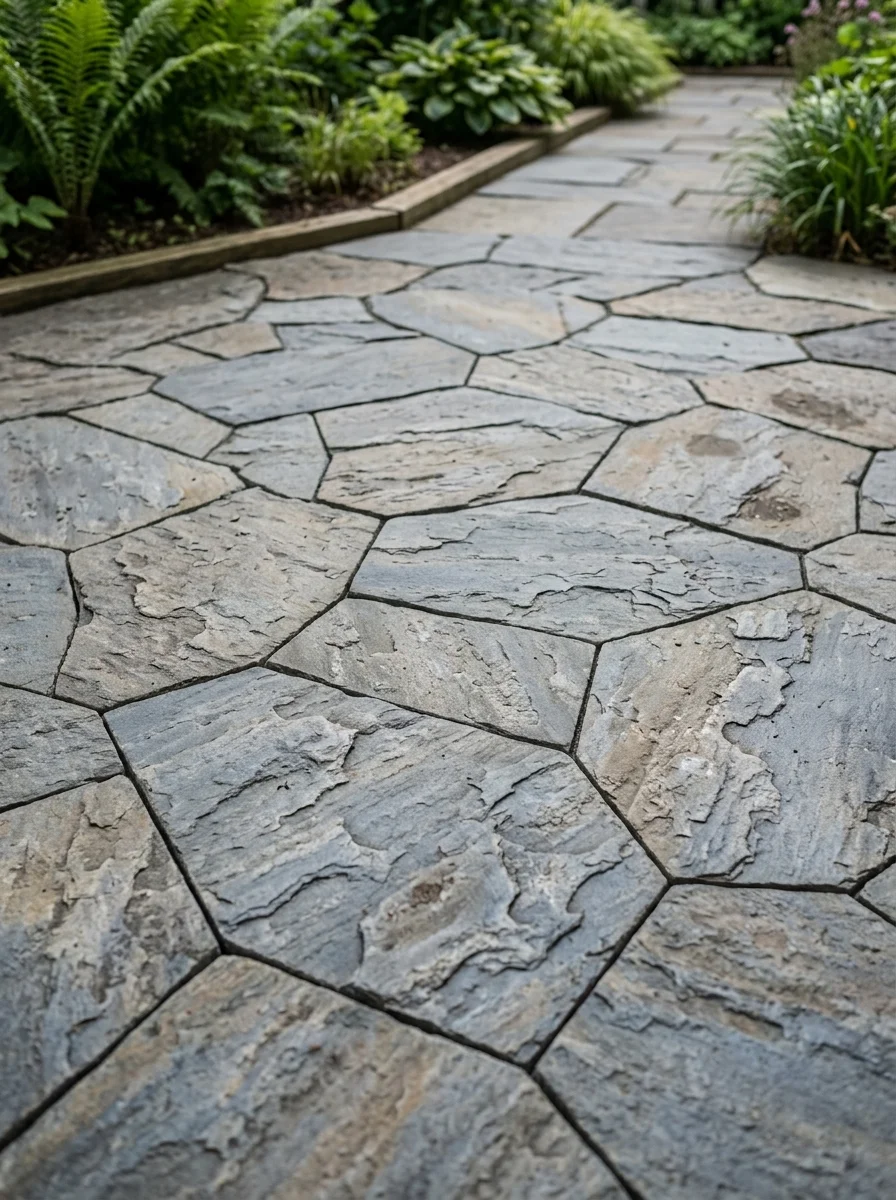
Natural Stone & Flagstone
Quarried stone — bluestone, flagstone, or fieldstone are common in New Jersey — cut into irregular or uniform pieces and set in sand, mortar, or gravel. It’s the most expensive patio material, and also the most durable, with a genuinely unique, natural look no manufactured product fully replicates.
Gravel
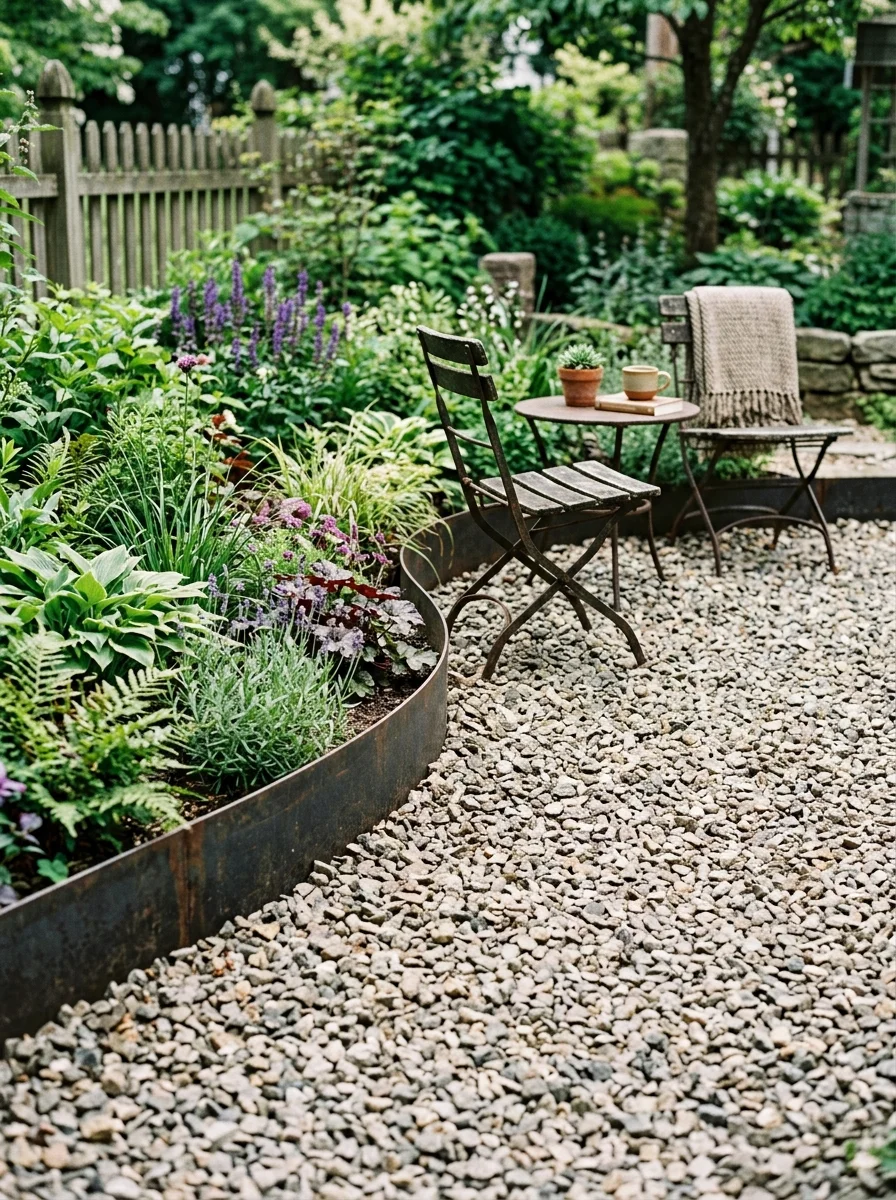
Crushed stone or pea gravel contained by a steel or paver border, often used for fire pit areas, informal seating spaces, or as a lower-cost complement to a paver or stone patio. It drains exceptionally well and installs quickly, though it needs periodic top-ups and isn’t ideal for furniture with narrow legs.
Note: Many New Jersey backyards combine materials — a paver or stone patio for the main seating area with a gravel border around a fire pit, for example. Our outdoor living & hardscaping team can help you plan a space that mixes materials for the right look and budget.
Not sure which patio material fits your yard and budget?Get a free, no-obligation outdoor living consultation.
Get My Free QuoteCost & Lifespan Comparison
Here’s a side-by-side look to help you budget for a typical 300 sq. ft. patio in New Jersey.
| Material | Cost per Sq. Ft. | 300 Sq. Ft. Patio Cost | Lifespan |
|---|---|---|---|
| Gravel | $0.85 – $2.80 | $255 – $840 | Needs periodic top-up |
| Poured Concrete | $5 – $15 | $1,500 – $4,500 | 25 – 50 years |
| Stamped Concrete | $8 – $19 | $2,400 – $5,700 | 25 – 50 years |
| Concrete/Brick Pavers | $10 – $17 | $3,000 – $5,100 | Up to 100 years |
| Natural Stone / Flagstone | $15 – $35 | $4,500 – $10,500 | Up to 100 years |
Note: These are patio surface and installation ranges — grading, drainage work, steps, seat walls, and lighting are additional. For a project-specific number, our team will provide a full quote after a site visit.
How to Choose the Right Patio Material
A few questions can quickly narrow the decision:
- What’s your budget? Gravel and poured concrete are the most affordable ways to get a functional outdoor space. Pavers and natural stone cost more but deliver noticeably more durability and resale appeal.
- Do you want the ability to repair sections individually? Pavers can be popped out and replaced one at a time if damaged or stained. A poured or stamped concrete slab requires patching or full replacement if it cracks badly.
- How long do you plan to stay in the home? If this is a forever home, natural stone or pavers spread their higher upfront cost over decades. For a shorter horizon, stamped concrete offers a lot of visual impact for less.
- Is drainage a concern in your yard? Gravel and permeable paver systems handle water runoff better than a solid concrete slab, which matters in low-lying New Jersey yards.
- Are you also building or updating a deck? Many of our projects combine a deck and patio in one backyard renovation — see our decking materials guide if you’re planning both.
Frequently Asked Questions
What’s the best patio material for New Jersey’s climate?
Pavers are generally the best all-around choice for New Jersey’s freeze-thaw climate. Because they’re individual units rather than one continuous slab, they flex slightly with seasonal ground movement instead of cracking, and any damaged piece can be replaced without redoing the whole patio.
Will my concrete patio crack in New Jersey winters?
All poured concrete carries some risk of cracking over time from freeze-thaw cycles, but a properly compacted base, adequate slab thickness, and correctly placed control joints significantly reduce that risk. Quality installation matters as much as the material itself.
How long does it take to install a patio?
Most standard-size New Jersey patios take 2–5 days to install, depending on size, material, and whether significant grading or drainage work is needed. Poured and stamped concrete also need several days of cure time before they can be walked on regularly.
Do pavers need to be resealed?
Sealing isn’t strictly required, but it’s recommended every 2–3 years to protect against staining, resist weed growth in the joints, and keep the color looking fresh. Unsealed pavers will still last decades, they’ll just show wear and staining sooner.
Do I need a permit to build a patio in New Jersey?
It depends on your township and the patio’s height and size — many at-grade patios don’t require a permit, but raised patios, those attached to the home, or larger projects often do. Our team confirms local requirements before work begins.
Ready to Build Your New Patio?
From material selection to proper base preparation, our team handles every step of your patio or hardscaping project — with a clear, upfront quote before any work begins.
Fill out the form and get a custom patio estimate for your home today.