The decking material you choose determines almost everything about your deck’s next 20 years — how often you’re out there staining it, how it feels underfoot in August, and whether it’s still looking good a decade from now. New Jersey’s humid summers and freeze-thaw winters make that choice matter even more than it does in milder climates.
This guide breaks down the most common decking materials used on New Jersey decks in 2026 — real installed costs, lifespan, and maintenance — so you can pick the right one for your budget and how you actually want to spend your weekends.
In This Guide
Key Takeaways
- Pressure-treated wood is the most affordable decking material but needs restaining every 2–3 years to hold up in NJ’s climate.
- Composite decking (like Trex) costs more upfront but is essentially maintenance-free for 25–30 years.
- PVC decking is the most water- and stain-resistant option, ideal for pool decks and low-lying yards.
- Ipe hardwood is the premium choice — dense, naturally rot-resistant, and can last up to 75 years.
- Pairing any decking material with a helical pier foundation lets us start building the same day.
Why Decking Material Matters in NJ
A deck in New Jersey lives outside through real winters and humid summers — freeze-thaw cycles that split and warp lower-grade lumber, UV exposure that fades color, and moisture that invites mold and rot if a material isn’t rated to handle it. The material you choose determines not just how the deck looks on day one, but how much time and money you’ll put into it every single year after.
It also affects resale: a tired, gray, splintering wood deck reads as deferred maintenance to a buyer, while a clean composite or PVC deck reads as a finished, move-in-ready outdoor space.
Decking Materials Compared
Here’s how the most common decking materials used on New Jersey decks stack up.
Pressure-Treated Wood
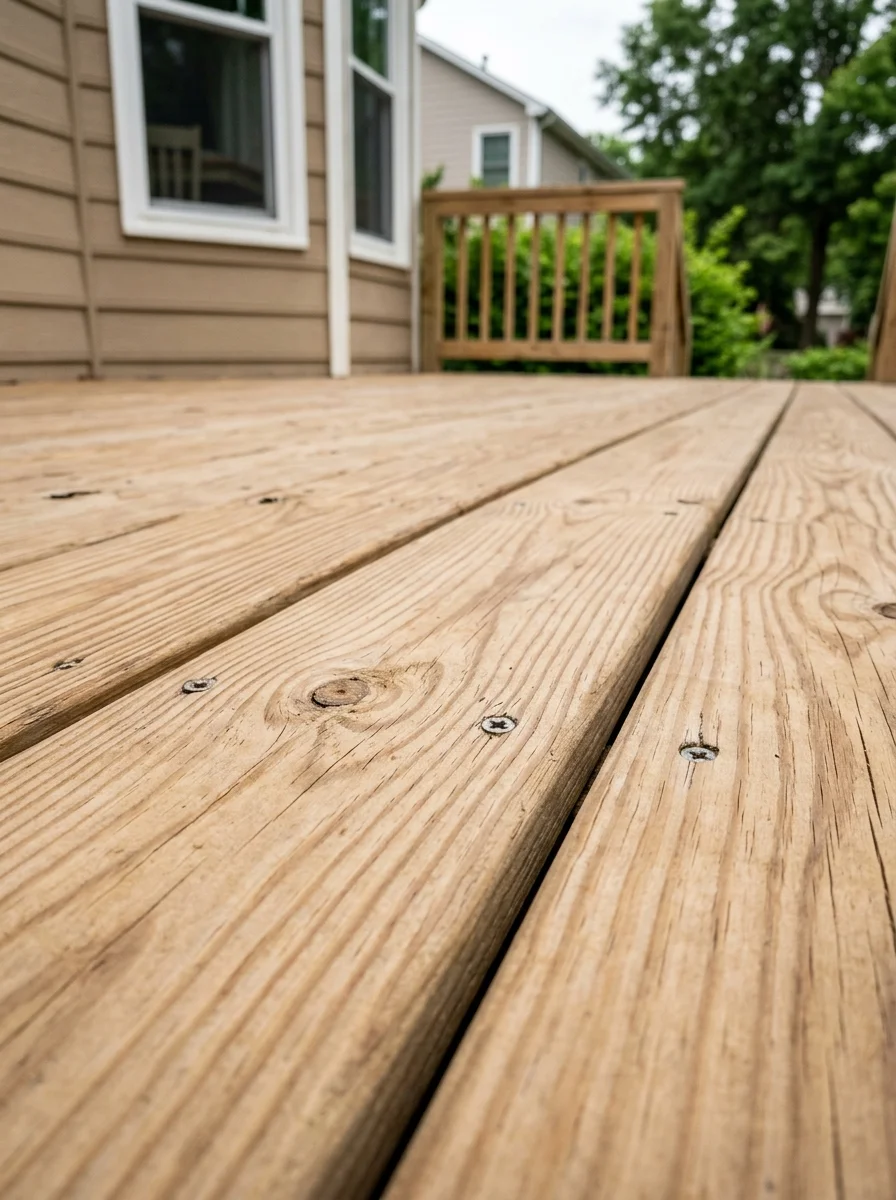
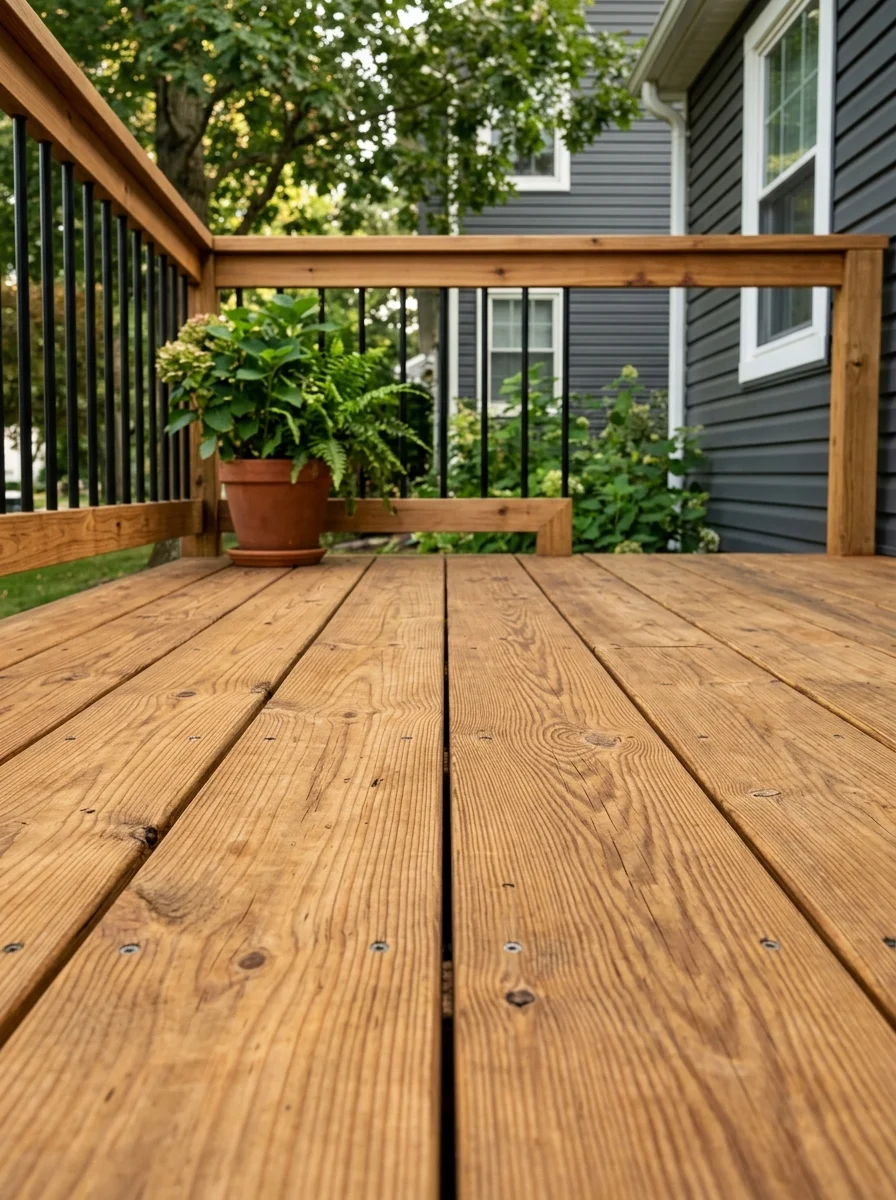
Southern yellow pine treated with chemical preservatives to resist rot and insects. It’s the most budget-friendly decking material and the most common choice for a first deck, but it needs regular cleaning and restaining to keep it from graying, splintering, and cracking in NJ’s humidity and winters.
Cedar
A step up from pressure-treated pine, cedar has natural oils that resist rot and insects without chemical treatment, plus a warmer grain and color. It still needs periodic staining or sealing to keep its look and prevent weathering, but many homeowners prefer its appearance and lower chemical content over treated lumber.
Composite Decking
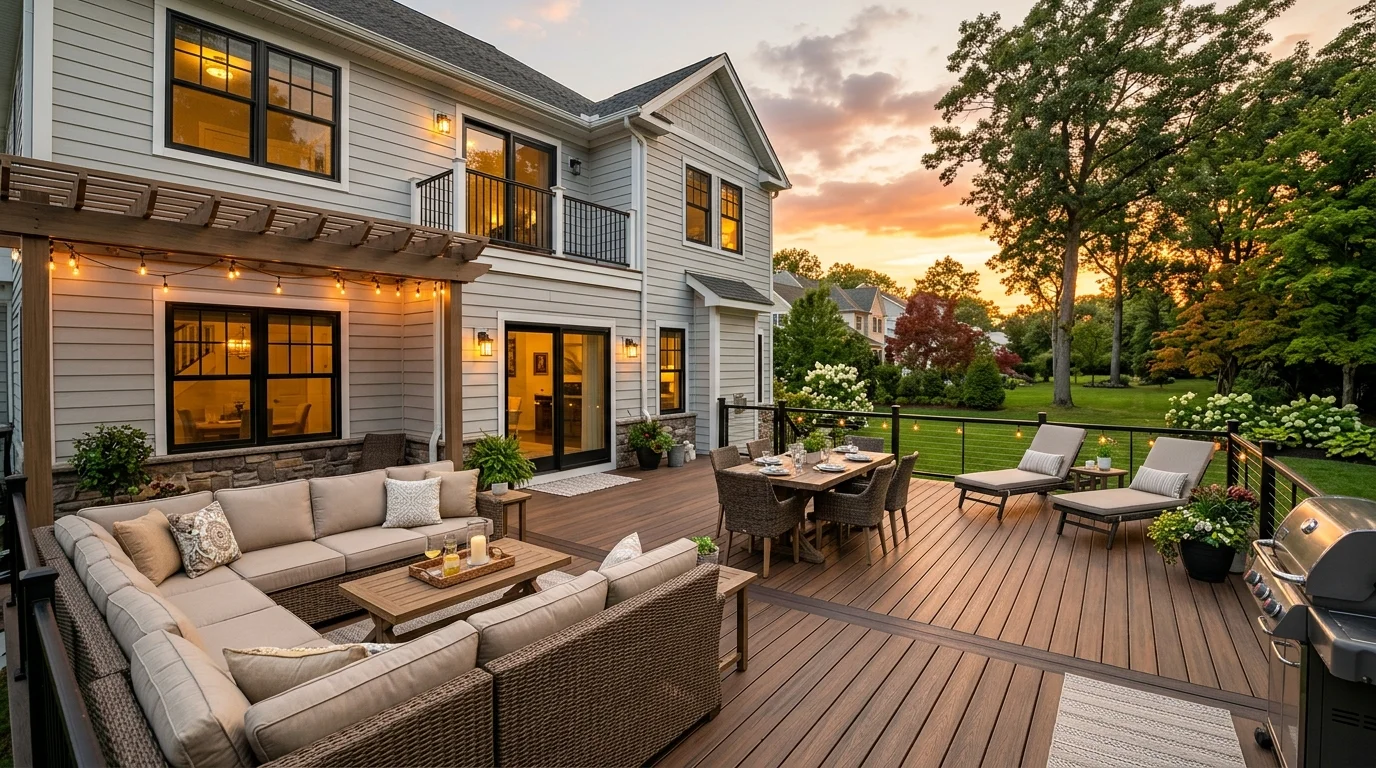
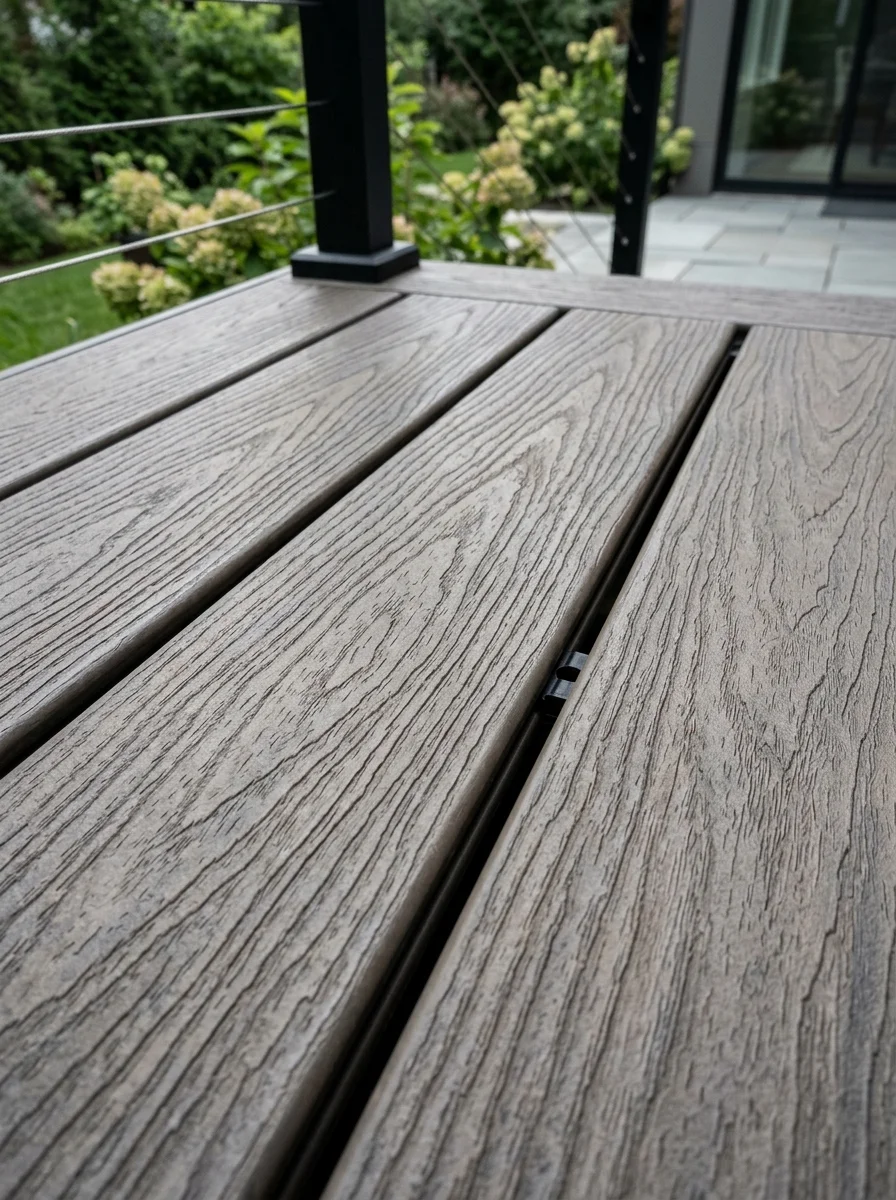
Made from a blend of wood fibers and recycled plastic, composite decking (like our partner brand Trex) never needs staining or sealing — just an occasional wash. It resists fading, staining, and splintering far better than any wood option, which is why it’s become the most common upgrade we install on New Jersey decks.
PVC Decking
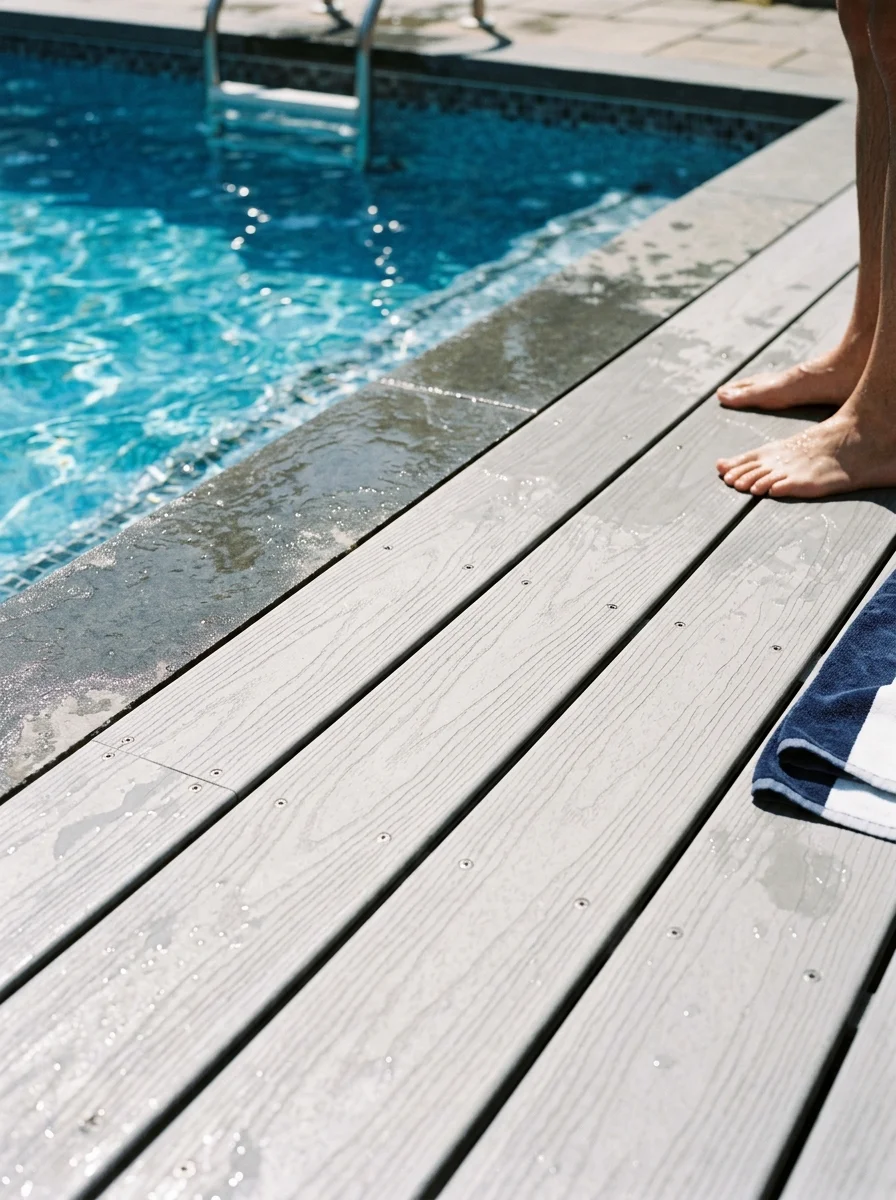
100% synthetic PVC boards with no wood fiber at all, making them fully waterproof and immune to rot, mold, and insects. It’s the top choice for pool decks, low-lying yards, or anywhere moisture is a constant concern, and it stays cooler underfoot than composite in direct summer sun.
Ipe & Premium Hardwood
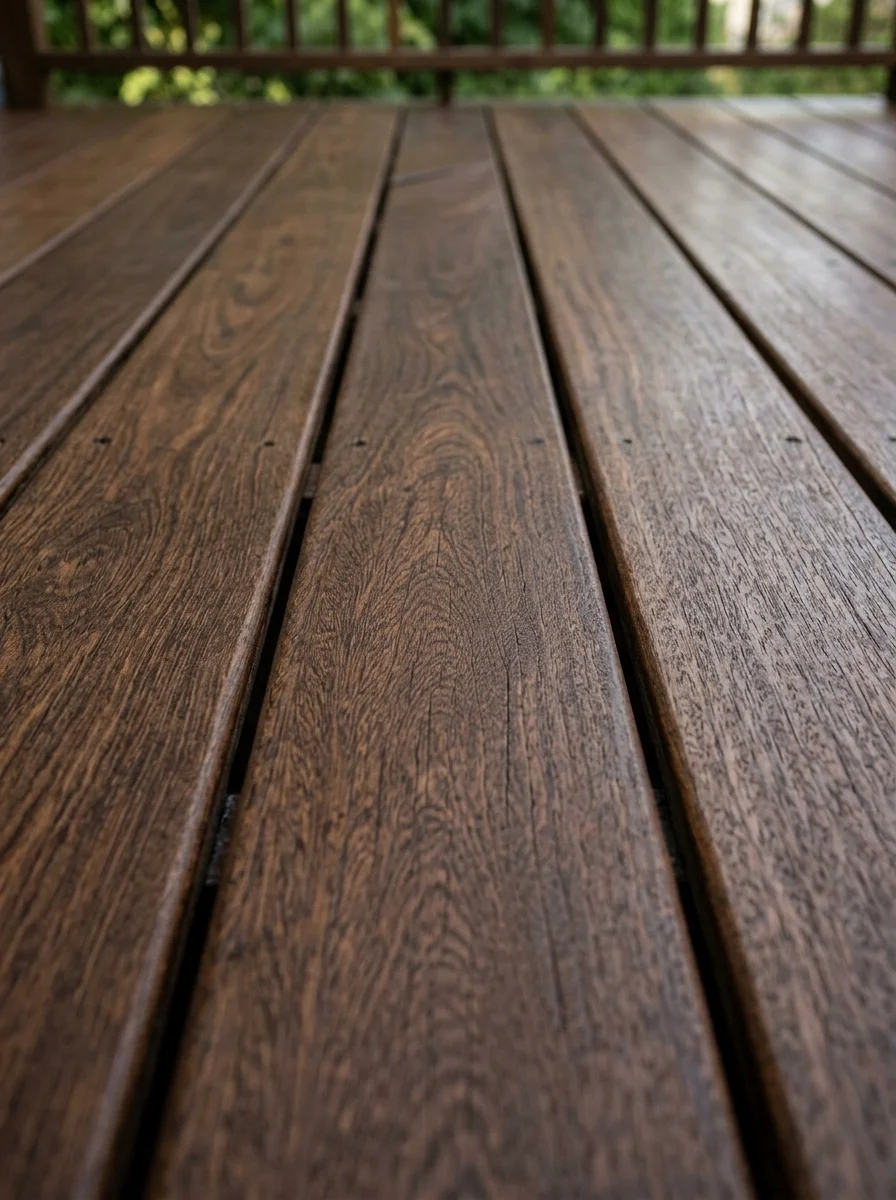
A dense Brazilian hardwood so naturally rot- and insect-resistant it doesn’t require chemical treatment, with a rich brown tone that rivals any composite for looks. It’s the most expensive decking material by far, and it’s genuinely built to outlast the home it’s installed on with minimal upkeep.
Note: Whatever decking material you choose, the substructure underneath matters just as much — see our helical pier foundation guide to learn how we build a faster, more stable base for your new deck.
Not sure which decking material fits your yard and budget?Get a free, no-obligation deck consultation.
Get My Free QuoteCost & Lifespan Comparison
Here’s a side-by-side look to help you budget for a typical 300 sq. ft. deck in New Jersey.
| Material | Cost per Sq. Ft. | 300 Sq. Ft. Deck Cost | Lifespan |
|---|---|---|---|
| Pressure-Treated Wood | $15 – $25 | $4,500 – $7,500 | 15 – 20 years |
| Cedar | $20 – $35 | $6,000 – $10,500 | 20 – 25 years |
| PVC | $25 – $45 | $7,500 – $13,500 | 30 – 50 years |
| Composite | $30 – $55 | $9,000 – $16,500 | 25 – 30 years |
| Ipe / Premium Hardwood | $50 – $70 | $15,000 – $21,000 | 50 – 75 years |
Note: These are decking material and installation ranges only — framing, railings, stairs, and foundation work (footings or helical piers) are additional. For a full project number, see our complete deck cost guide.
How to Choose the Right Decking
A few questions can quickly narrow the decision:
- How much maintenance are you willing to do? If you don’t want to restain a deck every 2–3 years, composite or PVC is worth the higher upfront cost. If you enjoy the upkeep and want the lowest entry price, pressure-treated wood is fine.
- Is the deck near a pool or low-lying area? PVC’s full waterproofing makes it the strongest choice where standing water or splashing is a regular factor.
- How long do you plan to stay in the home? Composite and PVC pay off best over a long ownership horizon. If you’re planning to sell within a few years, pressure-treated wood may be the more cost-efficient choice.
- What’s supporting the deck? Pairing your decking choice with the right foundation — traditional footings or helical piers — affects both your timeline and long-term stability.
- Do you want railings and lighting to match? Most composite and PVC brands (including Trex) offer matching railing systems, post caps, and integrated lighting, which is worth planning for upfront rather than retrofitting later.
Frequently Asked Questions
Is composite decking worth the extra cost over wood?
For most homeowners planning to stay long-term, yes. Composite costs more upfront but eliminates the recurring cost of staining and sealing — often $300–$800 every 2–3 years for a wood deck — and lasts 25–30 years with minimal upkeep, which narrows the lifetime cost gap significantly.
How often does a wood deck need to be resealed in New Jersey?
Most pressure-treated or cedar decks in New Jersey’s climate need cleaning and resealing every 2–3 years to prevent graying, splintering, and moisture damage from humid summers and freeze-thaw winters.
What’s the difference between composite and PVC decking?
Composite decking blends wood fibers with recycled plastic, giving it a warmer, more wood-like look and feel. PVC decking is 100% synthetic with no wood content at all, making it fully waterproof and slightly more expensive in most product lines — a common choice for pool decks and damp areas.
How long does it take to build a new deck?
Most standard-size New Jersey decks take 1–2 weeks from foundation to finished railings, depending on size, material, and weather. Using a helical pier foundation instead of poured concrete footings can shave several days off the front end of the timeline.
Do I need a permit to build a deck in New Jersey?
Yes, nearly every New Jersey municipality requires a permit for a new deck, particularly if it’s attached to the home or elevated above a certain height. Our team handles the permitting process as part of every deck project.
Ready to Build Your New Deck?
From material selection to a fast, stable foundation, our team handles every step of your deck project — with a clear, upfront quote before any work begins.
Fill out the form and get a custom deck estimate for your home today.