A backsplash does two jobs: it protects the wall behind your sink and range from splashes and grease, and it is one of the most visible design choices in the kitchen. It is also a relatively small surface, which makes it a great place to add style without a huge budget.
This guide compares the most common kitchen backsplash materials for New Jersey homes in 2026, with costs, upkeep, and where each one makes the most sense.
In This Guide
Key Takeaways
- Ceramic and porcelain tile are the affordable, easy-to-clean workhorses, and subway tile remains a classic.
- Glass and metal add shine and a modern look, but cost more and show fingerprints and water spots.
- Natural stone is beautiful but porous, so it needs sealing, while a full slab skips grout lines altogether.
- Because a backsplash covers only a small area, upgrading the material often adds style for a modest total cost.
Why Backsplash Material Matters
Behind the sink and stove, a backsplash faces water, grease, steam, and heat. The material you pick decides how easy it is to wipe clean, how it holds up near the range, and how much upkeep the grout and finish need.
A backsplash works best when it is chosen along with your countertops and cabinets. If you’re planning a full kitchen update, our team can help you coordinate the whole design.
Backsplash Materials Compared
Here’s how the five most common backsplash materials stack up.
Ceramic & Porcelain Tile
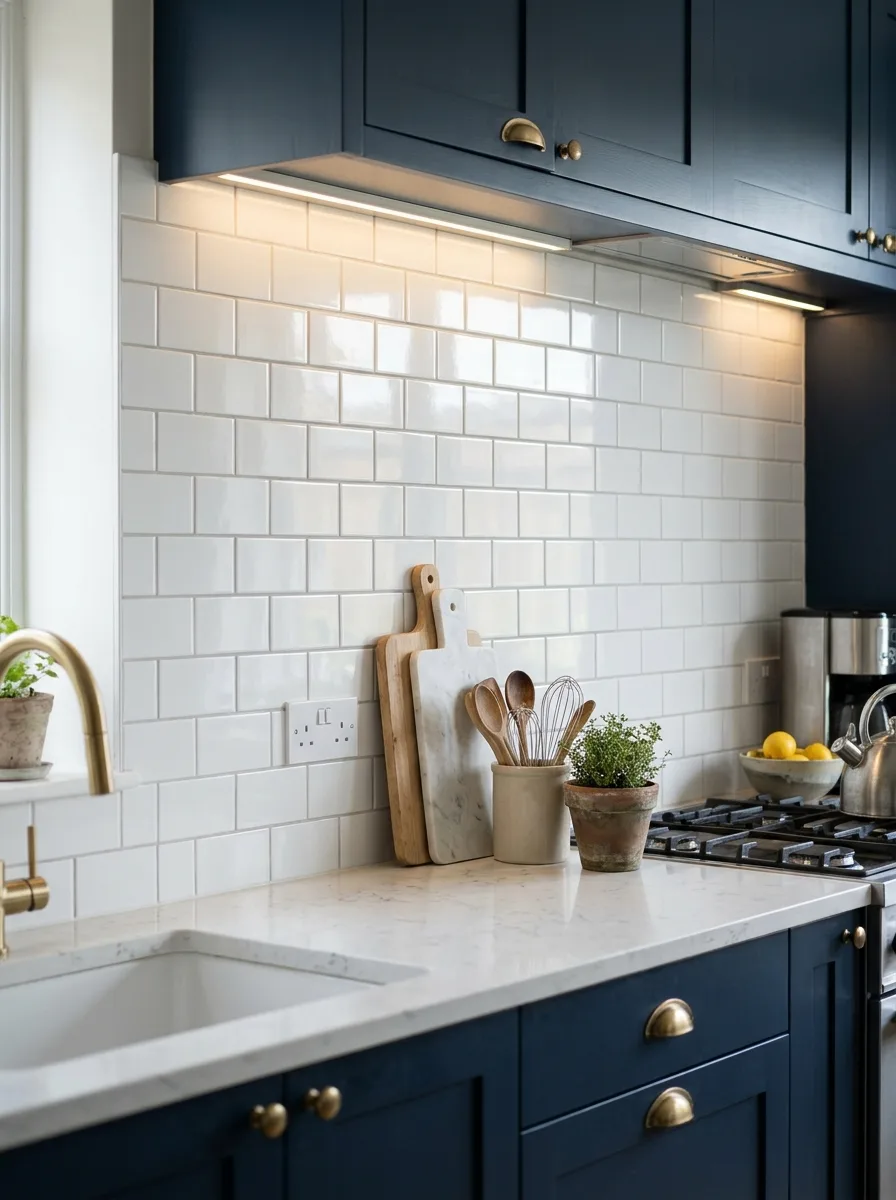
The most popular and practical choice. Ceramic is the cheapest option, porcelain is denser and tougher, and both are available in endless sizes, colors, and patterns. Grout lines need occasional cleaning and sometimes sealing.
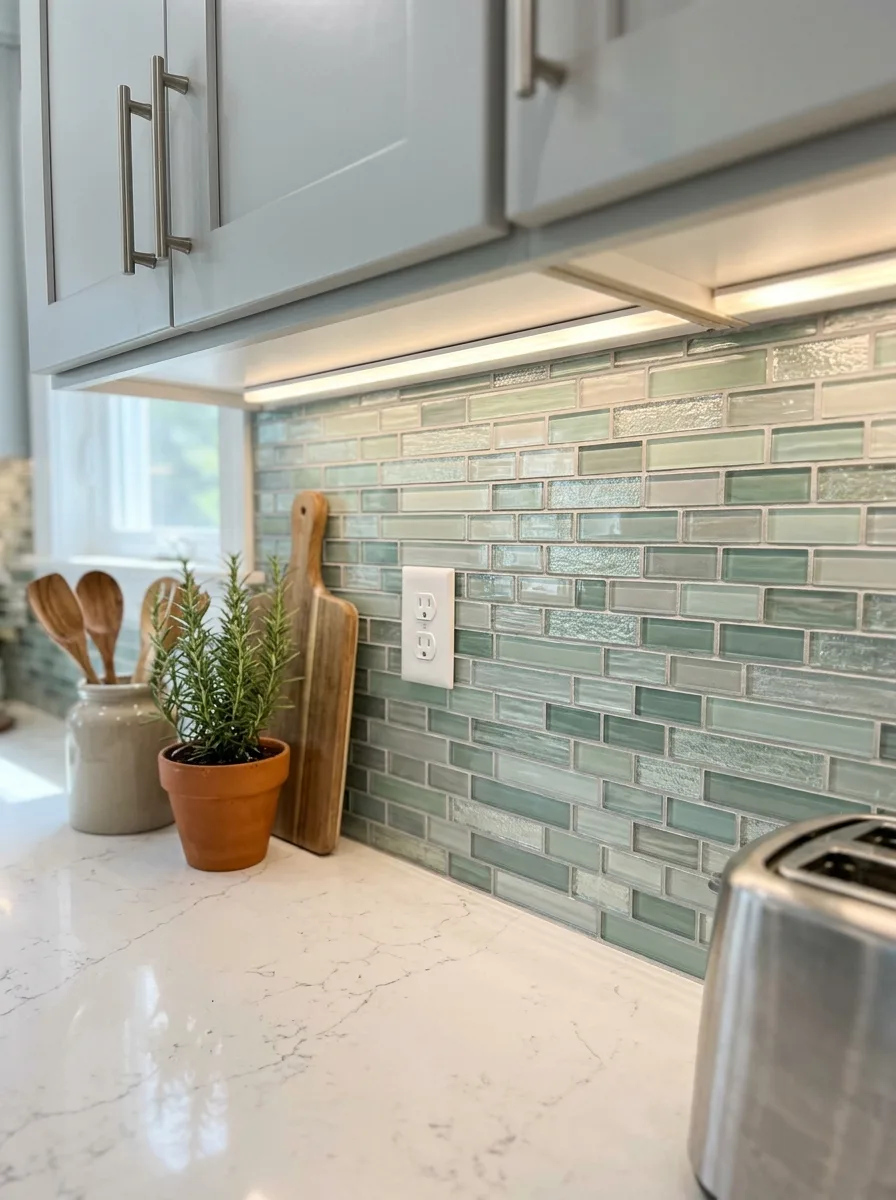
Glass Tile
Glass bounces light around the kitchen and wipes clean easily. It costs more than ceramic and porcelain and can show fingerprints and water spots, and it needs a careful, skilled install.
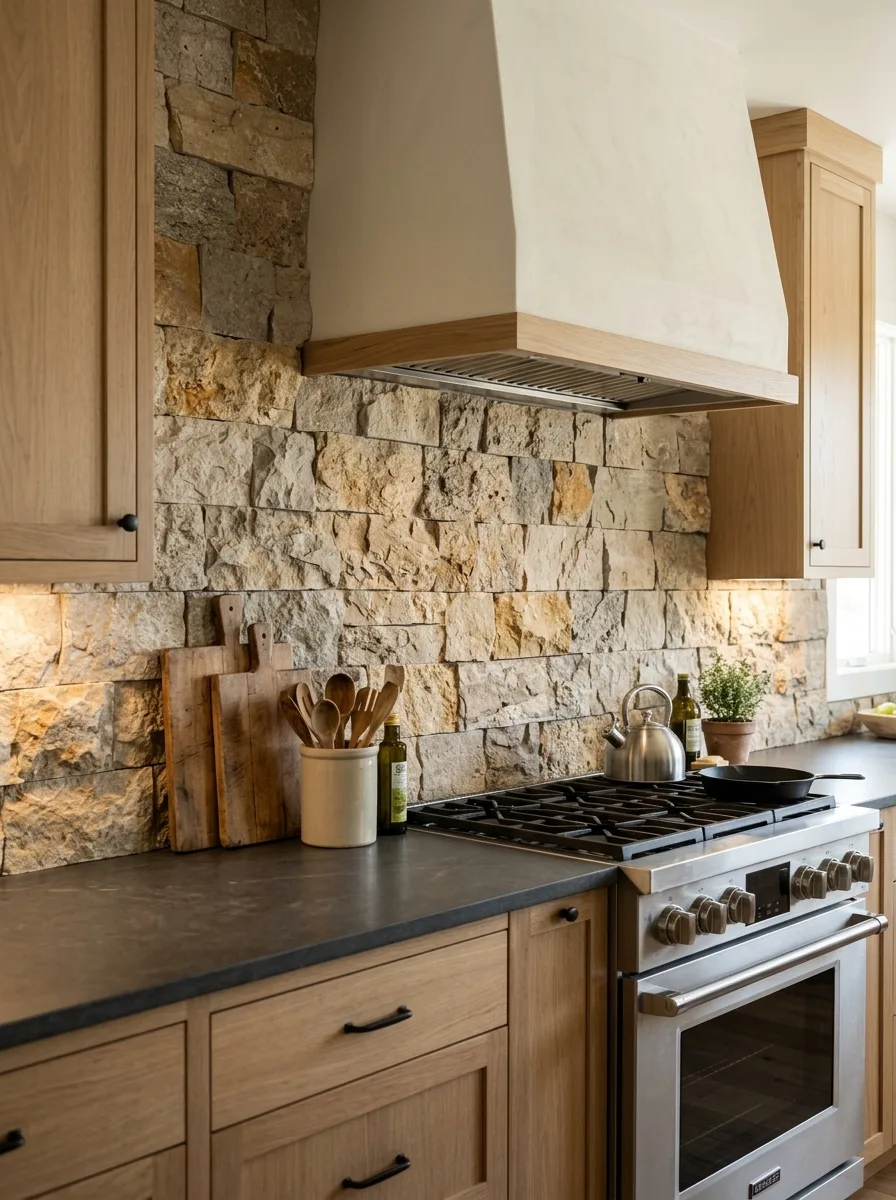
Natural Stone
Marble, travertine, and similar stone bring one-of-a-kind character. Stone is porous and heavier to install, so it needs sealing and can stain or etch if neglected.
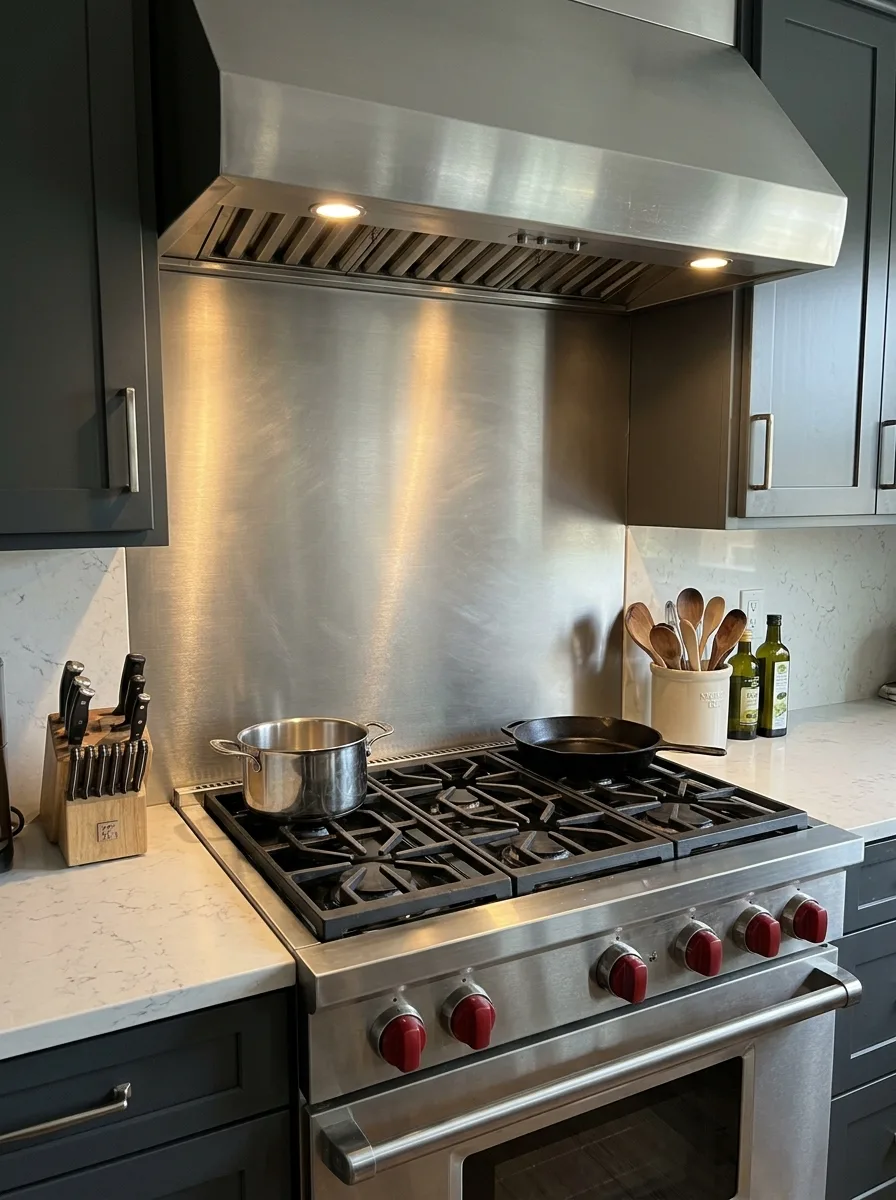
Metal & Stainless Steel
A sleek, easy-to-sanitize choice that pairs well with stainless appliances and handles heat behind a range. Metal can scratch and dent, and it shows fingerprints and water marks.
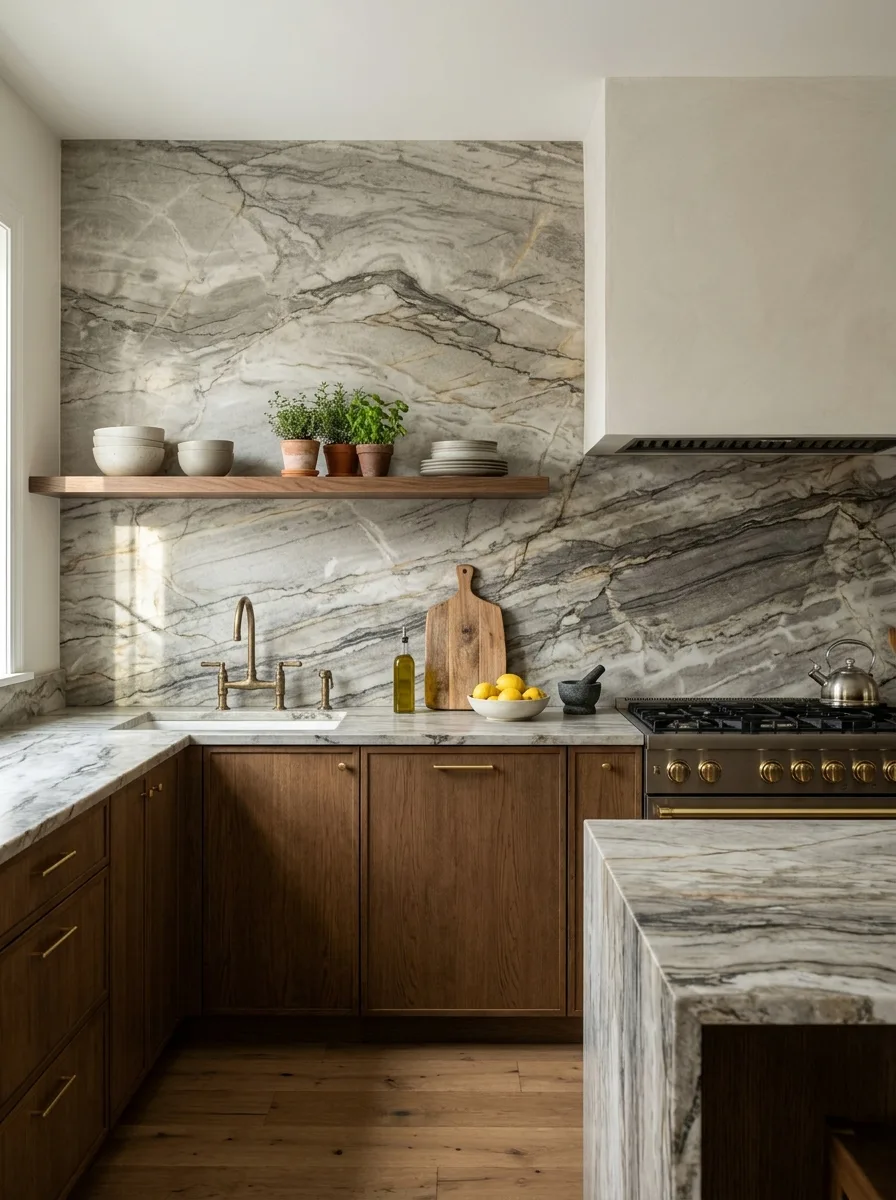
Slab Backsplash
A single run of stone, often matching the countertop, with few or no grout lines to clean. Costs depend on the stone and the thickness of the slab, with premium marble at the high end.
Note: Material prices are only part of the cost. Installed pricing also includes labor, grout, sealing, and cleanup, and stone and complex patterns cost more to install. Prices vary by source.
Not sure which backsplash fits your kitchen and budget?Get a free, no-obligation consultation and quote.
Get My Free QuoteCost Comparison
Here’s a side-by-side look at material costs and what each choice means for your upkeep.
| Material | Material Only (per Sq. Ft.) | Upkeep | Heat Behind Range | Look |
|---|---|---|---|---|
| Ceramic & Porcelain | $1 – $9 | Clean grout | Good | Classic, versatile |
| Glass | $8 – $30 | Wipe water spots | Good | Bright, modern |
| Natural Stone | $7 – $45 | Seal regularly | Good | Warm, natural |
| Metal & Stainless | $10 – $65 | Polish, show marks | Excellent | Industrial, sleek |
| Slab | $45 – $130 | Low | Good | Seamless, bold |
Note: Professionally installed backsplashes commonly run about $15–$45 per square foot including labor, with a typical project around $600–$1,500. Removing an old backsplash adds about $3–$6 per square foot. Sources vary, and the Northeast tends to run higher. Our team provides a full quote after a site visit.
How to Choose the Right Backsplash
A few questions can quickly narrow the decision:
- What’s your budget? Ceramic and porcelain tile are the most affordable. Glass, stone, metal, and slab cost more.
- How much do you cook? Behind a busy range, choose something that wipes clean easily and handles heat, such as porcelain, ceramic, or metal.
- How much upkeep will you accept? Natural stone needs sealing, and grout lines need cleaning. A slab or large-format tile reduces grout.
- What goes with your countertops? Busy countertops pair best with a calmer backsplash, and a simple countertop can handle a bolder one.
- Who will install it? Stone, glass, and patterned layouts demand skilled cutting and setting.
Frequently Asked Questions
What is the best material for a kitchen backsplash?
Ceramic or porcelain tile is the best all-around choice for most kitchens because it is affordable, durable, and easy to clean. Glass, metal, stone, and slab are good choices when you want a specific look.
How much does a kitchen backsplash cost?
A professionally installed backsplash typically runs around $600 to $1,500 for an average kitchen, or about $15 to $45 per square foot installed. Material choice, pattern complexity, and the size of the area drive the price.
Can I install a backsplash myself?
Simple tile layouts can be a DIY project, but stone, glass, and patterned layouts are much trickier. Professional installers also handle grouting, sealing, and cleanup, and they get cleaner results around outlets and corners.
Does a backsplash need to be sealed?
Natural stone and some grout types should be sealed to resist stains and moisture. Ceramic, porcelain, and glass tiles do not need sealing, though their grout may.
What backsplash is best behind a stove?
Porcelain, ceramic, and metal handle heat and splatter well and are easy to wipe down. Whatever you pick, check the product’s specifications and follow clearance guidelines for your range.
Ready for Your New Backsplash?
From choosing the right material to expert installation, our team handles every step of your kitchen backsplash project, with a clear, upfront quote before any work begins.
Fill out the form and get a custom kitchen backsplash estimate for your home today.