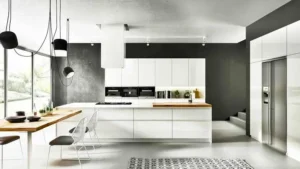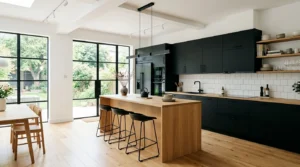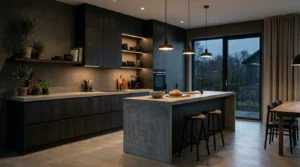
When you design a new kitchen, your countertops serve a dual purpose: they are both the visual anchor of the room and the heavy-duty work surface where daily life happens. Every cup of morning coffee, family dinner prep, and holiday baking session takes place directly on this stone.
Because countertops are exposed to boiling pots, sharp chef’s knives, red wine spills, and constant cleaning, selecting the wrong material can lead to permanent staining, chipping, or costly repairs down the road. Furthermore, in the New Jersey renovation market, countertops represent a major financial investment.
Never rely on a contractor who quotes an exact “pinpoint” price before measuring your kitchen layout. Factors like edge detailing, sink cutouts, slab waste, and stone rarity mean professional builders always calculate costs within flexible **pricing ranges**. At Jazz Construction Group, we guide homeowners through slab yards every day. Here is your definitive New Jersey comparison guide to **Quartz, Granite, Marble, and Quartzite countertops**, complete with realistic, real-world cost brackets.
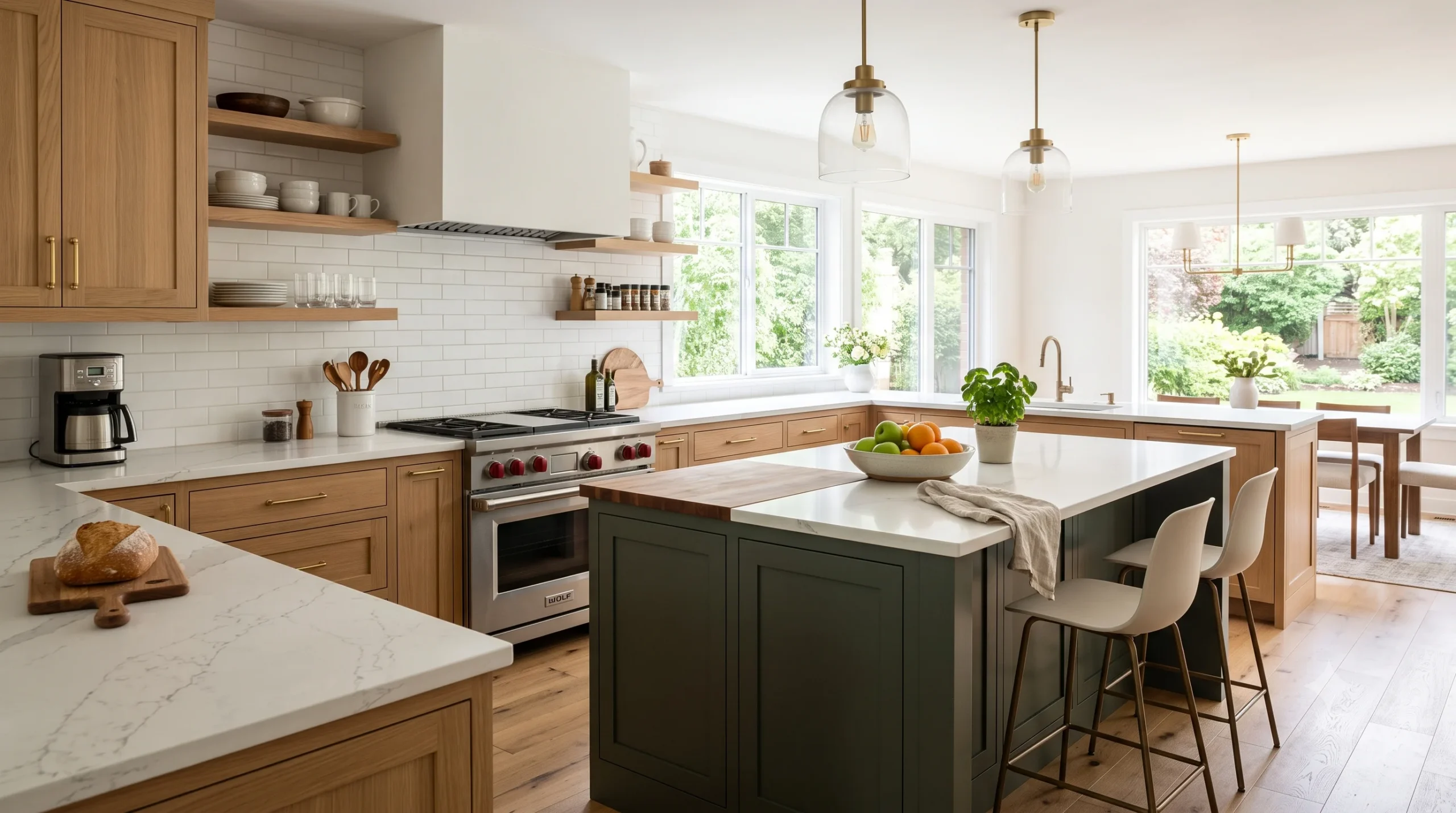
1. Engineered Quartz: The Low-Maintenance Powerhouse
Engineered quartz is currently the number one most requested countertop material among suburban New Jersey homeowners—and for good reason. Unlike natural stone that is mined directly from the earth in solid blocks, quartz is man-made by combining roughly 90% crushed natural quartz crystal with 10% polymer resins and color pigments.
Pricing & Key Features:
- Typical Cost Range: **$70 – $140+ per square foot** installed (or roughly **$4,500 – $9,000** for a full standard kitchen project).
- 100% Non-Porous: Because it is bound by durable resins, quartz never absorbs liquid. You will never need to apply a chemical sealer, and it is virtually immune to staining from coffee, oil, wine, or tomato sauce.
- Design Consistency: If you love the clean look of bright white marble but dread the maintenance, high-end quartz brands (like Cambria, Silestone, and Caesarstone) engineer slabs with precise, predictable gray veining that mimics natural stone perfectly.
- The Heat Caveat: While quartz is resistant to standard kitchen heat, extreme thermal shock from placing a boiling cast-iron skillet directly onto the surface can discolor or melt the binding resins. Always use a trivet!
Best For: Busy families, avid home cooks, and modern open-concept kitchens where zero-maintenance durability is the top priority.
2. Natural Granite: The Timeless & Heat-Resistant Classic
For decades, granite was the undisputed king of luxury kitchen remodels. Formed over millions of years by cooling magma deep within the earth, every single slab of granite is a unique, one-of-a-kind piece of natural art.
Pricing & Key Features:
- Typical Cost Range: **$60 – $130+ per square foot** installed (or roughly **$3,500 – $7,500** for an average kitchen layout).
- Unmatched Heat & Scratch Resistance: Natural granite is exceptionally dense. You can place hot pots directly onto its surface without fear of scorching, and it is hard enough to dull your kitchen knives before the stone itself scratches.
- Annual Sealing Required: Unlike quartz, granite is a porous natural stone. To prevent dark water spots and oil stains from penetrating the surface, homeowners must wipe on an impregnating stone sealer roughly once every 12 to 18 months.
- Aesthetic Variety: Granite ranges from uniform, tight-grained patterns (like Absolute Black or Steel Grey) to sweeping, dramatic mineral movements with specks of mica and quartz crystals.
Best For: Homeowners who appreciate traditional, organic natural stone aesthetics and want superior thermal and scratch resistance in their working zone.
3. Classic Natural Marble: The Pinnacle of Luxury
Nothing evokes high-end architectural luxury quite like genuine Italian marble (such as Carrara, Calacatta, or Statuario). Its soft, luminous white background paired with flowing grey and gold veining has adorned palaces and bakeries for centuries.
Pricing & Key Features:
- Typical Cost Range: **$100 – $200+ per square foot** installed (or roughly **$6,000 – $12,000+** for a complete kitchen project).
- The Baker’s Dream: Marble naturally remains cool to the touch, making it the premier surface for rolling out pie crusts, pastries, and dough without butter melting.
- Vulnerability to Etching: Chemically, marble is composed of calcium carbonate, which reacts instantly with acids. A single slice of lemon, a drop of vinegar, or a splash of wine left on the counter will cause chemical “etching”—leaving a dull, whitish watermark that removes the polished finish.
- Softer Density: Marble is significantly softer than quartz or granite, meaning it is more susceptible to physical chipping along sink edges and scratching from heavy stoneware.
Best For: High-end luxury showpiece kitchens, dedicated baking stations, or homeowners who embrace a European patina where natural wear adds character over time.
4. Natural Quartzite: The Secret Luxury Alternative
Do not confuse *quartzite* with man-made *quartz*! Natural quartzite is an ultra-dense metamorphic rock formed when sandstone is subjected to intense subterranean heat and pressure. It has exploded in popularity across New Jersey luxury builds because it offers a holy grail combination: **it looks like marble but wears harder than granite**.
Pricing & Key Features:
- Typical Cost Range: **$90 – $220+ per square foot** installed (or roughly **$6,500 – $14,000+** for an average kitchen layout).
- Marble Aesthetics, Granite Durability: Varieties like *Taj Mahal*, *Super White*, and *Classic White* feature breathtaking, organic veining that rivals the finest Calacatta marble, yet the stone is harder on the Mohs mineral scale than granite.
- Acid Resistant: Unlike marble, genuine quartzite will not chemically etch when exposed to lemon juice, tomato sauce, or wine.
- Sealing Recommended: While denser than granite, it is still a natural stone and benefits from periodic sealing to guard against deep liquid penetration.
Best For: Homeowners who demand the authentic beauty of natural white marble but refuse to compromise on heavy-duty stain and scratch durability.
Countertop Comparison Matrix
| Material Type | Typical Cost Range (Installed) | Maintenance Level | Heat & Scratch Resistance |
|---|---|---|---|
| Engineered Quartz | $70 – $140+ / sq. ft. | Zero (No sealing required) | High scratch, Moderate heat |
| Natural Granite | $60 – $130+ / sq. ft. | Low (Annual sealing) | Very High |
| Natural Marble | $100 – $200+ / sq. ft. | High (Prone to etching/stains) | Moderate (Softer stone) |
| Natural Quartzite | $90 – $220+ / sq. ft. | Low (Periodic sealing) | Exceptional |
Frequently Asked Questions
What thickness should I choose for my kitchen countertops?
In New Jersey residential remodeling, the industry standard is **3cm (roughly 1.25 inches) thick** slabs. Slabs of this thickness provide sufficient structural strength to cantilever over island seating overhangs without requiring extra plywood sub-top support. While thinner **2cm (3/4 inch)** slabs are slightly less expensive, they require laminated edges to look substantial and are more prone to cracking during heavy use.
Can I place a hot pan directly on quartz countertops?
We strongly advise against it. While natural quartz crystals are fireproof, the 10% polymer resin binders that hold engineered slabs together can scorch, warp, or permanently discolor when subjected to temperatures exceeding 300°F. Always use a trivet or hot pad when removing pans directly from the oven or stovetop.
How do I clean and disinfect my stone countertops safely?
Avoid harsh chemical cleaners, bleach, ammonia, or acidic solutions like vinegar, as these can strip protective sealers from granite and permanently etch natural marble. For everyday cleaning across all countertop materials, use warm water mixed with a mild dish soap or a dedicated pH-neutral stone spray, wiped dry with a microfiber cloth.
Find the Perfect Stone for Your New Jersey Kitchen
Selecting the right countertop requires balancing aesthetics, daily durability, and realistic cost brackets. Don’t navigate slab yards alone! Partner with Jazz Construction Group for complete design-build guidance, transparent material allowances, and flawless precision templating and installation.
Book Your Countertop & Kitchen Consultation