When you decide to transform your unfinished New Jersey basement into a luxury entertainment space, one of the first design questions you will face is how to handle food and beverages. Nobody wants to run up and down the stairs to the main kitchen every time a guest needs a fresh drink or a snack during the big game.
This leads homeowners to a classic architectural crossroads: Do we build a wet bar, or do we build a full kitchenette?
While the terms are often used interchangeably, in the world of construction, plumbing, and municipal zoning, they are two entirely different beasts. The choice you make will drastically impact your basement renovations cost, the permitting process, and how you ultimately use the space. Here is the definitive guide to helping you choose the perfect culinary setup for your lower level.
The Wet Bar: The Entertainer’s Dream
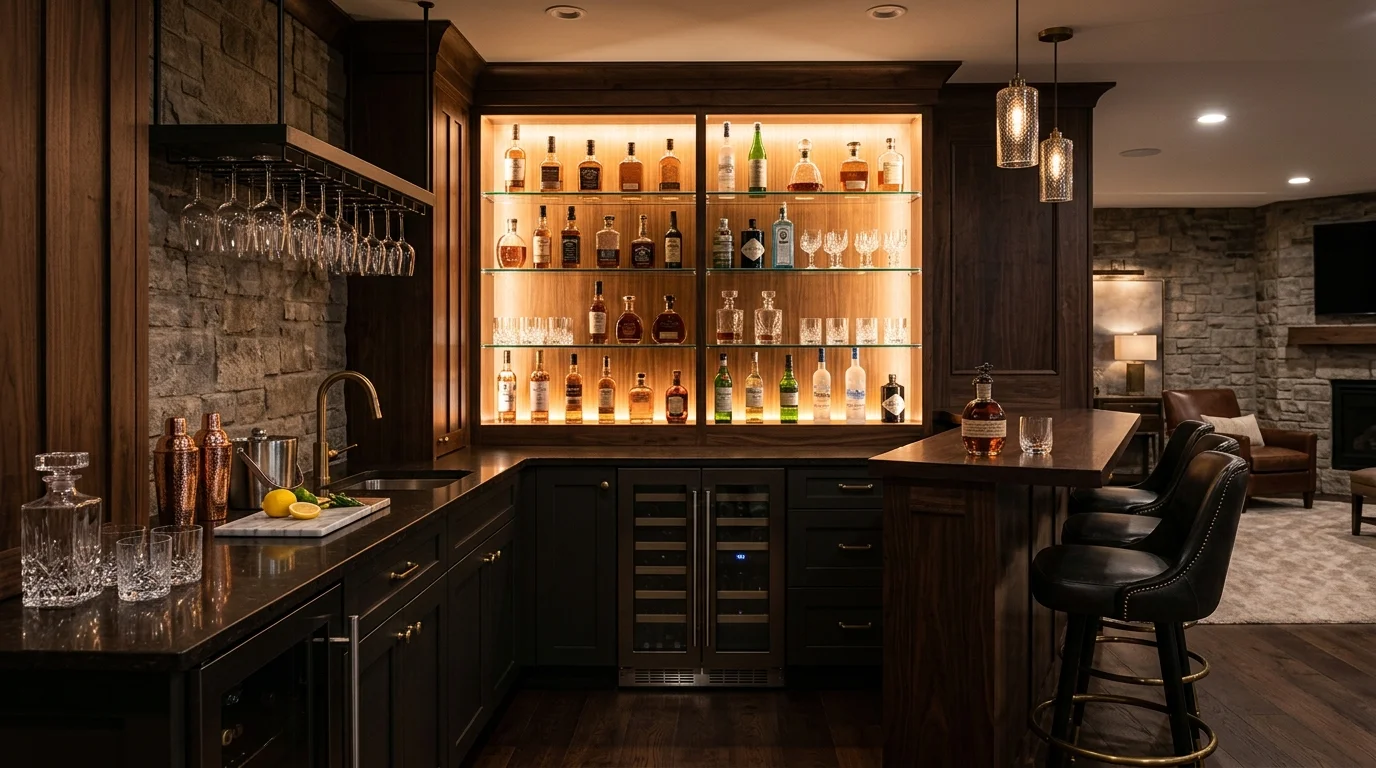
A wet bar is specifically designed for mixing drinks, serving light appetizers, and keeping beverages cold. It is called “wet” because it includes a sink with running water (as opposed to a “dry bar,” which is essentially just cabinets and a countertop).
Typical Features of a Wet Bar
- A small to medium-sized bar sink (ideal for washing glasses and rinsing fruit).
- Under-counter beverage centers, wine fridges, or kegerators.
- Custom cabinetry for storing glassware, liquor bottles, and bar tools.
- Often features a raised bar top with stool seating to create a social hub.
The Pros
Wet bars are incredibly popular in New Jersey basements because they perfectly complement home theaters and game rooms. They require less square footage than a kitchenette and generally face fewer municipal zoning hurdles because they are not classified as a “second kitchen.”
The Kitchenette: Maximum Utility
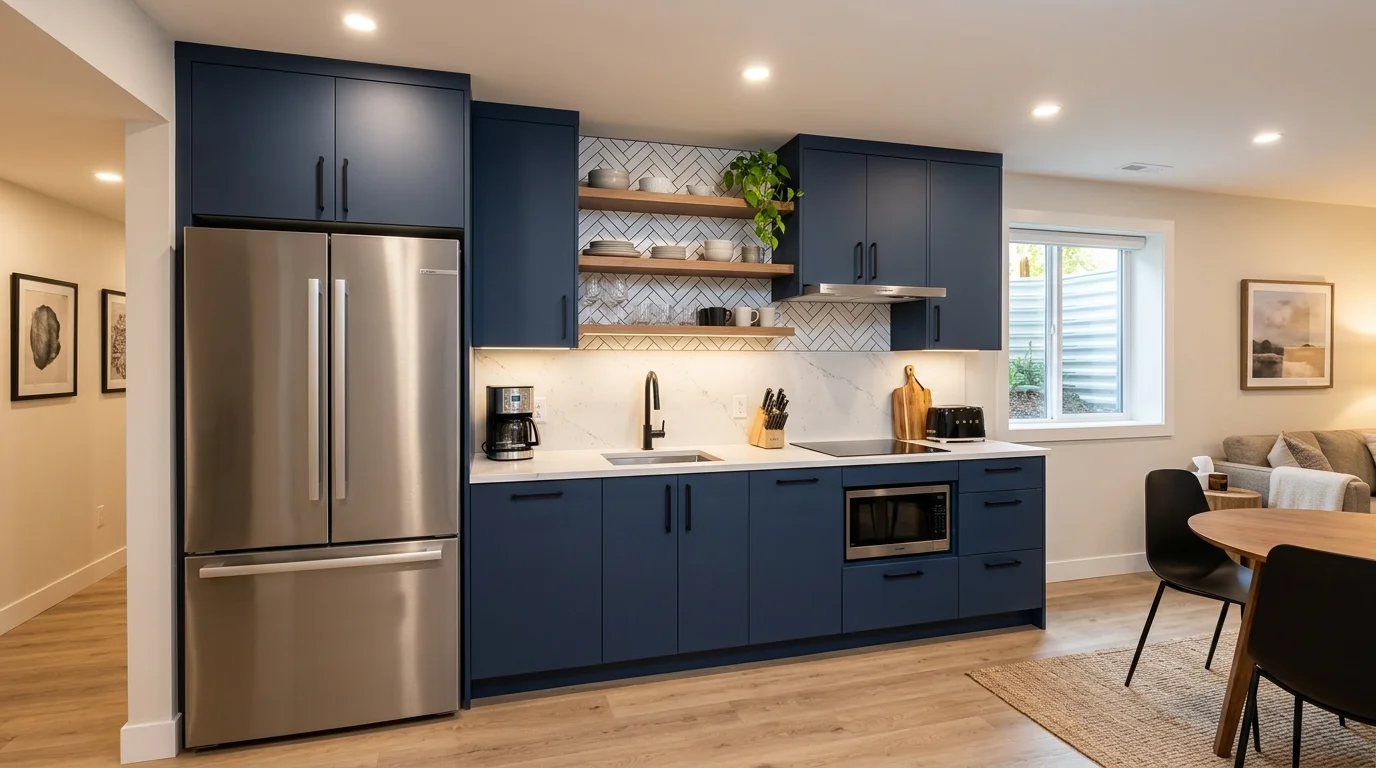
A kitchenette is essentially a scaled-down version of your main kitchen upstairs. While it may not have massive islands or double ovens, it is fully equipped for actual food preparation and extended living.
Typical Features of a Kitchenette
- A full-sized or large single-basin sink.
- A standard-sized refrigerator (or a tall, apartment-sized fridge).
- Cooking appliances: A microwave, a toaster oven, and often a built-in cooktop or a 24-inch electric range.
- Extensive upper and lower cabinetry for storing dry goods, plates, and full-sized cookware.
The Zoning Hurdle: Is It a Legal Apartment?
This is where things get tricky in New Jersey. The moment you introduce a 220-volt stove or a built-in cooktop into your basement design, many municipal building departments instantly classify the space as a “secondary kitchen.”
In the eyes of the township, a second kitchen implies that the basement is an independent apartment (an ADU or In-Law Suite). If your neighborhood is strictly zoned for single-family homes, the township may outright deny your permit for a stove, or require you to apply for a complex zoning variance. If you are planning a kitchenette simply for family use, sticking to a robust microwave and a large sink is often the easiest way to bypass these zoning headaches.
Wet Bar vs. Kitchenette: The Comparison Matrix
| Feature | Wet Bar | Kitchenette |
|---|---|---|
| Primary Purpose | Entertaining, mixing drinks, quick snacks | Food prep, cooking, extended living |
| Space Required | Minimal (Can fit along a single 6-foot wall) | Significant (Requires room for large appliances) |
| Appliances | Wine fridges, ice makers, beverage centers | Full fridge, microwave, sometimes a stove/cooktop |
| Permit Difficulty | Standard Plumbing/Electrical Permits | Strict (May trigger second-kitchen zoning laws) |
Which Should You Choose?
Choose a Wet Bar If:
Your primary goal is hosting parties, watching football, or creating a moody, high-end speakeasy vibe. If you want a space where friends can gather around a high-top counter for cocktails and conversation, a beautifully lit wet bar is the ultimate luxury upgrade.
Choose a Kitchenette If:
You have aging parents moving in, you are building an au pair suite, or you eventually plan to convert your basement into a legal rental unit. A kitchenette provides the autonomy necessary for independent, multi-generational living.
Frequently Asked Questions
Can I put a dishwasher in my wet bar?
Absolutely! Many luxury wet bars include an 18-inch (apartment size) or specialized “drawer dishwasher” perfect for washing cocktail glasses without having to haul them upstairs.
Do I need an exhaust hood for a basement kitchenette?
If you install a cooktop or a stove, New Jersey building codes mandate proper ventilation. This means we must run rigid ductwork from an exhaust hood above the stove directly to the exterior of the house to safely vent smoke, grease, and moisture.
How much does it cost to add a wet bar to a basement remodel?
Depending on the extent of the plumbing required, the grade of the cabinetry, and the luxury of the countertops (like quartz or granite), adding a custom wet bar typically adds between $10,000 and $25,000+ to your total renovation cost.
Design the Ultimate Entertainment Hub
Whether you want a sleek, modern wet bar to show off your wine collection or a fully-functional kitchenette for an in-law suite, Jazz Construction Group brings your vision to life. We handle the complex plumbing, the electrical work, and the custom cabinetry. Discover the possibilities with our basement renovation services today.
Start Designing Your Basement