When most homeowners start planning a basement remodel, their focus naturally drifts to the floors, the wet bar, or the paint colors. However, the most challenging structural and design decision you will make in your lower level forces you to look straight up: What do we do with the ceiling?
Unlike the clean, flat ceilings on the main floor of your home, the basement ceiling is the “mechanical heart” of your house. It is filled with a maze of HVAC ductwork, copper plumbing pipes, gas lines, and electrical wiring. Covering this up while maintaining a beautiful aesthetic and preserving your ceiling height is an architectural puzzle.
At Jazz Construction Group, our basement renovation experts guide clients through this decision every day. The right choice depends heavily on your budget, your long-term maintenance goals, and your home’s existing architecture. Here is a breakdown of the three primary basement ceiling options: Drywall, Drop (Suspended) Ceilings, and the Exposed aesthetic.
1. The Drywall Ceiling: The Seamless Upper-Level Look
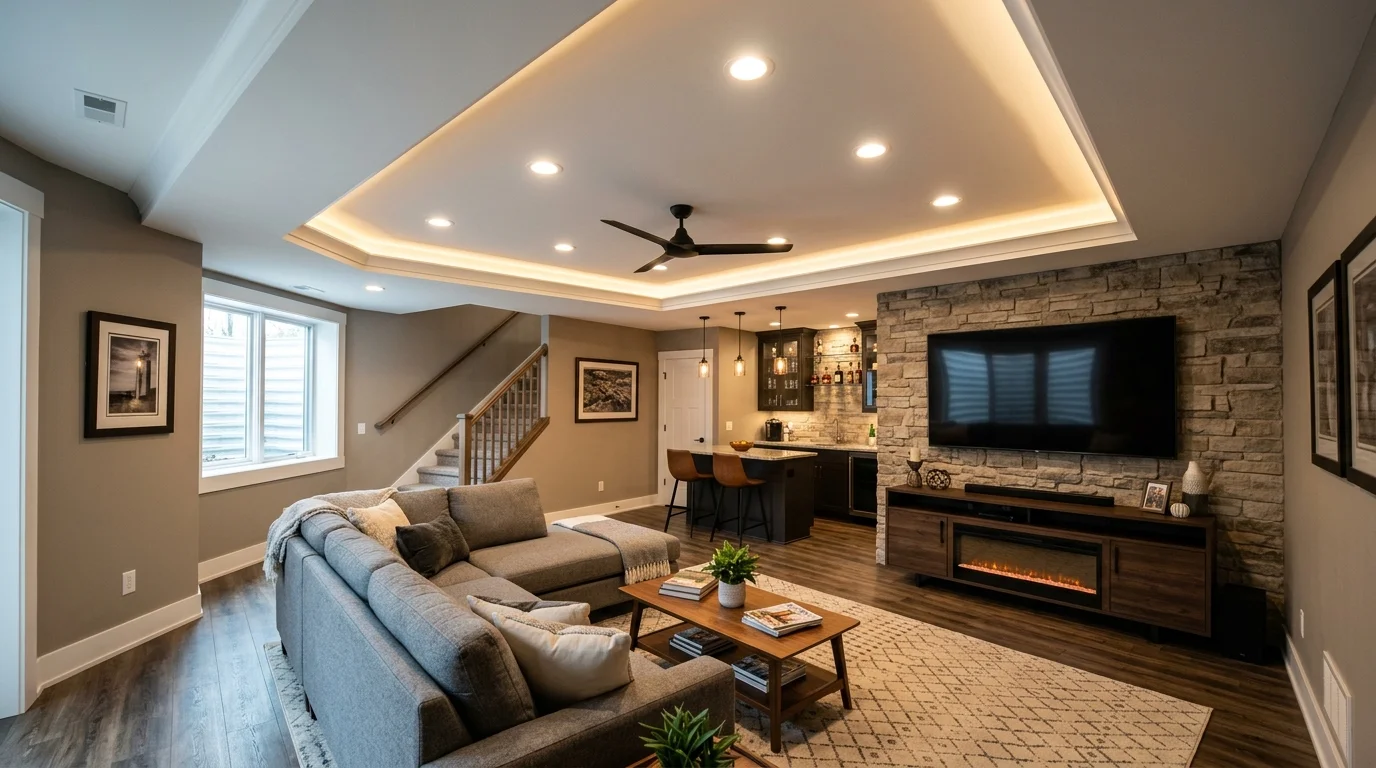
If your ultimate goal is to make your basement look exactly like the rest of your New Jersey home, drywall is the undisputed champion. By screwing sheetrock directly into the floor joists (or resilient channels for soundproofing), taping the seams, and painting it flat white, the basement instantly sheds its “subterranean” feel.
The Pros and Cons of Drywall
- Pros: Unmatched, seamless aesthetic. It provides the maximum possible ceiling height because the drywall sits directly against the joists. It also allows for sleek, modern recessed LED lighting.
- Cons: The biggest drawback is accessibility. Once drywall is up, the mechanical systems of your home are sealed inside. If a plumbing valve leaks or you need to run a new electrical wire in the future, you have to cut a hole in the ceiling and pay for a contractor to patch and repaint it.
2. The Modern Drop Ceiling (Suspended Tiles)
For decades, “drop ceilings” had a terrible reputation. Homeowners immediately pictured the cheap, sagging, water-stained acoustic tiles found in old corporate offices or 1970s basements. Today, that narrative has completely changed.
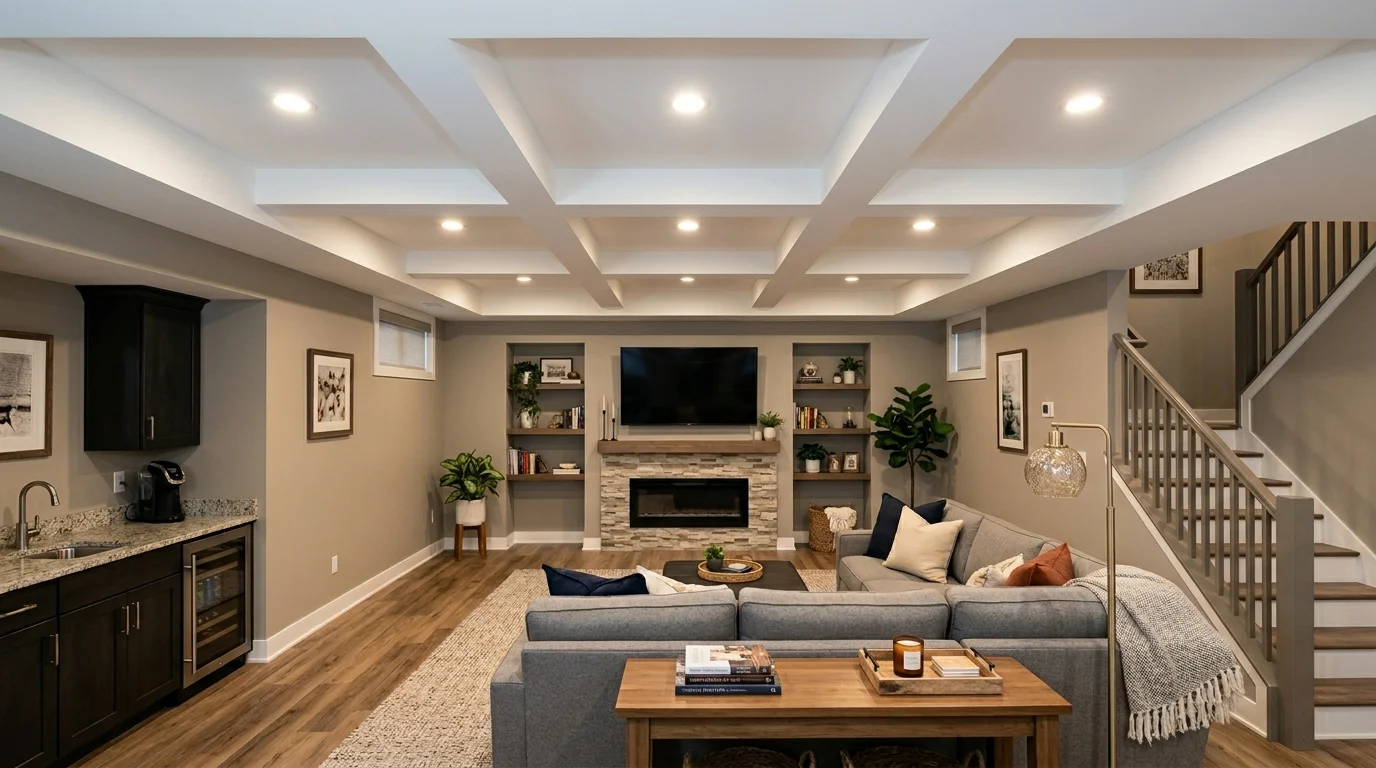
Modern suspended ceilings are highly sophisticated. They feature sleek, grid-minimizing designs and premium tiles that can mimic stamped tin, coffered wood, or smooth architectural panels.
The Pros and Cons of Drop Ceilings
- Pros: The ultimate maintenance solution. If you ever need to access a plumbing shutoff valve or run a new HDMI cable for your home theater, you simply lift a tile. They also offer excellent sound dampening (acoustic absorption) to quiet the room.
- Cons: By design, the grid must be suspended at least a few inches below the lowest pipe or duct in the room. In older homes with low basement ceilings, losing those precious inches can make the room feel slightly claustrophobic.
3. The Exposed (Painted) Ceiling: Industrial Chic
A massive trend in modern basement design—particularly in home gyms, game rooms, and basement pubs—is leaving the ceiling completely open. Contractors use professional spray equipment to coat the raw floor joists, the subfloor, the pipes, and the ductwork in a uniform color (almost always matte black or deep charcoal).
The Pros and Cons of Exposed Ceilings
- Pros: You retain 100% of your maximum ceiling height. It creates a very trendy, urban-loft vibe. It is also incredibly cost-effective compared to drywall framing and offers complete access to all mechanicals.
- Cons: It offers zero soundproofing. Every footstep from the floor above will be heard loudly in the basement. It can also make the room feel darker, requiring a robust lighting plan to compensate.
Ceiling Comparison Matrix
| Ceiling Type | Utility Access | Aesthetic Vibe | Preserves Ceiling Height |
|---|---|---|---|
| Drywall | Poor (Requires cutting and patching) | Premium / Seamless | High (Except for boxed soffits) |
| Modern Drop Ceiling | Excellent (100% accessible) | Clean / Structured | Low (Drops below lowest pipes) |
| Exposed / Painted | Excellent (Everything is visible) | Industrial / Urban Loft | Maximum (No dropped elements) |
Frequently Asked Questions
What is the minimum legal ceiling height in NJ?
According to the International Residential Code (IRC) used by New Jersey municipalities, habitable living spaces must generally have a ceiling height of at least 7 feet. Beams, girders, and ducts may project lower, but they typically cannot drop below 6 feet 4 inches from the finished floor.
Can I mix drywall and drop ceilings?
Yes! This is a very popular, high-end strategy. We frequently drywall the perimeter of the room to create a sleek border (often installing recessed lighting in this perimeter) and use premium drop ceiling tiles in the center tray to maintain access to main water and gas lines.
How do you light an exposed ceiling?
Because you cannot install traditional recessed “can” lights without drywall, we typically use sleek track lighting or flush-mount LED disc lights mounted directly to the bottoms of the wooden floor joists.
Look Up to Better Design
The ceiling dictates the entire feel of your basement. Whether you want seamless drywall, a modern acoustic grid, or an industrial painted vibe, the experts at Jazz Construction Group ensure it is framed safely, legally, and beautifully. Explore our basement renovation services today.
Get a Free Ceiling & Renovation Quote