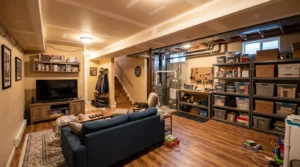
When you picture a walkout basement, you envision sunlight pouring through sliding glass doors, a seamless transition to a beautiful backyard patio, and the incredible convenience of a private entrance. What you do not want to picture is waking up after a heavy New Jersey spring rainstorm to find an inch of muddy water destroying your newly installed luxury vinyl flooring.
Let’s be honest about the physics of a walkout: by digging an exterior stairwell, you are essentially creating a massive concrete bowl at the absolute lowest point of your property. Gravity dictates that water will naturally want to flow down those stairs and pool directly against your new exterior door.
If you fail to address this during the excavation phase, flooding is not just a possibility—it is an absolute certainty. At Jazz Construction Group, our basement renovation experts prioritize water management above all else. Here is our comprehensive guide to walkout basement drainage solutions and how we guarantee your newly finished space stays bone-dry.
1. The Front Line: The Exterior Landing Drain
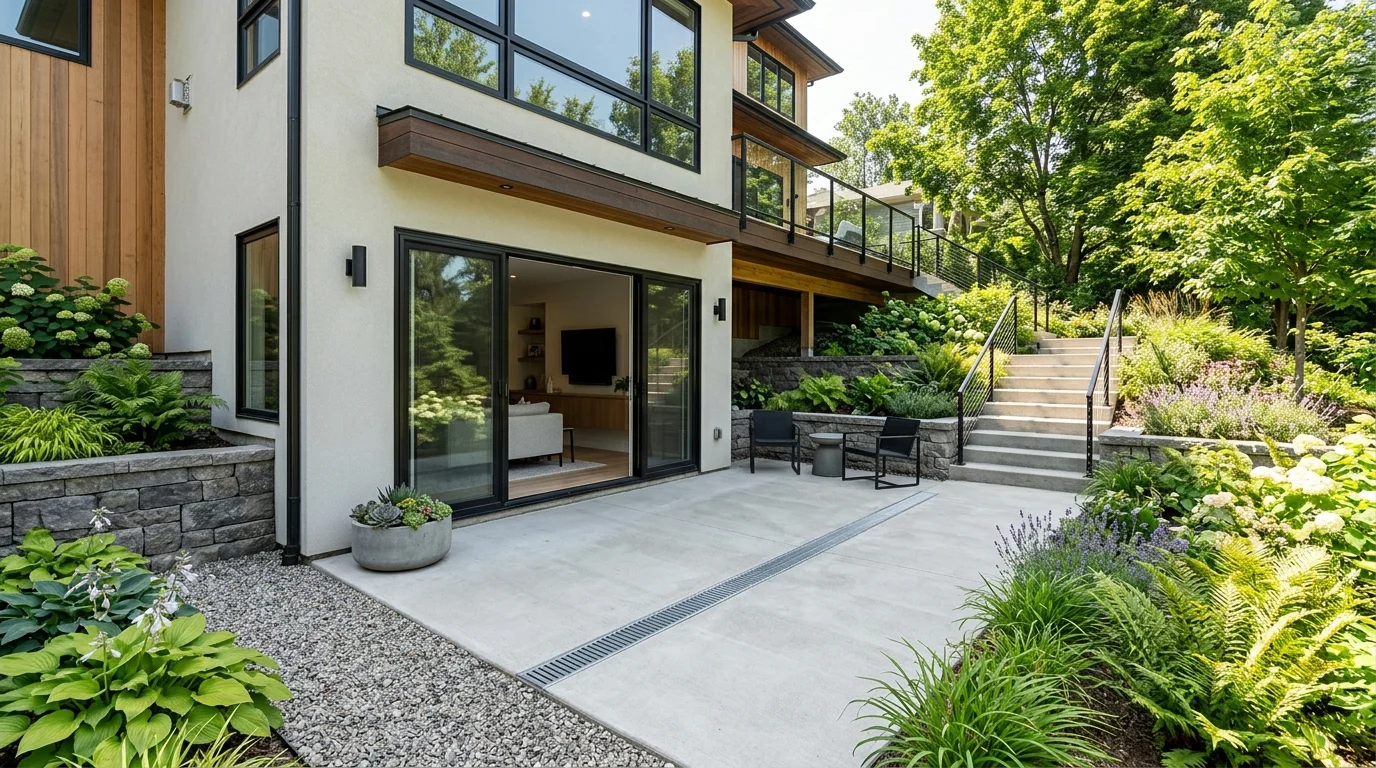
The most critical component of your walkout drainage system is located right outside the door. Before the concrete landing pad is poured at the bottom of the exterior stairs, a high-capacity floor drain (often a trench drain) must be installed.
This drain spans the entire width of the door opening and sits beneath a heavy-duty steel or cast-iron grate. The concrete landing is poured with a very slight pitch, angling the water away from the door threshold and directly into this trench. Any rain that falls into the stairwell, or snow that melts on the steps, will be caught by this drain before it ever touches your door frame.
2. The Routing: Where Does the Water Go?
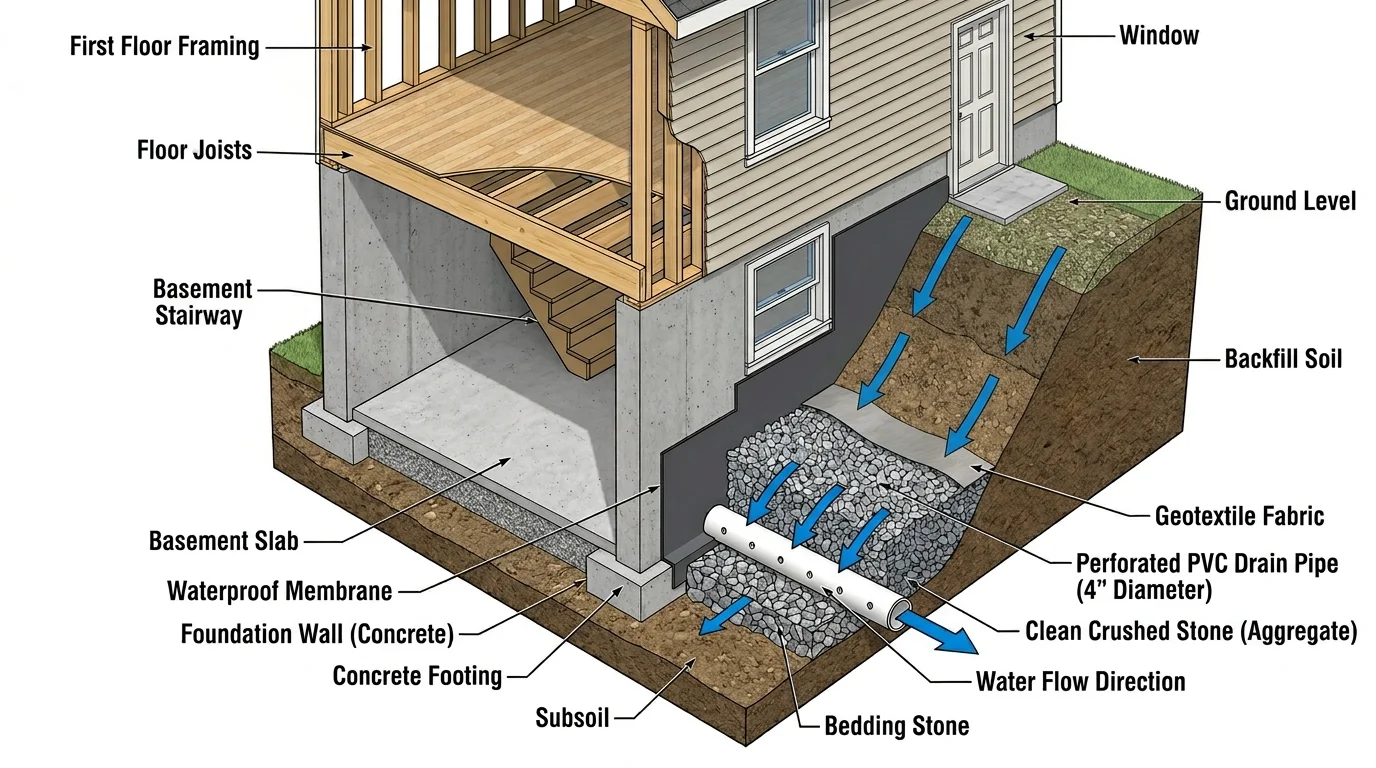
Catching the water is only half the battle; you have to put it somewhere. You cannot simply pipe the water a few feet under the dirt, as the surrounding soil will quickly saturate and push the water right back up due to hydrostatic pressure. There are two primary ways to route this water safely away from your home:
Gravity Drainage (The Ideal Scenario)
If your property is built on a steep hill that continues to slope downward away from the walkout, you have struck gold. We can run a solid PVC pipe from the landing drain, underneath the ground, and “daylight” it (bring it back up to the surface) further down the hill or into a dedicated dry well. Gravity does all the work, requiring no electricity or mechanical pumps.
Tying Into the Sump Pump (The Common Scenario)
For most New Jersey homes with relatively flat or moderately sloped yards, gravity isn’t enough. In this scenario, the exterior landing drain is piped directly through the foundation wall and tied into your basement’s interior French drain and sump pump system.
When water enters the exterior drain, it flows into the sump pit inside. Once the water hits a certain level, the mechanical pump kicks on and shoots the water safely outside, well away from the foundation. Because this relies on electricity, investing in a high-quality battery backup sump pump is an absolute non-negotiable requirement for any walkout basement.
3. Relieving the Pressure: Retaining Wall Weep Holes
Water isn’t just falling from the sky; it is also moving horizontally through the earth. The retaining walls built on either side of your walkout stairs are holding back thousands of pounds of wet, heavy New Jersey soil.
If water becomes trapped behind these walls, the immense hydrostatic pressure will cause the block or concrete to bow, crack, and eventually collapse. To prevent this, we install weep holes—small pipes built into the base of the retaining walls. These holes allow groundwater trapped behind the wall to safely bleed out into the stairwell, where it safely flows into the main landing drain.
4. Preventative Measures: Grading and Overhangs
The best drainage system is the one that doesn’t have to work too hard. Minimizing the amount of water that enters the stairwell in the first place is crucial.
- Exterior Grading: The soil at the top of the retaining walls must be professionally graded to slope away from the stairwell. We do not want surface runoff from your backyard cascading down the steps.
- Gutters and Downspouts: Check the roofline above the new walkout. If there is a gutter seam that drips or a downspout that empties too close to the stairs, it must be relocated.
- Porticos and Overhangs: If your budget allows, building a small roof extension (a portico) over the walkout stairs is a brilliant investment. It keeps heavy rain and snow entirely out of the stairwell, preserving the life of your exterior door and keeping your drainage system from being overwhelmed.
At a Glance: Walkout Drainage Components
| Component | Primary Function | Maintenance Requirement |
|---|---|---|
| Trench Drain | Catches direct rainfall/snowmelt at the door threshold. | Clear leaves and debris from grate monthly. |
| Sump Pump | Actively ejects collected water away from the property. | Test float switch biannually; replace battery backup every 3-5 years. |
| Weep Holes | Relieves hydrostatic pressure behind retaining walls. | Ensure holes remain unblocked by mud or debris. |
| Overhang / Portico | Prevents precipitation from entering the stairwell. | Standard roof maintenance. |
Frequently Asked Questions
Will a walkout drain freeze in the winter?
If the pipes are laid below the frost line and pitched correctly so water flows completely out without pooling inside the pipe, freezing is rarely an issue. However, keeping the surface grate clear of heavy ice buildup is important during deep freezes.
Can I just put a drain cover over the stairwell?
While you can buy custom clear polycarbonate covers (similar to window well covers) for walkout stairwells, they can be cumbersome if you use the door daily. They are a good secondary measure, but they do not replace the need for a proper underground drainage system.
How much does a sump pump add to my basement renovations cost?
Installing a new interior perimeter drain and a high-quality sump pump with a battery backup typically adds between $3,000 and $6,000 to your total basement renovations cost. Think of it as the ultimate insurance policy for your newly finished space.
Don’t Let Water Ruin Your Investment
A beautiful walkout basement requires flawless, invisible engineering. At Jazz Construction Group, we refuse to cut corners when it comes to waterproofing and drainage. Ensure your new living space stays warm, safe, and bone-dry. Explore our basement renovation services to see how we manage the elements.
Get a Free Waterproofing Consultation