Standing in an unfinished basement is like staring at a blank canvas. It is entirely up to you how the space is divided. But before you start buying furniture or picking out flooring, you have to make the most important architectural decision of the entire project: Will you leave it wide open, or will you build walls?
At Jazz Construction Group, we see homeowners struggle with this choice every day. Do you want a massive, flowing entertainment area, or do you need private rooms for an office and a guest suite?
Your floor plan dictates how your family will use the space for decades. Here is our comprehensive guide to choosing between an open concept and a walled layout for your basement renovation design.
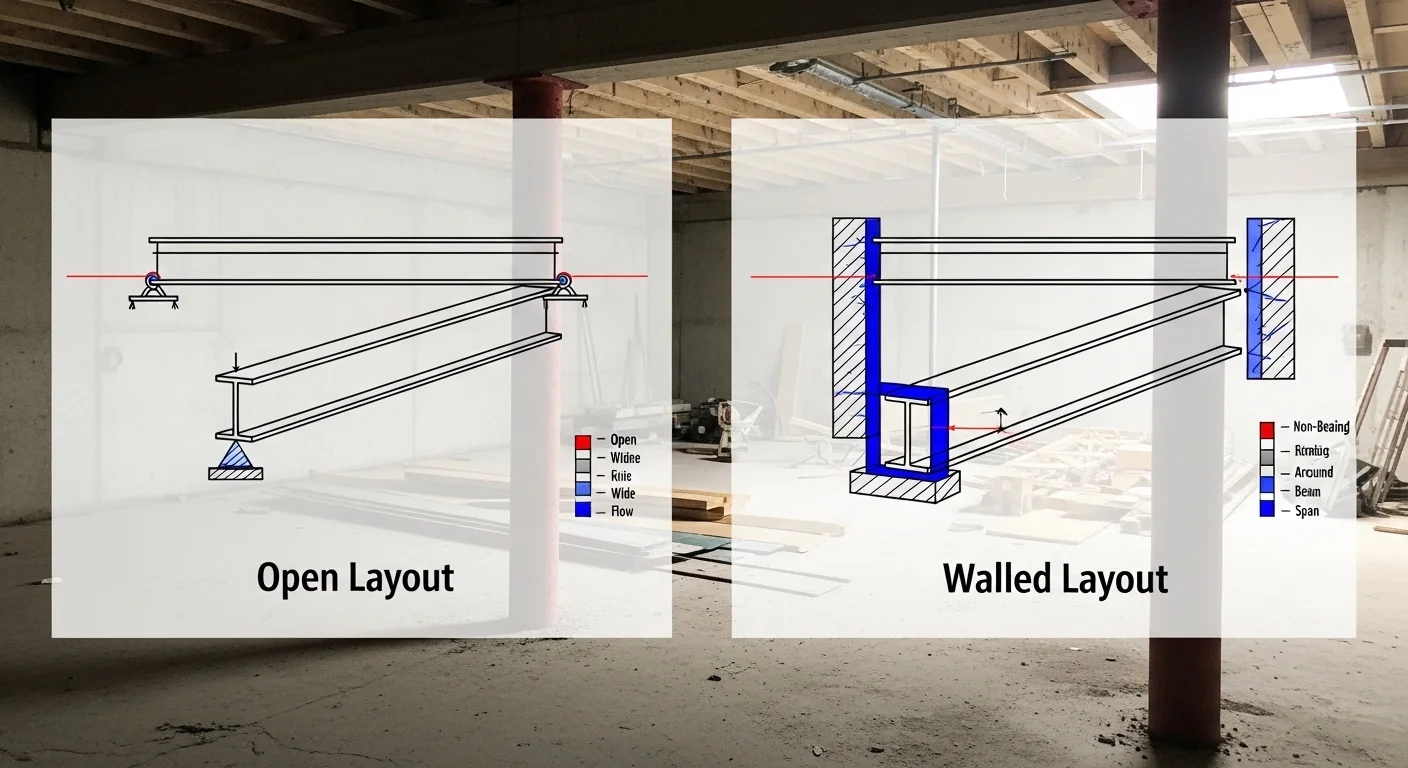
The Open Concept Basement: Maximizing Flow
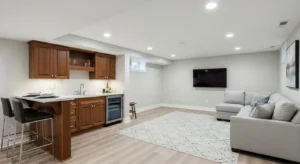
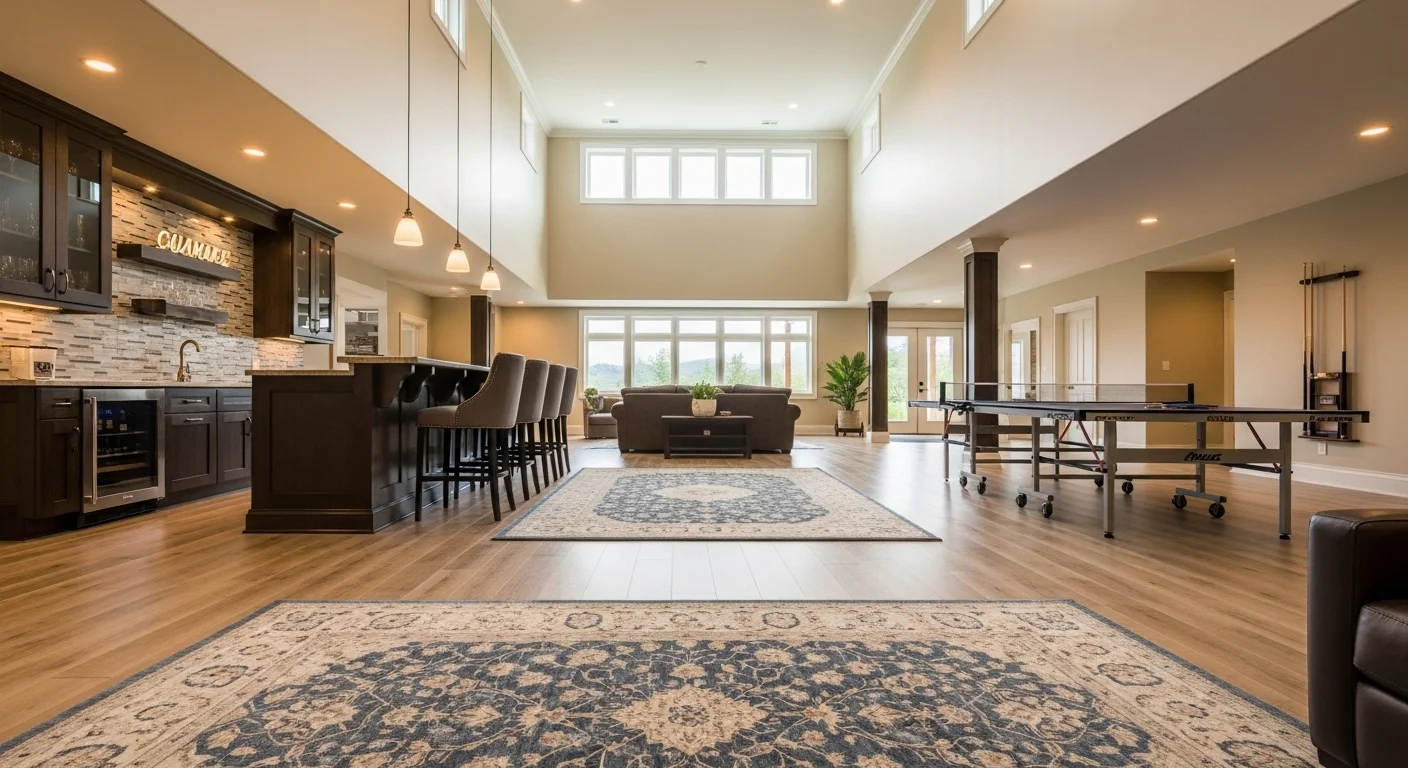
The open concept layout removes as many interior walls as structurally possible. It relies on furniture, area rugs, and lighting to create distinct “zones” (like a TV area and a pool table area) within one large, continuous room.
The Pros of Open Concept
- Bigger Feel: Without walls chopping up the square footage, even a small basement will feel massive and airy.
- Maximum Natural Light: Basements suffer from a lack of windows. An open layout allows light from a single egress window to travel across the entire lower level.
- Cost-Effective: Fewer walls mean less lumber, less drywall, fewer doors, and less labor. It is generally the more budget-friendly approach to a basement renovation.
- Entertainer’s Dream: You can host large parties where guests mingling at the wet bar can still converse with people sitting on the sofa.
The Cons of Open Concept
- Noise Travels: With no walls to stop it, the sound of a video game in the corner will easily bleed into the conversation happening at the bar.
- Lack of Privacy: It is nearly impossible to use the space for a quiet home office or a guest bedroom.
- The “Clutter” Effect: If the kids’ toy area is messy, you see it from everywhere in the room. There are no doors to close and hide the mess.
The Walled Layout: Purpose-Built Privacy
A walled (or segmented) layout divides the basement into specific, dedicated rooms accessed via a central hallway or landing area.
The Pros of a Walled Layout
- Ultimate Privacy: Perfect for creating a dedicated home office, a quiet reading room, or an in-law suite.
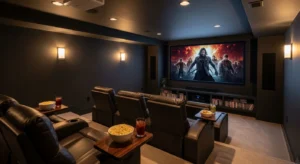
- Sound Control: If you want a booming home theater, walls are required to contain the acoustics and prevent the bass from disrupting the rest of the home.
- Higher Resale Value: Adding a legal bedroom (with a closet and an egress window) significantly boosts your home’s official appraisal value.
The Cons of a Walled Layout
- Can Feel Cramped: Hallways eat up valuable square footage. If the basement is small, adding multiple rooms can make it feel like a maze.
- Trapped Light: Rooms without windows will rely 100% on artificial lighting, which can feel gloomy if not designed properly.
The “Broken Plan”: The Best of Both Worlds
What if you want the airy feel of an open concept but still need some separation? Enter the “Broken Plan.”
This trending basement renovation design uses partial architectural elements to divide the space without fully closing it off. You can achieve this by:
- Building a half-wall (pony wall) behind a sofa to separate the media area from a playroom.
- Installing a two-sided gas fireplace in the center of the room.
- Using a structural support column as the anchor point for a wrap-around bar peninsula.
At a Glance: Layout Comparison
| Factor | Open Concept | Walled / Segmented | Broken Plan |
|---|---|---|---|
| Construction Cost | Lowest | Highest | Moderate |
| Natural Light Flow | Excellent | Poor (in interior rooms) | Good |
| Acoustic Privacy | Poor | Excellent | Moderate |
| Best Use Case | Rec rooms, large parties | Offices, bedrooms, theaters | Family multi-tasking spaces |
Frequently Asked Questions
Can I remove the steel columns in the middle of my basement?
Those columns (lally columns) are holding up the main floor of your house. They can be removed, but it requires a structural engineer to design a massive flush-mount steel I-beam to take the load. This is a very expensive process, so we often recommend incorporating the columns into your layout design instead.
Does an open concept affect my HVAC heating?
Yes. A single large room requires strategic placement of supply vents and cold air returns to ensure there are no “cold dead zones.” Segmented rooms are actually easier to heat evenly because they are smaller, enclosed spaces.
Can I build an open concept now and add walls later?
Absolutely. It is much easier to add a wall later than to tear one down. Just make sure your electrical and lighting plan accommodates future walls (e.g., don’t put a single massive light fixture directly where a wall might eventually go).
Design a Floor Plan That Fits Your Life
A great basement starts with a flawless floor plan. Our design team at Jazz Construction Group knows how to navigate support beams, plumbing stacks, and low ceilings to create the perfect layout for your family. Explore our basement renovation services to learn more.
Book a Free Floor Plan Consultation