Look up at your unfinished basement right now. What do you see? You probably see a chaotic web of wooden floor joists, hanging electrical wires, PVC plumbing pipes, and massive metal HVAC ducts. Figuring out how to hide that mess without making the room feel like a cramped cave is one of the biggest challenges in any home remodel.
The ceiling you choose will dictate the entire aesthetic of your lower level. Do you want it to look like a seamless extension of your main floor, a modern industrial loft, or a highly functional entertainment space?
At Jazz Construction Group, we help clients navigate these structural puzzles daily. Here is our expert breakdown of the top three basement ceiling ideas: Drywall, Drop Ceilings, and Exposed Joists.
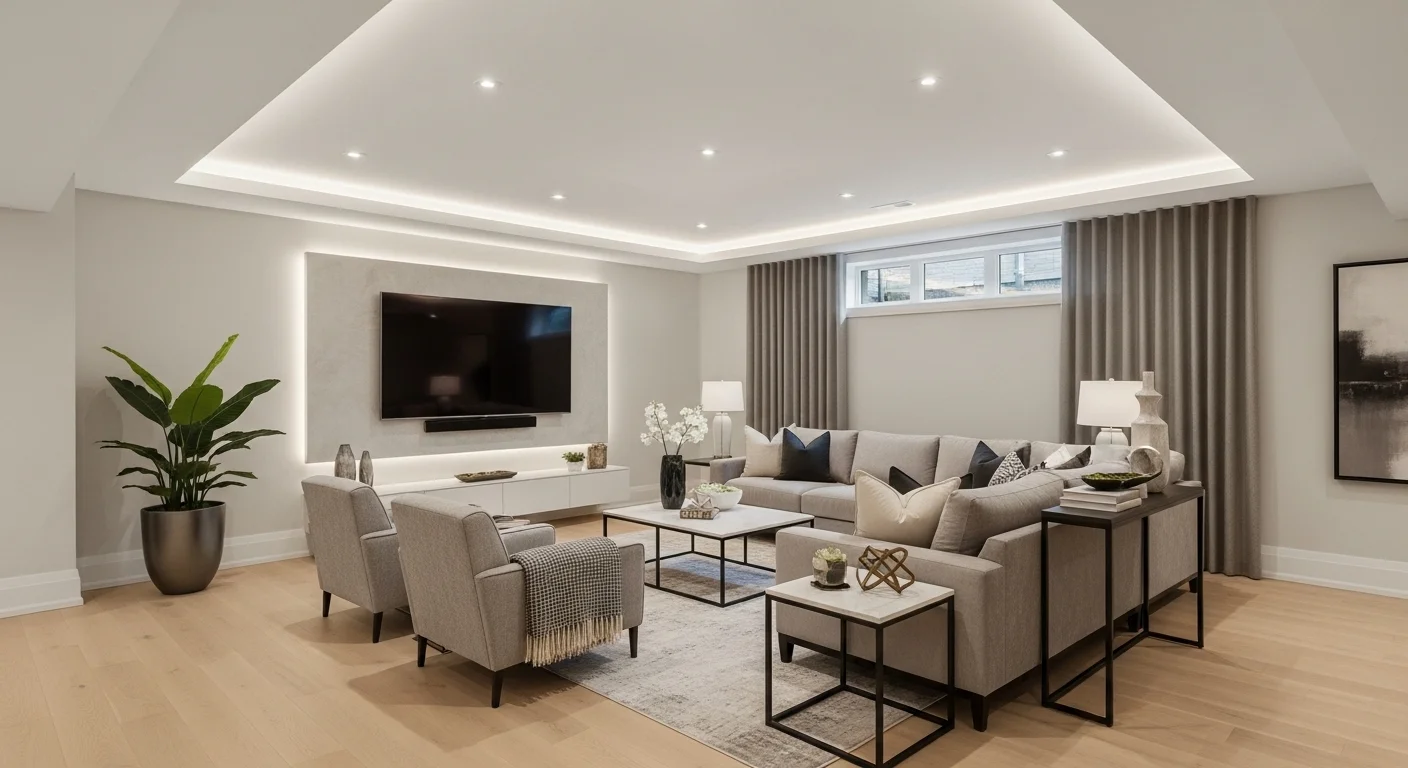
1. The Drywall Ceiling: Clean and Classic
Hanging drywall (sheetrock) directly to the floor joists above is the most popular choice for homeowners who want their basement renovation to look exactly like the upper levels of their house.
The Pros
- Seamless Aesthetic: It looks clean, bright, and permanent. It completely hides the “basement feel.”
- Maximum Height: Drywall is only 1/2 to 5/8 of an inch thick, meaning you lose almost zero headroom (unless you have hanging ducts).
- Great for Soundproofing: If you pack the joists with acoustic insulation and use heavy 5/8-inch drywall on resilient channels, you can block a massive amount of noise from traveling upstairs.
The Cons
- No Utility Access: Once the drywall is taped and painted, your plumbing and electrical are trapped. If a pipe leaks or you need to run a new wire in the future, you have to cut a hole in the ceiling and patch it later.
- The “Bulkhead” Problem: Because drywall cannot bend around low-hanging HVAC ducts, your contractor will have to build wooden frames (bulkheads or soffits) to box them in, creating drop-downs in the ceiling.
2. The Drop Ceiling: Ultimate Functionality
Forget the cheap, sagging cardboard tiles from the 1990s. Today’s suspended ceilings (drop ceilings) have undergone a massive luxury upgrade. You can now buy tiles that look like coffered wood, stamped tin, or sleek modern panels.
The Pros
- 100% Utility Access: This is the biggest selling point. If you need to access a plumbing shut-off valve or inspect a wire, you simply pop a tile out and put it back when you are done.
- Acoustic Control: Many modern drop ceiling tiles are made from acoustic fiberglass or mineral wool, which absorbs sound beautifully, making them perfect for basement home theaters or playrooms.
- Easy Replacements: If a pipe leaks and ruins a tile, you only have to replace that single 2×2 square, rather than repainting an entire drywall ceiling.
The Cons
- Loss of Headroom: The metal grid system requires a minimum of 2 to 4 inches of clearance below your lowest pipe or duct to allow the tiles to angle in. If your ceiling is already below 7 feet, a drop ceiling might make it too low to pass building codes.
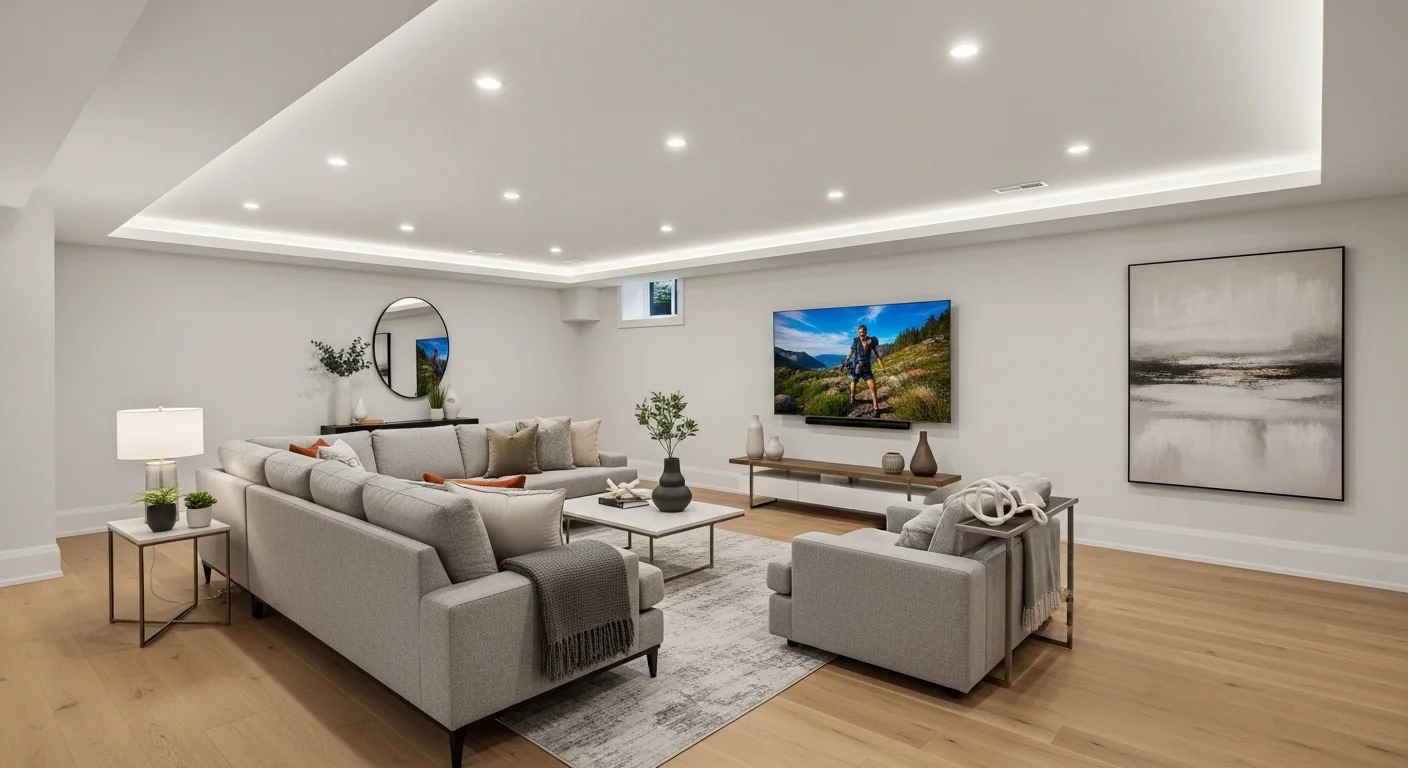
3. The Exposed Ceiling: Industrial and Edgy
If you love the look of downtown loft apartments, leaving the ceiling completely open is a fantastic and trendy option. Contractors will tidy up the loose wires, clean the wood and ducts, and use an airless sprayer to paint the entire ceiling (joists, pipes, and all) in a single uniform color—usually flat black or crisp white.
The Pros
- Maximum Headspace: Because you aren’t covering anything up, you gain every possible inch of height. This is the best solution for basements with very low ceilings.
- Budget-Friendly: Spraying the ceiling is significantly cheaper than the labor required to frame, hang, mud, and sand a drywall ceiling.
- Great Contrast: A black exposed ceiling paired with white walls and warm wood flooring creates a stunning, modern, and moody atmosphere perfectly suited for a wet bar or luxury lounge.
The Cons
- Zero Soundproofing: There is nothing between you and the floorboards upstairs. You will hear every footstep, and the upstairs will hear every word spoken in the basement.
- Dust Collection: The tops of the exposed ducts and pipes can collect dust over time, requiring occasional vacuuming with a shop-vac extension.
At a Glance: Basement Ceiling Comparison
| Ceiling Type | Headroom Loss | Utility Access | Acoustic Privacy |
|---|---|---|---|
| Drywall | Minimal (1/2 inch) | None (Requires cutting) | Excellent (With insulation) |
| Drop Ceiling | High (3 to 6 inches) | 100% Accessible | Good (Absorbs echoes) |
| Exposed / Painted | Zero (Gains height) | 100% Accessible | Poor (Transfers sound) |
Frequently Asked Questions
Can I mix and match ceiling types in my basement?
Absolutely, and this is highly recommended! We often install drywall in the main living areas for a premium look, but use a drop ceiling in the utility room or laundry room where plumbing access is critical.
What is the minimum legal ceiling height for a basement?
In most municipalities, building codes require habitable basement rooms to have a minimum ceiling height of 7 feet (84 inches). However, beams and ductwork (bulkheads) are usually allowed to drop down to 6 feet 4 inches, provided they don’t cover too much of the total floor area.
Is it hard to paint an exposed ceiling black?
It is incredibly messy. It requires commercial-grade airless paint sprayers and “dryfall” paint (which turns into dust before hitting the floor). The entire room, including the walls and floor, must be meticulously masked off with plastic before spraying begins. It is best left to the professionals.
Look Up to a Better Basement
Your ceiling shouldn’t be an afterthought. Whether you want the seamless elegance of drywall, the utility of a modern drop ceiling, or the edge of an exposed loft, we have the skills to make it perfect. Explore our basement renovation services and let’s start planning.
Get a Free Design Consultation