Deciding to add a walkout entrance or an egress window to your basement is an exciting milestone. You are taking the first steps toward bringing natural light, safety, and immense value to your lower level. However, before the excavators arrive and the concrete saws start spinning, you must navigate the least exciting—but arguably most important—phase of the project: the New Jersey municipal permitting process.
Cutting a massive hole into the concrete foundation of your home is not a cosmetic upgrade; it is a major structural modification. Because you are altering the load-bearing dynamics of the house and changing the exterior footprint of the property, local municipalities require strict oversight to ensure the work is done safely and legally.
At Jazz Construction Group, we know that dealing with township zoning boards and building inspectors can be overwhelming for homeowners. As premier basement renovation contractors in NJ, we manage this entire process for our clients. Here is a clear, step-by-step guide to understanding the permits required for structural basement modifications in New Jersey and why cutting red tape is just as important as cutting concrete.
Why Structural Changes Trigger Immediate Oversight
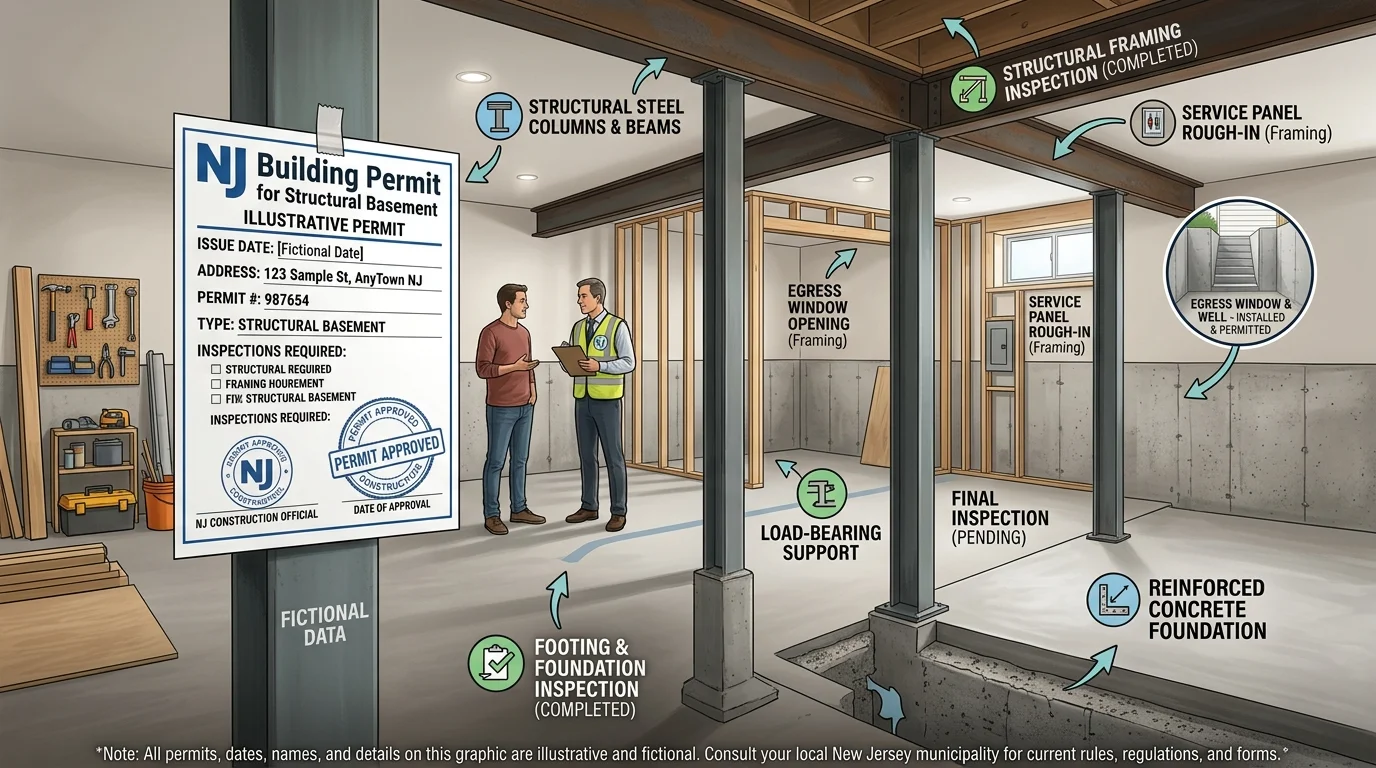
When you paint your living room or lay down new carpet, the township doesn’t care. But when you remove a section of your foundation wall to install a walkout door, you are removing the very concrete that holds up your main floor.
Building departments enforce the International Residential Code (IRC) to prevent catastrophic structural failures. They need absolute proof that the steel header we install above your new door is mathematically capable of carrying the weight of the house. Furthermore, because a walkout involves excavating earth and building retaining walls, the township must ensure your new stairwell doesn’t violate your property’s setback lines or dump stormwater into your neighbor’s yard.
The 4 Types of Permits You Will Likely Need
A full basement walkout is a multi-trade project. Consequently, it usually requires a combination of different permits, which are factored into your overall basement renovations cost. Depending on your specific township, you will need:
1. The Zoning Permit
Before the building department even looks at your blueprints, the zoning department must approve the project. Zoning dictates where you can build. An exterior walkout stairwell extends into your yard. The zoning officer will check your property survey to ensure the new stairwell does not cross into restricted setback areas (the required distance between your structure and the property line).
2. The Building (Structural) Permit
This is the core permit. It covers the excavation, the cutting of the foundation, the installation of the steel structural header, the framing of the door, and the construction of the retaining walls.
3. The Electrical Permit
Walkout stairwells require exterior lighting for safety. You will also likely need an outlet installed for a sump pump to handle the stairwell drainage. Anytime new wiring is tied into your breaker panel, an electrical permit and inspection are legally required.
4. The Plumbing Permit
If the floor drain at the bottom of your new walkout stairs is being tied into your home’s existing interior French drain or requires a new dedicated sump pump pit to be dug, a plumbing permit is required to ensure water is routed safely and according to code.
The Massive Risks of Unpermitted Work
Some homeowners, lured by the promise of a cheaper, faster job from unlicensed “handymen,” attempt to bypass the permitting process entirely. For a project this large, this is a catastrophic financial and legal mistake.
- Failed Real Estate Sales: When you go to sell your home, the buyer’s home inspector will easily spot the structural modification. If there are no municipal records (closed permits) for the walkout, the buyer’s mortgage lender will likely refuse to fund the loan, killing the sale instantly.
- Voided Homeowner’s Insurance: If an unpermitted walkout stairwell collapses, or if the door leaks and floods your basement, your insurance company has the legal right to deny your claim entirely because the work was done illegally.
- Township Fines and Demolition: If a local code enforcement officer sees an excavator in your yard without a permit placard in the window, they will issue an immediate “Stop Work” order. You will face severe daily fines and could be legally forced to fill the hole back in with concrete at your own expense.
The Municipal Inspection Timeline
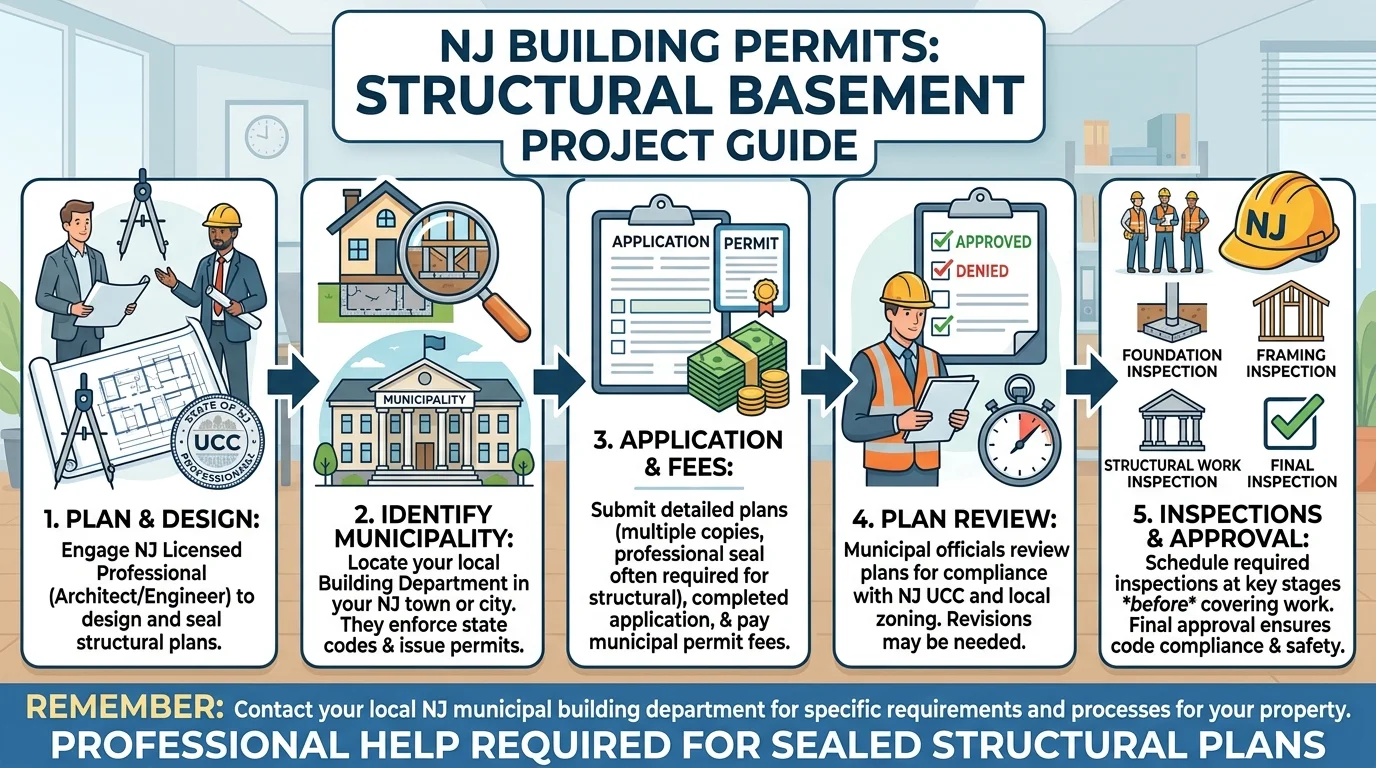
Once the permits are approved and construction begins, the township inspector will visit the site at various milestones to ensure we are building exactly what was drawn on the plans. A typical walkout requires several inspections:
| Inspection Phase | What the Inspector Checks |
|---|---|
| 1. Footing / Pre-Pour | Ensures the trench is dug to the proper depth below the frost line before concrete is poured for the retaining walls. |
| 2. Structural / Framing | Verifies the correct size of the steel header, the shoring method, and the proper bolting of the framing lumber. |
| 3. Rough Electrical/Plumbing | Checks the wiring for the exterior lights and the piping for the drainage system before everything is buried or closed up. |
| 4. Final Inspection | The final walk-through to ensure the door is secure, the grading is correct, and the site is safe. Once passed, the permit is officially “closed.” |
Frequently Asked Questions
How long does it take to get permits approved in NJ?
It varies wildly by township. Some municipalities approve permits in 2 to 3 weeks, while others with backlogged zoning boards can take 6 to 8 weeks. At Jazz Construction Group, we submit the paperwork immediately to get the clock ticking as fast as possible.
Who is responsible for pulling the permits?
While the homeowner technically owns the permit, a professional, licensed contractor will handle the entire application process for you. We act as your agent, submitting the engineering plans, paying the fees (which are billed to you), and scheduling all inspections.
Do I need an updated property survey?
Yes. The zoning department will require a copy of your property survey to verify where the new walkout will sit relative to your property lines. If you do not have your original survey from when you bought the house, a new one must be ordered.
We Handle the Red Tape So You Don’t Have To
Structural modifications require elite engineering and strict municipal compliance. Don’t risk your home’s foundation or your peace of mind. Let the experts at Jazz Construction Group manage the architects, the township, and the heavy lifting. Explore our basement renovation services to see how we build safe, fully permitted walkouts.
Get a Free Consultation Today