
When you imagine a new basement walkout, your mind likely goes straight to the beautiful glass doors or the sunlight streaming into your newly finished lower level. But before you can install that door, you have to dig a massive hole. And once you dig that hole, the thousands of pounds of heavy New Jersey soil surrounding it desperately want to collapse back in.
Holding back the earth is the job of the retaining walls. Flanking both sides of your new exterior staircase, these walls are the unsung heroes of your walkout. They are critical for structural safety, crucial for preventing water intrusion, and they play a massive role in the final aesthetic of your backyard.
At Jazz Construction Group, we often field questions about the structural design of these walls and how they impact the overall basement renovations cost. Because there is no “one-size-fits-all” solution, partnering with expert basement renovation contractors in NJ is essential. Let’s break down the three primary materials used for walkout retaining walls—Cinderblock, Poured Concrete, and Stone—so you can make the best choice for your home.
1. Cinderblock (CMU): The Industry Standard
Concrete Masonry Units (CMUs), commonly known as cinderblocks, are the most frequent choice for walkout basements in New Jersey. They offer a fantastic balance of structural reliability, cost-effectiveness, and speed of installation.
The Construction Process
A concrete footing is poured at the base of the excavated trench. The cinderblocks are then stacked and bound together with high-strength mortar. To ensure they can hold back the earth, steel rebar is driven vertically through the hollow cores of the blocks, and those cores are then filled solid with liquid concrete.
Pros of Cinderblock Walls
- Cost-Effective: CMU walls are generally the most budget-friendly masonry option for retaining walls.
- Flexible Installation: Because they are built block-by-block, they are ideal for tight backyards where large concrete mixing trucks cannot easily access the site.
- Easy Customization: While raw cinderblock is not highly attractive, it serves as a perfect blank canvas. It can easily be painted, stuccoed, or covered with an elegant stone veneer later on to match your patio.
Cons of Cinderblock Walls
- Joint Vulnerability: The mortar joints between the blocks are susceptible to water penetration and cracking over time if proper drainage is not maintained.
2. Poured Concrete: Maximum Strength
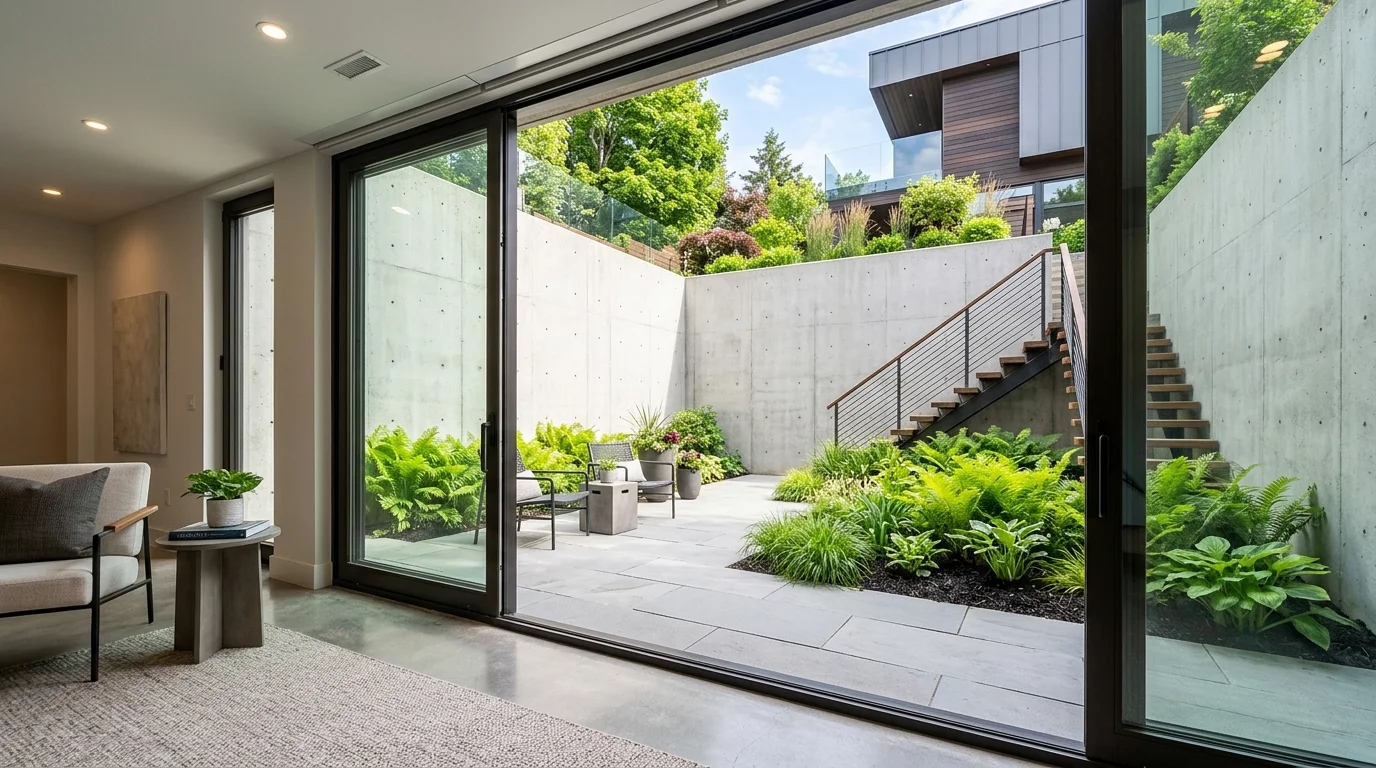
If you want an absolutely bulletproof solution, poured concrete is the undisputed king of retaining walls. Rather than piecing blocks together, this method creates a single, seamless, monolithic wall of solid concrete.
The Construction Process
Heavy wooden or steel forms are erected inside the excavated trench, acting as a mold. A massive grid of steel rebar is constructed inside the forms. A concrete pump truck then fills the mold with wet concrete. Once it cures, the forms are stripped away, revealing a flawless, uniform wall.
Pros of Poured Concrete Walls
- Immense Strength: Poured concrete offers unparalleled resistance against the hydrostatic pressure of dense, wet New Jersey clay soils.
- Highly Water-Resistant: Because there are no mortar joints or seams, it is incredibly difficult for water to penetrate a solid concrete wall.
- Modern Aesthetic: Raw, poured concrete offers a sleek, modern, industrial look that pairs beautifully with minimalist landscaping and modern architecture.
Cons of Poured Concrete Walls
- Higher Cost: The labor required to build the forms, plus the cost of bringing in concrete pump trucks, makes this significantly more expensive than cinderblocks.
- Site Access Requirements: Heavy machinery must be able to reach your backyard to pour the concrete, which can be challenging in tightly packed suburban neighborhoods.
3. Stone & SRWs: The Luxury Aesthetic
If your walkout basement door opens up to an elaborate backyard entertainment area, you may want a wall that feels less like a foundation and more like high-end landscaping. Segmental Retaining Walls (SRWs) are interlocking concrete blocks engineered to look like natural stone, while actual natural stone (like fieldstone or boulders) provides unparalleled luxury.
Pros of Stone Walls
- Stunning Curb Appeal: Stone walls completely eliminate the “basement stairwell” vibe, integrating your walkout seamlessly with premium paver patios, fire pits, and pool decks.
- Natural Drainage: Interlocking SRWs are typically built without mortar. The slight gaps between the stones allow water to naturally weep through the wall, drastically reducing hydrostatic pressure behind it.
Cons of Stone Walls
- Highest Cost: Natural stone and premium SRWs are the most expensive options, both in raw material costs and the intensive, specialized labor required to lay them.
- Footprint: SRWs often require a “battered” design, meaning the wall steps back into the earth slightly as it gets taller. This requires a wider excavation footprint than a vertical concrete wall.
Retaining Wall Comparison Matrix
| Material | Cost Level | Aesthetic Appeal | Best Use Case |
|---|---|---|---|
| Cinderblock (CMU) | $$ | Basic (Unless veneered) | Standard walkouts, tight backyards, budget-conscious builds. |
| Poured Concrete | $$$ | Modern / Industrial | Deep excavations, areas with heavy, wet soil, modern homes. |
| Stone / SRW | $$$$ | Premium / Luxury | Walkouts connecting to high-end outdoor living spaces and patios. |
Frequently Asked Questions
Do I need a building permit for a retaining wall?
Yes. In New Jersey, any retaining wall over a certain height (usually 3 to 4 feet, depending on the municipality) requires a building permit. Because walkout stairwells are often 7 to 9 feet deep, your walls will absolutely require permits and often stamped architectural drawings.
Can I just use pressure-treated wood?
While heavy timber (like railroad ties) can be used for small garden walls, we highly discourage using wood for a full-depth walkout basement. Even pressure-treated wood will eventually rot when buried in wet soil, leading to a catastrophic collapse of the stairwell.
How long will a concrete retaining wall last?
When properly engineered with the correct steel reinforcement and adequate drainage systems, a poured concrete or reinforced CMU retaining wall will easily last 50 to 100 years without structural failure.
Build on a Solid Foundation
A beautiful walkout requires walls that will stand the test of time. Don’t compromise on structural engineering or water management. Partner with the top-tier experts at Jazz Construction Group. Explore our basement renovation services to see how we build safe, stunning retaining walls for New Jersey homeowners.
Get a Free Walkout Estimate