With housing costs rising and the demand for rental units at an all-time high, more homeowners are looking right beneath their feet for a solution. Basement apartment renovations offer an incredible opportunity to generate passive income, help pay off your mortgage faster, and drastically increase your property value.
However, turning your basement into a living space for yourself is very different from renting it out to a tenant. At Jazz Construction Group, we specialize in navigating the complex building codes required to create safe, legal, and highly profitable basement suite renovations.
Here is what you need to know about converting your lower level into a legal, income-generating apartment.

What Makes a Basement Apartment “Legal”?
A “legal” basement suite (often called an Accessory Dwelling Unit or ADU) means the space has been built according to the local municipal fire codes, building codes, and zoning bylaws. If you rent out an illegal suite, you face massive fines, your home insurance may be voided in case of a fire, and the city can force you to tear the kitchen out.
While specific rules vary by municipality, the core safety requirements for basement apartment renovations are universally strict.
The 4 Core Requirements for a Legal Suite
| Requirement | Why It Is Necessary | Common Solution |
|---|---|---|
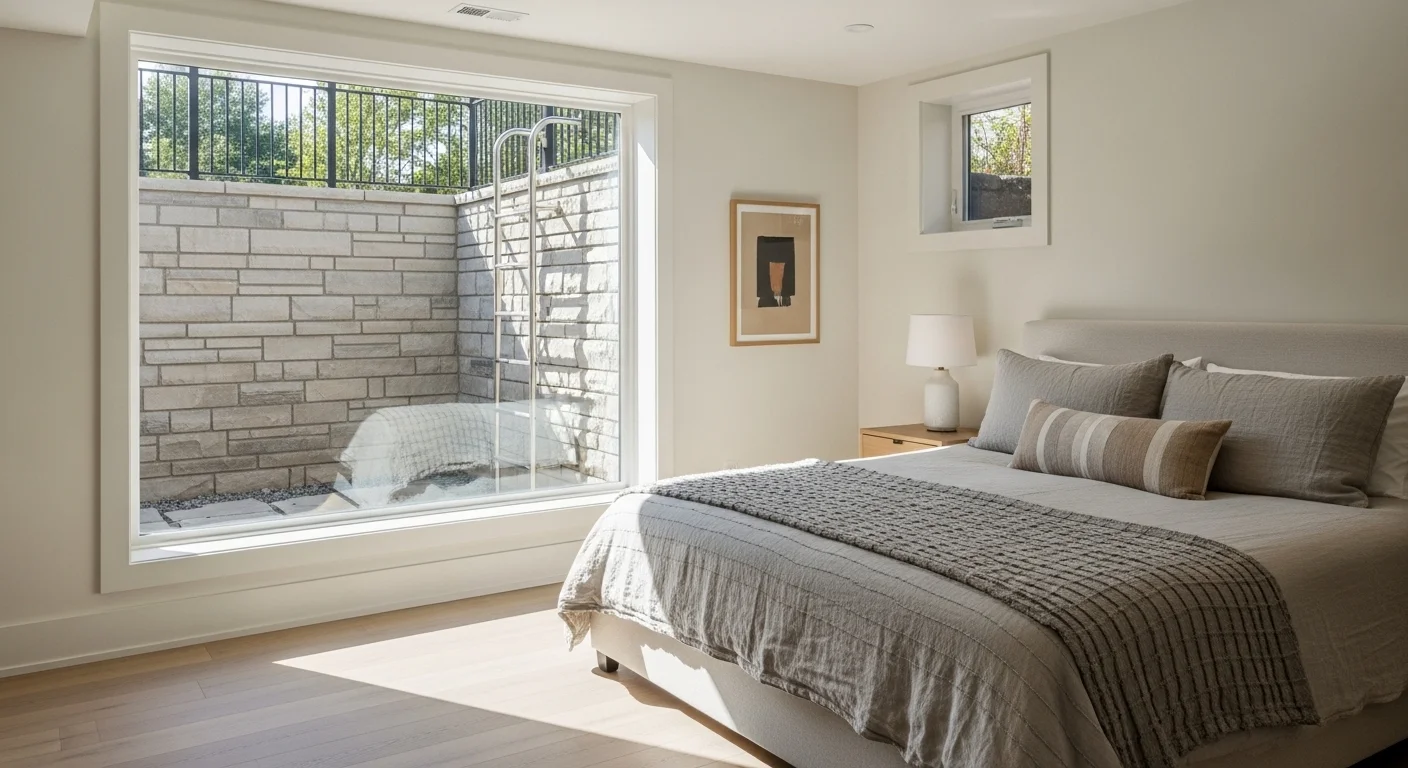
| Egress Windows | Tenants must have a safe way to escape in case of a fire. Standard basement windows are too small. | Excavating a window well and installing a large, legally-sized egress window in every bedroom. |
| Fire Separation | Fire needs to be delayed from spreading between the main house and the basement unit. | Installing 5/8″ Type X fire-rated drywall on the ceiling and a solid-core, fire-rated door. |
| Separate Entrance | The tenant must be able to enter and exit safely without going through your main living area. | A walk-out basement door, or an enclosed side-entrance staircase. |
| HVAC & Ventilation | Air cannot be shared directly between units due to smoke and carbon monoxide risks. | Installing independent smoke detectors and a separate ventilation system (or specific duct dampers). |
Designing for Maximum Rentability
To attract high-quality tenants and command top-tier rent, your basement suite renovation needs to feel like a modern home, not a dungeon.
- The Kitchen is King: You don’t need a massive kitchen, but you do need full-sized appliances. Skip the mini-fridge. Install quartz countertops—they are durable, stain-resistant, and look premium.
- In-Suite Laundry: This is the #1 requested feature by renters. Even a small, stacked washer/dryer unit hidden in a closet will allow you to charge significantly more rent each month.
- Soundproofing: You don’t want to hear your tenant’s TV, and they don’t want to hear your footsteps. Ask your contractor about resilient channels and Roxul Safe’n’Sound insulation for the ceiling.
- Maximize Light: Paint the walls a crisp, bright white and install plenty of LED recessed lighting to counteract the lack of natural sunlight.
Cost vs. ROI: Is It Worth It?
A full, legal basement apartment renovation is a major investment. Because it involves creating a second kitchen, upgrading electrical panels, cutting concrete for egress windows, and extensive fireproofing, costs generally start between $50,000 and $80,000+.
However, the ROI is unmatched. If you spend $65,000 on the renovation and rent the unit for $1,500/month, the suite pays for itself in just over 3.5 years. Beyond that, it is pure profit. Plus, having a legal income suite adds immense resale value to your home. Discover more about our approach on our basement renovation services page.
Frequently Asked Questions
Do I need a separate electrical panel for a basement apartment?
Not necessarily, but you will likely need to upgrade your main home service to 200 amps to handle the load of a second kitchen and laundry setup. Some landlords choose to install a sub-panel to easily separate utilities.
How long does it take to build a legal basement suite?
Due to the complexity of the permits, multiple city inspections, and specialized trades (plumbers, electricians, HVAC), a legal basement apartment typically takes between 8 to 12 weeks to complete.
Will a legal basement apartment increase my property taxes?
Yes, any major home improvement that requires a permit and increases the value of your home will likely trigger a slight increase in your property taxes. However, the rental income generated far outweighs this cost.
Ready to Build Your Passive Income Engine?
Building a legal basement apartment requires expert knowledge of local building codes. Let our experienced team handle the permits, design, and construction so you can start collecting rent worry-free.
Get a Free Apartment Quote