Thinking of buying or building a new home for your family? You may have come across the phrase, “attached or detached single-family home” in your research.
Both are excellent options for a new family. But both come with their own unique challenges.
Fortunately, the advantages outweigh the disadvantages. And, if you’re looking to discover both, you’ve come to the right place.
Jazz Construction Group here: we’ll guide you through the ins and outs of single attached versus detached family homes, so that you can buy and build with confidence and peace of mind.
In this article, our construction pros will discuss the following topics:
- The advantages and disadvantages of choosing to buy and/or build a single-family attached vs. detached home
- What single-family attached and detached home is, along with their key features
- Three key factors to consider when choosing either a single-family attached or detached home
- A featured attached and detached family home built by Jazz Construction
- What to keep in mind when buying and/or building your new single-family home
Pros and cons of single attached vs detached family homes
| Advantages | Disadvantages | |
| Detached family homes | 1. Greater privacy 2. More flexibility and autonomy over renovations 3. Less noise | 1. Often more expensive 2. Pay more in property taxes 3. Not always available in urban areas |
| Attached family homes | 1. Often more affordable 2. Provide a sense of community 3. Enjoy shared amenities | 1. Often less customizable than detached single-family homes 2. More noise 3. Less individual space |
What does a single-family attached home include?
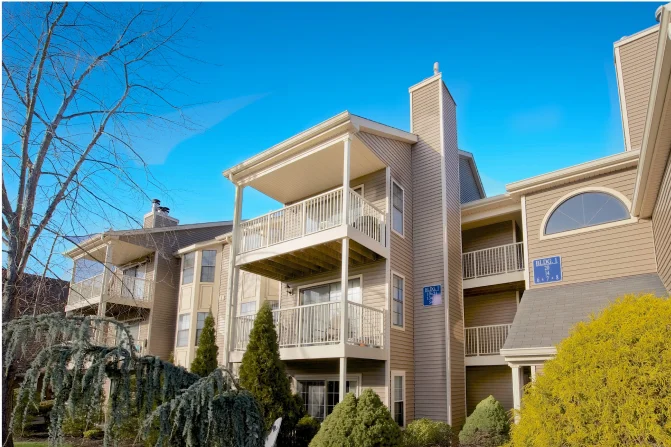
Single-family detached and attached homes are places designed for single families, but key differences exist.
An attached single-family home, such as a townhouse, semi-detached home, or row house, is a residential space that shares one or more walls with properties next to the space. The home may be a part of a larger building or row of similar structures.
These homes are often found in rural, suburban, and urban areas alike. What’s more, attached homes are built in various styles and sizes, ranging from compact townhomes to larger, multi-story structures.
What are the common features of an attached family home?
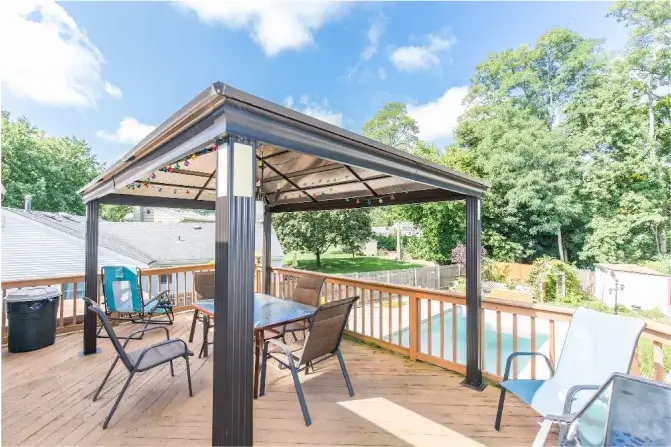
Most attached single-family homes share the same common features. Common features of an attached family home include the following:
- Shared walls: attached homes are connected to neighboring units via shared walls.
- Similar-looking exterior designs: In most cases, attached homes share a common outer appearance, including similar design elements and structures.
- Ownership: Depending on the development, most attached homes include shared structures such as roofs, common outdoor areas, and exterior walls.
- Layout: many attached homes share a similar layout and structure, making them efficient housing options for individuals.
- Community amenities: pools, tennis courts, parks, clubhouses, and more. Residents share community amenities in attached family home communities.
In contrast to attached family homes, we have detached family homes, the topic of our next section.
What is a single-family detached home?
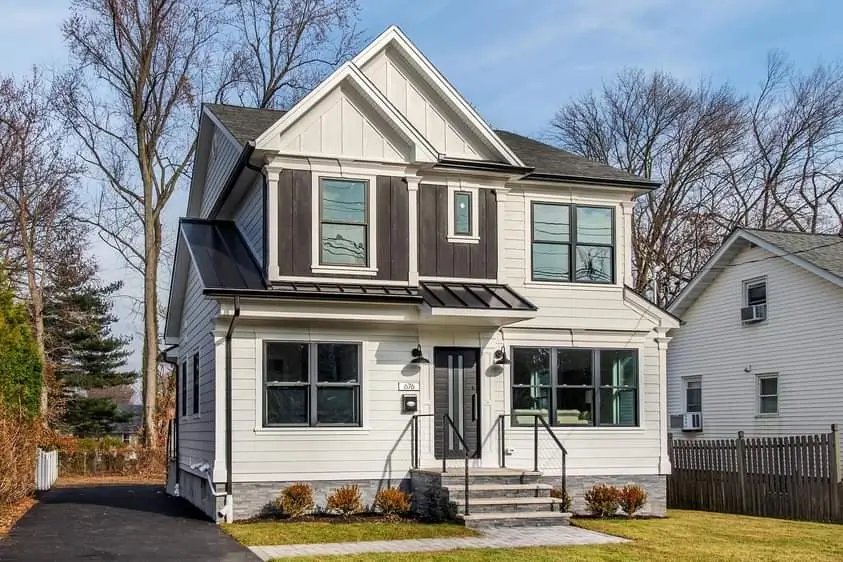
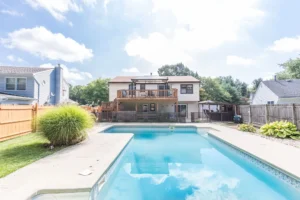
Detached single-family homes typically are stand-alone residential structures that don’t share any walls or common structures with other homes. In other words, detached homes are what you would expect from a traditional single-family home: a standalone structure that exists as a single building on an outdoor space. Detached homes are separate, independent spaces on pieces of land.
One of the key differences between attached and detached single-family homes is the space in front and behind the home. With a detached home, you’ll often find open spaces on all sides of the home. The front, side, and back of the homes are owned by the person who lives in the detached home.
Detached homes tend to be found in suburban and rural areas. These homes provide a great deal of privacy and independence to homeowners, more so than attached spaces like townhomes, condominiums, or duplexes.
What are common features of single-family detached homes?
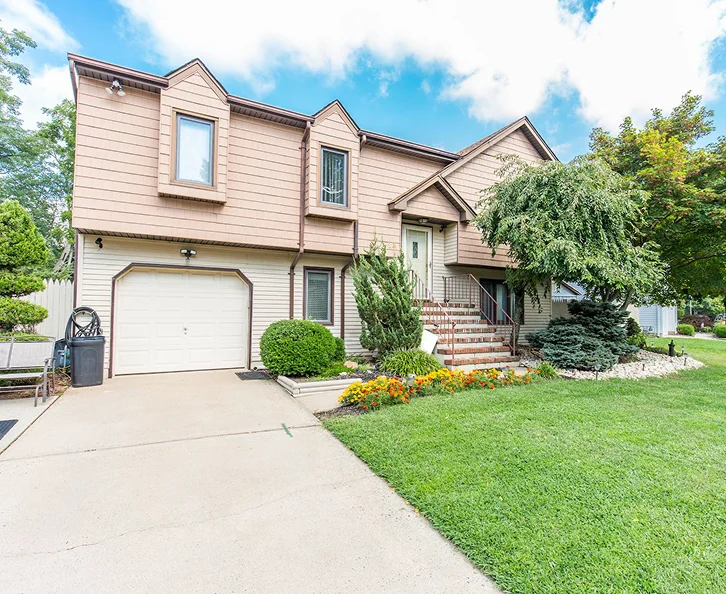
Some of the most common characteristics of detached vs. attached homes is that detached homes come with the following:
- Greater independence: Since detached homes aren’t connected to other homes, they give homeowners more autonomy, personal space, and privacy. In contrast, attached homes often come with restrictions, as they are often governed by homeowner association rules. Dettached homes typically give homeowners more flexibility in terms of making aesthetic or structural changes. The reason is that, more often than not, detached home homeowners don’t need to abide by homeowner association regulations, so they experience greater freedom with choosing how their home looks and functions.
- Standalone structure: Detached homes are independent structures that are surrounded by open space. The characteristic that differentiates them from attached homes is that they don’t share walls, roofs, or foundations with other homes.
- Outdoor areas: Many detached homes often come with larger yards
- Greater space: Detached single-family homes often are larger than attached homes, giving families greater freedom to customize the home to fit their lifestyle preferences.
Nevertheless, advantages and disadvantages exist with both detached and attached homes. Let’s explore the pros and cons of attached and detached homes in greater detail.
Comparing attached vs. detached family homes (3 criteria)
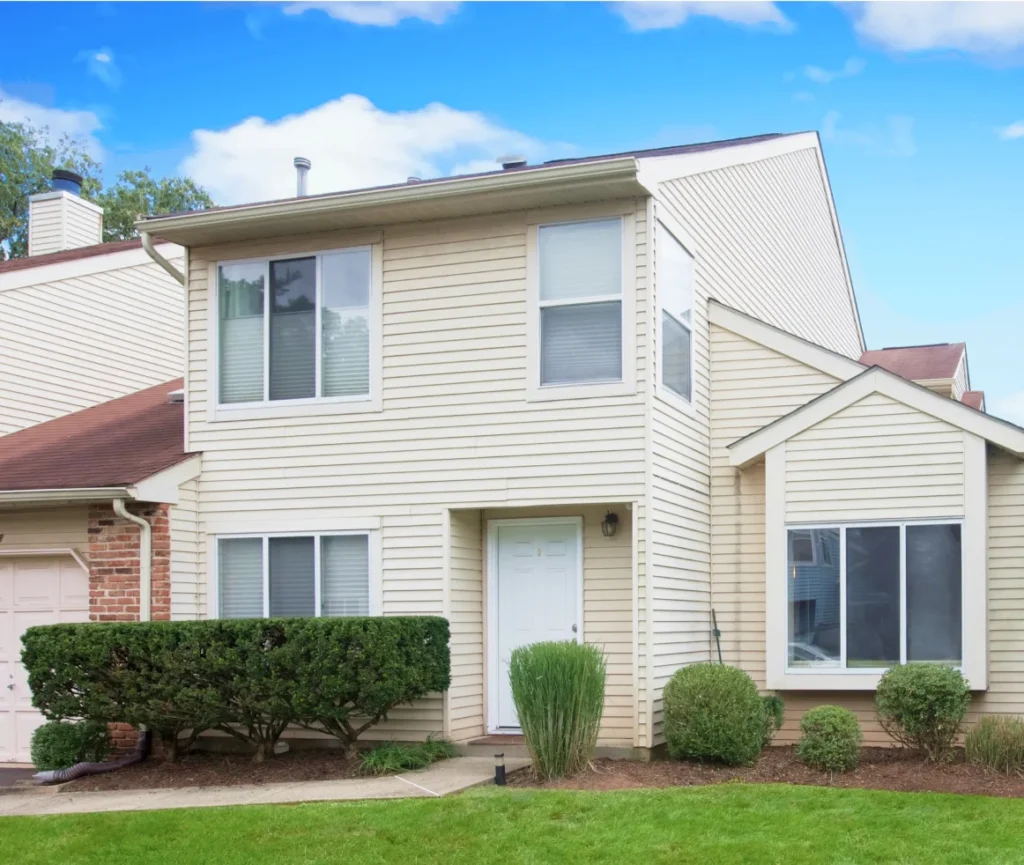
“So, how do attached and detached homes compare?” you might be wondering. At the end of the day, the ideal home is a personal decision. With that being said, when choosing between an attached and detached home, consider the following three differentiating criteria:
- Cost and maintenance
- Privacy
- Design styles
Cost and maintenance
As a whole, attached family homes are often more affordable than detached single-family homes. They often foster a strong sense of community, though you may have to pay for exterior maintenance if you live in a community that pays for communal outdoor landscaping.
In contrast, detached family homes tend to be a more costly long-term investment than homes in attached home communities. Exterior upkeep may fall on the shoulders of the homeowner, and property taxes tend to be higher with detached family homes.
Nevertheless, detached homes offer more freedom and autonomy to homeowners in terms of how to use space. Yet, attached single-family homes are a popular choice for first-time buyers or those on a budget who aren’t yet ready to build a custom standalone home.
Privacy
When buying or closing a new construction home, attached family homes tend to offer less privacy than detached homes. In attached homes, since residents share walls with other homes, noise levels may be higher as well.
Nevertheless, living in an attached home has its perks. Shared maintenance responsibilities (like lawn care) are covered by landscape contractors, and being in the company of neighbors may enhance the overall perception that the community is more secure (and often, it is!).
Design styles
Attached homes are often designed in the same style, making the neighborhood look uniform and clean. Living in a community with homes that are styled in the same way can make the community look more attractive.
Nevertheless, detached single-family homes often look more architecturally diverse than attached single-family homes. Attached homes are often built according to the residents’ preferences.
These spaces can often be modified to accommodate a new room or home addition, making them an attractive option for families who are confident that they’d like to one day expand their living space.
Did you know?
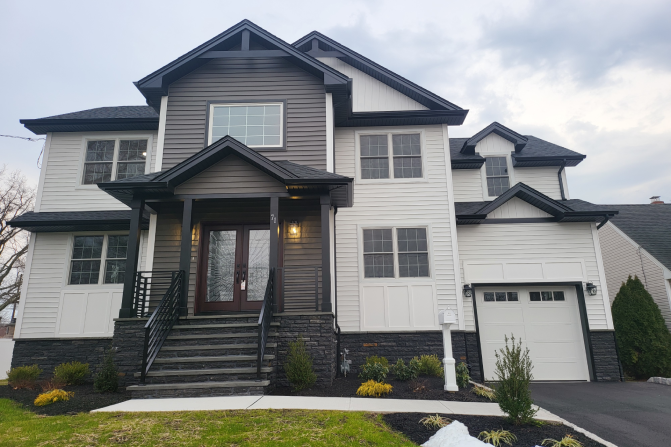
Did you know that the median size of a new single-family home built in 2024 was 2,210 square-feet, according to a 2024 United States Census Bureau report? Attached homes are trending smaller in 2025.
Curious to see what your money can buy you? Check out this luxurious black-and-white primary suite that turns heads and dazzles.
Looking for a new, custom-built family home?
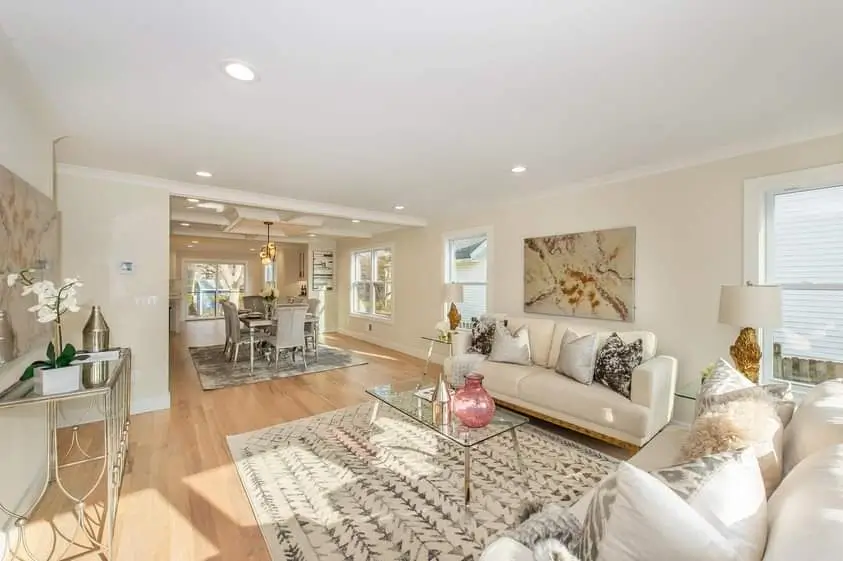
Attached vs. detached single-family homes: Attached homes are ideal for first-time homeowners and families with young children. In contrast, detached single-family homes are best for individuals who know they’ll want to expand.
The reason is that detached homes offer more privacy and can accommodate a larger family size than an attached home. Nevertheless, detached homes can be extremely beneficial for those who aren’t looking to spend a great deal of money on custom renovations.
This home type allows homeowners to enjoy shared amenities without having to pay to own them outright.
Regardless of the type of home you choose, the best home is one made by a quality builder with a reputation for delivering consistent, quality results on time and within budget, every time.
If you’re looking for advice on what type of home to buy or build — or if you’re ready to kick off construction on your dream home — don’t hesitate to reach out to us. We’d be happy to help.
Contact us today to book your complimentary discovery call on your next construction project.