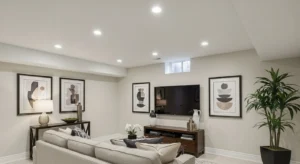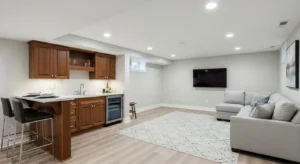
Imagine never having to run up two flights of stairs just to use the restroom while watching a movie. Or finally giving your guests the privacy they deserve when they stay over.
Adding a bathroom to your basement is one of the most functional upgrades you can make. It transforms a simple storage area into a fully habitable living space. However, unlike renovating a bedroom, a bathroom involves complex plumbing challenges that happen beneath the concrete.
At Jazz Construction Group, we specialize in solving these challenges. This guide covers everything you need to know about costs, layouts, and the all-important plumbing logic behind a basement bath.

How Much Does a Basement Bathroom Cost?
The cost of adding a bathroom to a basement varies significantly based on one factor: Where are your drains?
If your builder installed “rough-ins” (pipes sticking out of the concrete) when the house was built, you are in luck. If not, we have to break the concrete to install them.
| Scenario | Estimated Cost | Complexity |
|---|---|---|
| Rough-In Exists | $10,000 – $18,000 | Low (Connect & Finish) |
| No Rough-In (Close to Stack) | $15,000 – $25,000 | Medium (Concrete Breaking Required) |
| No Rough-In (Far from Stack) | $20,000 – $35,000+ | High (Extensive Trenching or Pumps) |
The Plumbing: Gravity vs. Up-flush
Basement plumbing is all about fighting gravity. Your home’s main sewer line typically runs above the level of your basement floor, or just below it. Understanding how we get waste up and out is crucial.
[Image of basement bathroom plumbing rough-in diagram]1. Traditional Gravity System
This is the gold standard. If your main sewer line is deep enough under your house, we can cut a trench in your basement floor, lay the pipes, and let gravity do the work. It requires breaking concrete, but it is silent and requires no maintenance.
2. Ejector Pump (Sewage Pump)
If your main sewer line is higher than your basement floor, gravity won’t work. We install a sealed basin in the floor with a powerful pump. The waste flows into the basin, and the pump pushes it up into the main sewer line.
3. Up-flushing Toilet (Saniflo)
Don’t want to break any concrete? An up-flush system sits on top of the floor. It macerates (grinds) waste and pumps it through small pipes in the wall. It is the easiest to install but can be noisier than traditional systems.
Layouts for Small Spaces
Basements often have awkward support columns and utility closets. Here are three layouts that maximize space:
- The “Powder Room” (Half Bath): Requires only 20-25 sq. ft. Perfect if you just need a toilet and sink for a media room. Fits easily under staircases.
- The “3-Piece” (Shower, Toilet, Sink): Requires 35-45 sq. ft. This is the standard for guest suites. Using a corner shower (neo-angle) saves massive amounts of floor space.
- The “Wet Room”: In very tight spaces, the entire room is waterproofed and tiled, meaning the shower area doesn’t need a curtain or glass door, making the room feel larger.

Don’t Forget Ventilation
Basements are naturally damp. Adding a shower creates a moisture bomb. A high-quality exhaust fan vented to the exterior is not optional—it is mandatory to prevent mold growth behind your new walls.
Frequently Asked Questions
Does a basement bathroom add value to my home?
Yes. A basement bathroom offers one of the highest returns on investment (ROI) of any remodeling project, often recouping 80% to 100% of its cost at resale.
How do I know if I have a “rough-in”?
Look for capped PVC pipes sticking out of your concrete floor. There will usually be three: a large one for the toilet, a smaller one for the sink drain, and one for the vent.
Can I put a bathroom anywhere in the basement?
Technically, yes, but placing it close to the existing “main stack” (the big vertical drain pipe) will save you thousands of dollars in trenching and piping costs.
Ready to Add Convenience to Your Home?
Adding a bathroom is a complex job that requires licensed plumbers and skilled contractors. Don’t risk leaks or backups. Let our team handle the dirty work so you can enjoy the finished result.
Get a Free Bathroom Quote